

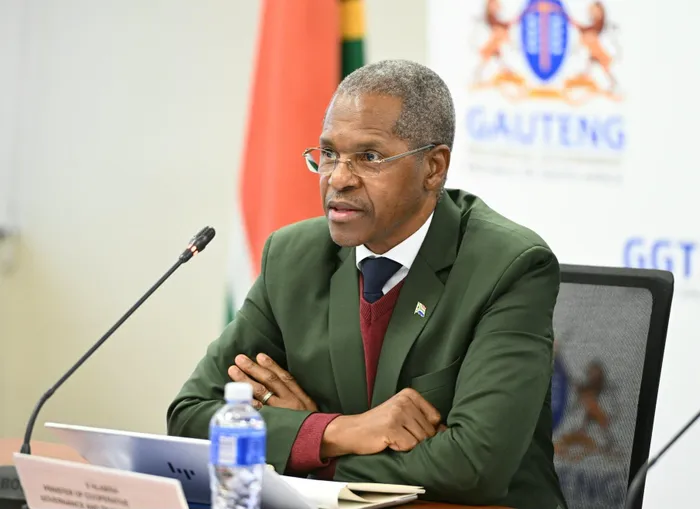
IFP leader and Minister of Cooperative Government and Traditional Affairs, Velenkosini Hlabisa
Image: IFP / X Account
The Department of Cooperative Governance and Traditional Affairs (COGTA) is under renewed scrutiny after a civil rights organisation, Right to Justice (R2J), announced plans to approach the High Court on an urgent basis to enforce a judgment requiring the department to pay more than R9 million to the Insika Foundation.
The dispute stems from a Gauteng Division of the High Court ruling issued in July 2024, which ordered COGTA to pay R9 291 633.42 for services rendered under the Community Work Programme (CWP). The court further ordered interest and legal costs on an attorney client scale. The department’s subsequent appeal was dismissed with costs, making the order final and binding.
Despite this, Insika Foundation says it has not received payment and R2J alleges that the department has failed to comply with the court order, raising concerns about adherence to judicial authority and the rule of law.
R2J Chairperson Siphesihle Jele said the organisation will seek urgent relief from the High Court, arguing that continued non compliance undermines the authority of the courts and weakens constitutional governance.
“We are approaching the court on an urgent basis because this is a final court order that has not been implemented,” Jele said. “The law is clear state departments are not exempt from compliance simply because they disagree with a judgment. Court orders must be obeyed.”
Jele further confirmed that the organisation is exploring legal steps that could affect the Director General’s pension benefits, Mbulelo Ntshangama, who is expected to leave office next month.
“We are also considering lawful mechanisms to ensure accountability does not end with retirement,” Jele said. “Where there is continued defiance of a court order all available legal avenues must be considered to ensure enforcement and compliance.”
The controversy has been compounded by a lack of communication from the department. COGTA has not responded to The Star’s questions regarding the outstanding payment, the allegations of non compliance, or the planned urgent court application by R2J. There has also been no response from the department to repeated written queries submitted by stakeholders and legal representatives involved in the matter.
According to those stakeholders, the department has for an extended period not engaged with correspondence or media inquiries relating to the judgment, despite multiple attempts to obtain clarity on payment timelines or compliance measures. This silence has further intensified frustration among affected parties.
Insika CEO Ziphozethu Busisiwe Matheniwa said the absence of communication has worsened the impact of the non payment and left the organisation unable to recover from financial collapse.
“We have a valid court order but there has been no payment and no meaningful response from the department,” Matheniwa said. “The lack of engagement has made an already devastating situation even worse for our organisation and the communities we served.”
Insika, which previously implemented aspects of the Community Work Programme, says the non payment forced it to shut down operations entirely, leaving staff unpaid and disrupting services to thousands of beneficiaries who depended on the programme for income support.
The Community Work Programme itself has faced broader instability following the collapse of several implementing agents across the country. Reports have highlighted ongoing payment delays, uncertainty around contract renewals, and administrative disruptions affecting workers at multiple sites. COGTA has since moved to restructure parts of the programme through insourcing, but questions remain about whether the department has sufficient administrative and financial capacity to ensure continuity.
Advocates specialising in administrative law warn that continued refusal to implement a final court order could expose senior officials to personal consequences, including contempt proceedings or adverse cost orders, depending on how the court interprets the conduct.
As pressure mounts, the dispute is increasingly being viewed as a test of the effectiveness of judicial enforcement mechanisms against government departments, and whether court orders can be meaningfully upheld when challenged by the state.
COGTA has not responded to The Star’s questions.