

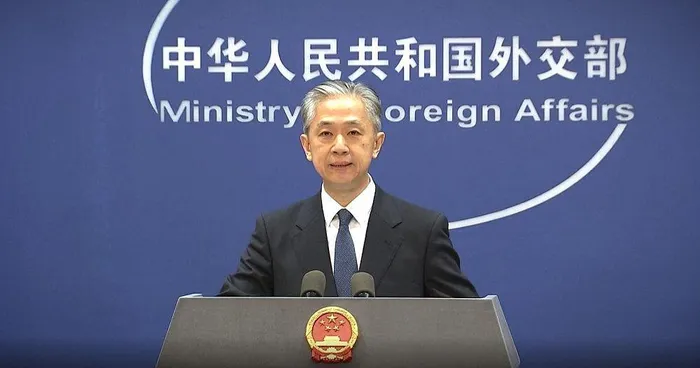
Starting May 1, China is going to apply zero tariffs on 100% of tariff lines for all 53 African countries that maintain diplomatic relations with Beijing.
Image: TV BRICS
This announcement was made on February 14, 2026, in a message from President Xi Jinping to African Union leaders that were gathered in Addis Ababa. Starting May 1, China is going to apply zero tariffs on 100% of tariff lines for all 53 African countries that maintain diplomatic relations with Beijing. Not selected categories. Not a partial list. This applies to everything, agricultural goods, processed foods, textiles, minerals, manufactured products, entering China from virtually the entire continent, duty-free. Only Eswatini is excluded, penalised for its continued recognition of Taiwan.
In order to appreciate the scale of this, consider what it replaces. For years, China had extended zero-tariff treatment to its 33 African least-developed country (LDC) partners. In December 2024, that was expanded to cover all tariff lines for those 33 countries. The May 2026 announcement broadens the architecture further, sweeping in middle-income economies like South Africa, Egypt, Morocco, Nigeria, and Kenya that had been previously subject to Chinese import duties reaching as high as 25% on certain goods. China is, in doing this, forfeiting an estimated $1.4 billion in annual tariff revenue. That is a real financial commitment, not a symbolic one.
Beyond the headline number, the policy actually has three practical dimensions that African exporters need to understand immediately.
The first one is that the tariff elimination is paired with an upgrade of China's "Green Channel", which is a fast-track customs clearance mechanism for African agricultural products. Perishables such as Kenyan avocados, Rwandan coffee, Senegalese tuna, and South African stone fruits, which have historically lost value in slow customs queues, will move faster and cheaper. This matters enormously for agricultural exporters, whose margins are consumed not by tariffs alone but by time as well.
Secondly, China is simultaneously negotiating bilateral Economic Partnership Agreements with individual African countries. South Africa is furthest along, its Trade Minister Parks Tau signed a framework agreement with China's Ministry of Commerce in early 2026, with an Early Harvest Agreement expected by March. These deals layer investment commitments and technology transfer on top of the tariff access, and they are creating a more durable commercial architecture than a tariff cut alone.
Thirdly, the policy applies to rules-of-origin compliant goods, meaning African countries must prove their exports are genuinely domestically produced. This creates an incentive, not just a preference, for local processing. A Ghanaian company that refines cocoa into chocolate rather than exporting raw beans benefits more under this framework than one that simply harvests and ships. That design is not by accident.
The countries that are best positioned to convert this policy into real economic gain are those with exportable processed goods and the logistics to move them. South Africa's wines, citrus, and manufactured auto components; Kenya's floriculture, avocados, and tea; Morocco's phosphate derivatives and processed seafood; Ethiopia's textiles, these are sectors with genuine upside under a zero-tariff regime, provided quality standards and Chinese buyer relationships are implemented or put in place.
For raw material exporters . Angola, the DRC, Zambia, Mozambique , the gains are real but structurally shallow unless governments use the increased export revenue to fund domestic beneficiation. The tariff cut creates fiscal space. It does not fill it.
What makes this announcement historically significant is not just its breadth but its timing. It arrives as the United States reviews AGOA and raises tariff walls globally, positioning China as the responsible actor in global trade at the precise moment America is taking a step back. UN Secretary-General Guterres explicitly called on other major economies to follow Beijing's lead. The optics are deliberate and effective.
Written by:
*Dr Iqbal Survé
Past chairman of the BRICS Business Council and co-chairman of the BRICS Media Forum and the BRNN
*Sesona Mdlokovana
Associate at BRICS+ Consulting Group
Africa Specialist
**The Views expressed do not necessarily reflect the views of Independent Media or IOL.
** MORE ARTICLES ON OUR WEBSITE https://bricscg.com/
** Follow @brics_daily on Twitter for daily BRICS+ updates and instagram @brics_daily