


Police Commissioner Nhlanhla Mkhwanazi outlines the operational challenges faced by law enforcement in tackling organised crime.
Image: Tumi Pakkies/ Independent Newspapers
In an assessment of the alarming surge in cash-in-transit (CIT) robberies across KwaZulu-Natal, Police Commissioner Lieutenant General Nhlanhla Mkhwanazi has pointed out the organised nature of these crimes and highlighted significant operational challenges faced by law enforcement. Mkhwanazi’s remarks come on the heels of escalating incidents that have left law enforcement on high alert.
Mkhwanazi said they have administrative challenges hindering their ability to perform their work properly.
“I’m told that the matter has been addressed because we need a judge to be appointed to help us do some of the work that we need to do so that we’re able to infiltrate these criminals. I am told there have been two judges shortlisted and interviewed. I hope within a month, we’re going to have a judge appointed, because for us to do the job we need to do, we need to have a judge who is appointed by the government,” Mkhwanazi said, explaining that this was the first problem to address.
He said secondly, there is a renewed sense of confidence due to the return to work and output from the crime intelligence management.
“Some of the criminals have been identified by our intelligence community in KZN. A few of them that have been arrested in Mpumalanga yesterday (Monday), and a number of firearms recovered,” Mkhwanazi said.
He said that the criminals do not only operate in Mpumalanga and were believed to be planning another robbery with criminals operating in KZN.
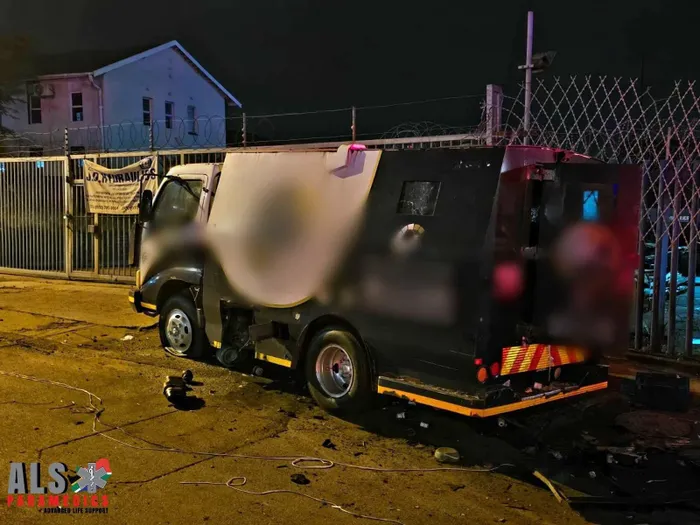
A recent cash-in-transit robbery scene in Pinetown highlights the urgent need for enhanced security measures.
Image: ALS Paramedics
Mkhwanazi said there have been several shooting incidents in the province in recent weeks - a shooting near Mid-Illovo involved a CIT robbery where four suspects were killed.
“The intelligence members that we have in the province, are working very hard to recruit sources and informers, who are providing information to the members, but we still have lot of breakaway splinter groups from the main groups,” Mkhwanazi said.
Mkhwanazi highlighted that challenges remain with some employees working at some companies.
He cited the recent N2 CIT robbery that occurred after the cash vehicle driver stopped due to overheating. While the driver was on the phone with the controller, a white vehicle pulled alongside, and armed suspects with rifles allegedly emerged, overpowering the driver and security crew. The suspects used explosives on the vehicle and fled with an undisclosed amount of money.
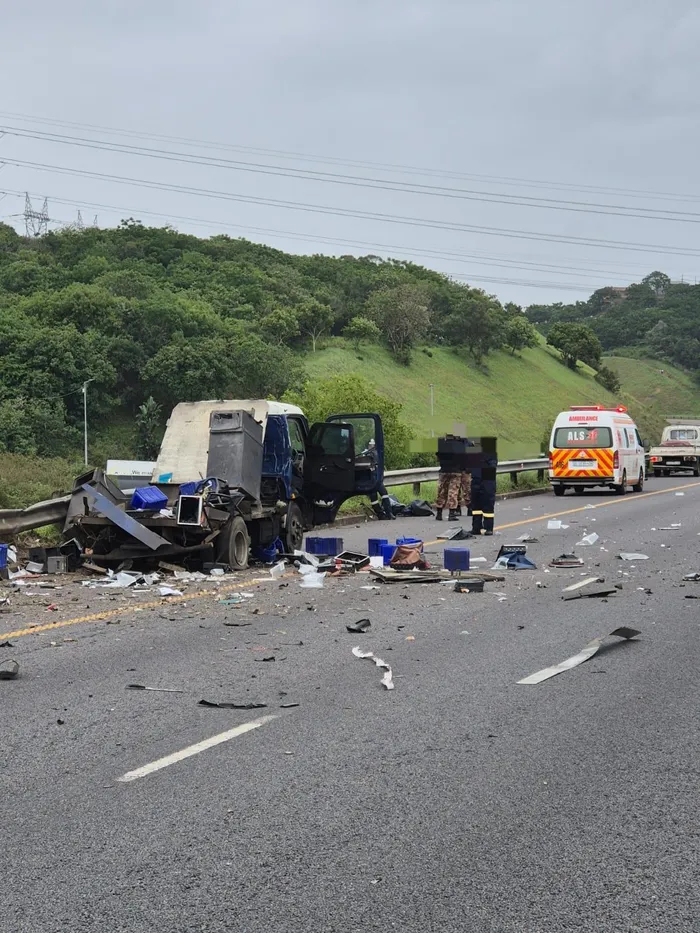
Officials examine evidence at the scene of a cash-in-transit robbery, underscoring the ongoing battle against crime.
Image: ALS Paramedics
“The employee who was driving that truck is subject to investigation because of some activities that he was involved with prior to that heist. When you are reporting a vehicle to have broken down, you’re having a problem, or a fan belt of a car, it breaks down on the freeway. You call your command centre saying, ‘I’m having a mechanical problem with the vehicle’, literally, five minutes later, the vehicle is stopped on the side of the road, and then you report the CIT? When did the criminals know about the breakdown of the car? So you definitely know something about it,” Mkhwanazi said.
He said coordination for these activities often occurs through individuals in various locations: either those in shops who facilitate the exchange of money, or people working within the companies.