

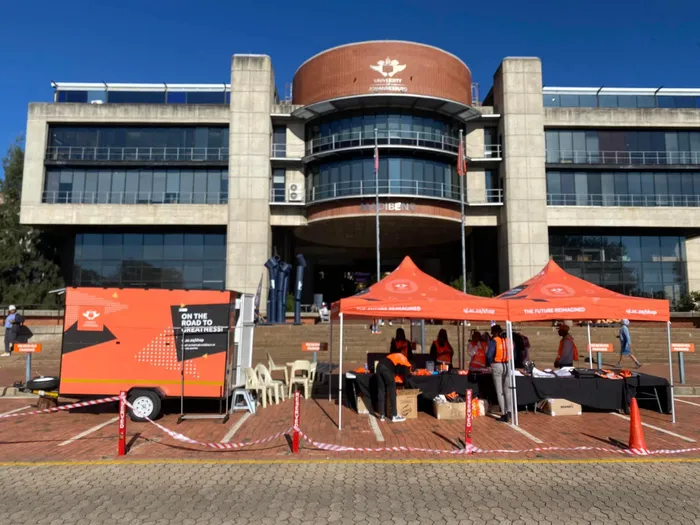
Labour Court rules against former UJ employee in sleeping on duty dismissal case.
Image: The University of Johannesburg/Facebook
The Labour Court in Johannesburg has dismissed an application by former University of Johannesburg (UJ) employee to review and set aside Commission for Conciliation, Mediation and Arbitration (CCMA) ruling that refused to condone her late referral of an unfair dismissal dispute.
Gloria Mamela worked as a protection officer at UJ for 34 years, she was dismissed in July 2024 after being found guilty of sleeping on duty. She received her dismissal letter on July 26, 2024, and was advised to refer any unfair dismissal dispute to the CCMA within 30 days.
Her legal representative referred the dispute on September 4, 2024, which was outside the prescribed period. The CCMA informed Mamela the following day that she needed to apply for condonation, but the application was only filed on September 25, 2024.
The CCMA commissioner granted UJ condonation for the late filing of its opposing affidavit but refused Mamela’s condonation application, effectively preventing her unfair dismissal claim from proceeding.
The court said UJ provided a reasonable and acceptable explanation for its delay. Also, the delay was not excessive, and granting condonation did not prejudice Mamela. Moreover, the university acted in a manner consistent with the CCMA rules and the interests of justice.
In contrast, Mamela's condonation application was refused because she failed to explain the full period of delay. Although her initial delay was only 10 days, she did not explain the further delay between 5 September and 25 September 2024, after being told by the CCMA that condonation was required.
In addition, her explanation was found to be implausible after she claimed illness, but the commissioner found that this did not satisfactorily explain why her attorney still delayed filing the condonation application.
Disillusioned, Mamela approached the Labour Court to review that ruling, arguing that the commissioner failed to consider her age, long service, alleged clean record, illness, and prospects of success. She also complained that the matter was decided on the papers without oral submissions.
Acting Judge Connie Phakedi rejected these arguments, finding that the commissioner had exercised her discretion properly and in line with established legal principles.
The court held that Mamela failed to provide a full and reasonable explanation for the entire period of delay, particularly the 20-day gap between being informed that condonation was required and actually filing the application.
The court also noted that Mamela was legally represented throughout and did not file a replying affidavit or oppose UJ’s late filing application. It ruled that deciding the matter on the papers was permitted under CCMA rules and did not result in unfairness.
On prospects of success, the court found Mamela’s claims vague and unsupported, especially in light of evidence that she had received a final written warning in 2023.
"Having regard to all the evidence and material filed in this matter, I cannot find any basis to review and set aside the condonation ruling on any of the grounds submitted by the applicant (Mamela).
"The explanation for the delay is wholly inadequate and non-existent, the applicant failed to provide a full account of the delay and the commissioner cannot be faltered for this conclusion," said the acting judge, adding that condonation “is not merely there for the taking.”
The review application was dismissed, with the court making no order as to costs.
IOL News