

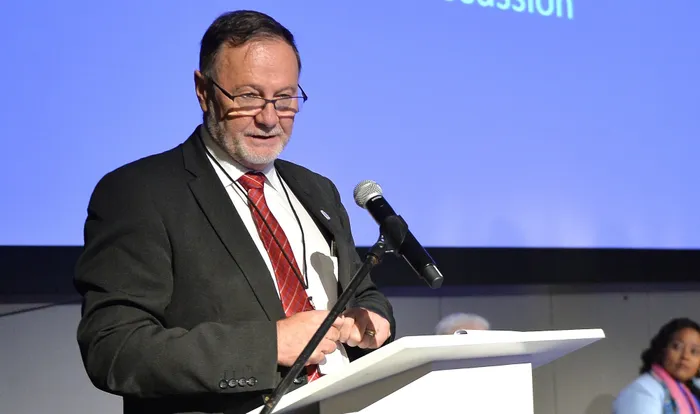
Anton Bredell meets municipal officials from Stellenbosch, Beaufort West, Laingsburg and Prins Albert to assess water security and drought interventions across the Western Cape.
Image: Independent Newspapers Archive
Provincial authorities have reported that massive water losses, vandalised boreholes, and increasing consumption—rather than just low dam levels—are exacerbating the deepening drought crisis in various regions of the Western Cape following emergency engagements with municipalities.
Western Cape Provincial Minister (MEC) for Local Government, Environmental Affairs and Development Planning, Anton Bredell, met officials from Stellenbosch, Beaufort West, Laingsburg and Prins Albert on Thursday, focusing on system failures and usage patterns that are accelerating pressure on already limited supplies.
The most critical situation is unfolding in Beaufort West, where the Gamka Dam sits at just 14%, and rainfall failed to reach its catchment area. Yet the town’s daily consumption has continued climbing, rising from 9.5 to 10.4 megalitres since November.
Compounding the crisis, nearly three-quarters of the municipality’s water cannot be accounted for.
“Beaufort West Municipality has made progress by installing 2,000 water meters, but much more needs to be done, as water losses remain unacceptably high at 77%,” Bredell said.
“This means the municipality cannot accurately account for whether water is lost through leaks or consumed without being billed. Immediate priorities include refurbishing vandalised boreholes and increasing production at the reclamation plant to its design capacity of 2.1 megalitres per day.”
About 70% of the town’s supply comes from 40 boreholes, but only 26 are functioning, with 10 out of service due to vandalism. The municipality will escalate from Phase 3 to Phase 4 restrictions on 1 March, including a 200% surcharge for households exceeding 10 kilolitres per month.
Elsewhere, the province raised concern over water use practices rather than supply alone. In Prins Albert, authorities flagged potable drinking water being used for agriculture at a correctional services facility.
“We are concerned about the excessive water usage by a Correctional Services facility in Prins Albert, where potable water is being used for a food garden project. Prins Albert Municipality must urgently address this situation,” Bredell said.
Stellenbosch, where the Idas Valley Dam stands at 30%, has not yet implemented restrictions but has been advised to act early to avoid crisis conditions.
“Given the provincial drought classification and the South African Weather Service’s prediction of a below-average rainfall winter season, we would strongly recommend that Stellenbosch consider instituting water restrictions as a precautionary measure,” he said.
Laingsburg has already begun adapting to declining groundwater, after borehole levels dropped from 14 metres to 30 metres over summer. New boreholes, prepaid meters and night throttling have cut consumption by 25%.
Bredell warned the drought is no longer only about rainfall, but about infrastructure resilience and behaviour.
“Water security is a shared responsibility. Government is working with municipalities to strengthen systems and reduce losses, but every resident must also play their part.”
Provincial officials say the coming winter rainfall season will be critical, but immediate savings and infrastructure repairs may determine whether some towns avoid severe shortages.
IOL News