

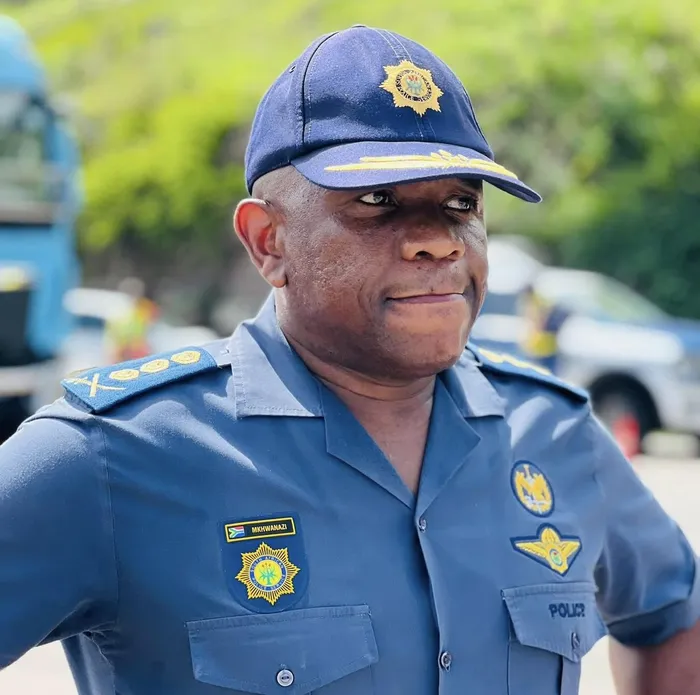
The Independent Directorate Against Corruption (IDAC) has denied social media claims that it issued a J50 warrant of arrest for KwaZulu-Natal police commissioner Lieutenant-General Nhlanhla Mkhwanazi.
Image: Facebook/SAPS
The IDAC has rubbished rumours that it has a J50 warrant of arrest for KZN provincial police commissioner Lieutenant-General Nhlanhla Mkhwanazi as “false”.
This comes after reports circulated on social media alleging that the Independent Directorate Against Corruption (IDAC) had prepared a J50 arrest warrant for Mkhwanazi.
However, despite the claims being false, the charge for which Mkhwanazi was allegedly going to be arrested remains unclear.
IDAC said it had noted with concern the rumours and enquiries claiming it had a J50 warrant of arrest for Mkhwanazi.
“This information is false and dismissed with the contempt it deserves.”
“These rumours are clearly started to disrupt and distract the work of IDAC, as well as the responsibilities that Gen Mkhwanazi is discharging in the fight against crime,” said IDAC spokesperson Henry Mamothame.
He called for vigilant use of social media.
“Members of society are urged to be vigilant against false information circulated in social media platforms, aimed at destabilising and discrediting law enforcement in the country.”
Mkhwanazi is no stranger to headlines, often making explosive allegations and drawing public attention.
He has long been regarded as a no-nonsense law enforcer with an unflinching stance on corruption.
On July 6, 2025, the top cop held an explosive media briefing where he blew the whistle on alleged corruption, political interference and institutional capture within the South African Police Service (SAPS).
During the briefing, Mkhwanazi implicated several senior officials, including police minister Senzo Mchunu, who is currently on special leave, and suspended deputy national commissioner for crime detection Lieutenant-General Shadrack Sibiya.
Mkhwanazi has for several times maintained that Mchunu, who was new to the portfolio at the time, had been “captured” to write the December 2024 disbandment letter of the Political Killings Task Team (PKTT).
President Cyril Ramaphosa previously said he did not approve the disbandment of the Political Killings Task Team and was dissatisfied that he had not been consulted beforehand.
Ramaphosa said that in written responses submitted to the Parliament’s Ad Hoc Committee, which was investigating the allegations made by Mkhwanazi.
He said the decision was taken by Mchunu and should have fallen under the authority of the now suspended national police commissioner General Fannie Masemola.
Ramaphosa said he was informed of the move on or about February 1, 2025, by Masemola, who indicated that Mchunu had instructed that the unit be disbanded.
Masemola also made it clear that he disagreed with the decision, Ramaphosa said.
Wait a minute… Who is Nhlanhla Mkhwanazi?
He joined SAPS in 1993 as a student constable at the age of 20, initially serving in public order policing.
In 2005, he was appointed head of the Special Task Force, the service’s elite operations unit responsible for specialised operations, including the National Air Wing and National Intervention Unit.
In 2011, he was appointed component head of specialised operations at major-general level. Later that year, he was named acting national police commissioner by former president Jacob Zuma, replacing Bheki Cele, who had been suspended.
In December 2018, Mkhwanazi was appointed KwaZulu-Natal police commissioner by Cele, a position he still holds. His contract expired on March 30, 2026.
He claimed his move to KwaZulu-Natal was voluntary and not financially motivated.
Meanwhile, the now-suspended national police commissioner, General Masemola, has since extended Mkhwanazi’s contract, and he will remain in his post for another five-year term.
IOL News