

As South Africa's public broadcaster faces scrutiny, a recent BCCSA ruling opens the door for transformative change, prompting a vital discussion among human rights groups.
Image: Karen Sandison / Independent Newspapers
On Monday, March 9, 2026, a coalition of human rights solidarity groups will meet with the SABC to discuss the implications of the recent BCCSA ruling involving the public broadcaster.
The significance of the Lorgat v SABC SAfm – Balance ruling lies not in its redress of our specific complaints, but in the opportunity it creates for collective reflection between the public broadcaster and its users.
The ruling evolved from complaints I lodged regarding four programmes broadcast between October 3 and 6, 2025, which featured expelled Israeli embassy staffer Ariel Seidman and Rolene Marks from the SA Zionist Federation. Dr. Sunette Lötter, chair of the BCCSA Tribunal, weighed arguments from the complainants—a coalition including the Peoples Media Consortium, Palestine Solidarity Alliance, Palestine Solidarity Campaign (Cape Town), the Media Review Network and South African Jews for a Free Palestine—and the SABC. The ruling was unanimous, with Commissioners Edwin Naidoo and John Chemaly concurring. Their shared interpretation of Clause 13.1 strengthens the reprimand against the SABC.
Under the BCCSA Constitution, tribunal leaders have the power to issue a reprimand as an explicit disciplinary measure—a formal finding of an infringement of the Code. This confirms that the SABC's failure was not a "borderline judgment," but a clear breach of its duty to the public. It clearly had powers to reject the complaint or issue a fine which it did not do.
In my complaint, I asked for specific actions: a formal finding that the SABC failed its duty to provide fair right of reply; equivalent redress on the same platforms; and removal of offensive segments from digital platforms. While these were not granted, the SABC's response to the removal demand is telling: "We do not find any reason why this interview should be removed… Doing so would take away the balance that we have established in our coverage of the war in Gaza."
This underscores the need for civil society to engage the board and management to ensure future compliance.
Simply put, the BCCSA found that the SABC interviewed only Israeli representatives in the impugned programmes; that the later Palestinian interview was not about the flotilla incident and was not broadcast in a comparable slot; and that this failed the requirement for timely and balanced presentation of opposing views. The SABC was reprimanded and urged to ensure future compliance with Clause 13.1.
This is a partial victory because the SABC's self-conception that it serves everyone equally is far from the truth. My complaint highlighted systemic failures in journalist education and research support. In the October discussions, SABC journalists never questioned guests on the Dahiya Doctrine, which authorizes disproportionate force on civilian infrastructure, or the Hannibal Directive, which authorises the army to kill Israelis who are being taken hostage by enemy forces—and which was implemented on 7 October 2023." Good preparation would have obviated these shortcomings and it is not as if there were not resources available.
Regarding language used by neutral SABC, I took serious umbrage at terms like "Gaza health Ministry”, "War in Gaza" instead of "occupied territory." This framing absolves Israel of its obligations as an Occupying Power under the Geneva Convention. When I asserted this was resistance by an oppressed and occupied people, not a war, the SABC replied: "Again, this is a matter of opinion, but international media has generally referred to it as a war."
The SABC also objected to my view that Seidman's false assertions about starvation and aid obstruction should not go uncontested. In the hearing they quoted me as saying: "Mr Lorgat admits he would rather the program came to an abrupt halt than give Mr Seidman the courtesy of allowing him to voice his opinion." My reply was terse: I do not accept one-sided, uncontested propaganda. To continue such a show makes the broadcaster complicit.
On factual inaccuracies, the broadcaster permitted guests to deny that a man-made famine was imposed on Palestinians in Gaza as well as genocide was being perpetrated. This they do despite international scholarly consensus. Seidman labelled the Global Sumud Flotilla a Hamas project—a smear with no evidence. This was hasbara and Israeli talking points, playing into "both-sideism" without research to determine who is right or wrong.
One of the criticisms I have for ruling is Lötter continues to use the controversial terms in her summation when she writes: The conflict in Gaza is a result of the long-standing tensions between Israel and Palestine, sparking strong emotions globally. Elsewhere, Dr. Lötter continues thus:“While covering the war in Gaza in this manner may be considered a prudent use of available sources, it does not fully meet the requirements of Clause 13, which calls for addressing opposing views within a reasonable time and in a similar time slot. The three impugned programmes focused on a specific moment in the war…”
This isn't new. In my 2013 case (Lorgat v SAfm, Case: 22/2013), after Palestinian writer Susan Abulhawa was interviewed, the SABC granted a right of reply to a South Sudanese activist proposed by the SAJBD. I then, as I do now, question how a South Sudanese person could have a right of reply to the struggle of Palestinians or the life of Susan.
The Mail & Guardian then criticised the BCCSA's reasoning in a long article that is worth reading stating that the BCCSA: "... defines public interest as purely domestic… Unless there are exceptional circumstances, foreign matters would not be 'of public interest'… So the global financial crisis, conflict in the DRC—these join the Middle East as being of no public interest in South Africa."
Our objective has been to educate citizens through public spheres where media users convene with producers. We cannot be passive consumers of narratives shaped by dominant groups. Public broadcasting is a commons, a public good that requires secure public funding and independent governance.
Despite South Africa's leading role in the ICJ genocide case, the SABC remains susceptible to external pressures. On the genocide, the SABC speaks from both sides of its mouth. To me, they wrote: "SABC News has long acknowledged this [genocide] and carried the ICJ case live." Yet in another BCCSA used their arguments against the Jewish board of Deputies noting amongst other points that:“SABC News has spoken to many people who support Israel’s actions since the Hamas attack on October 7 2023, including members of the SABDJ. That includes airing their opinions during the ICJ hearings. SABC News covered both the SA government application and the response of those representing the state of Israel at that time, with analysts from both sides….”
This adherence to "false balance" betrays justice. Journalists aren't neutral umpires; if one says it's raining and another says it's dry, your job isn't to quote both—it's to look out the window and report the truth. Professional media coverage must be underwritten by ethics and victim support because, in the face of genocide, neutrality is an impossibility.
Just the other day, over a dozen solidarity groups have formally requested a meeting with the SABC about the judgement and implications going forward. We seek not excuses but transformation of the broadcaster's ethos to reflect the justice-oriented values it is mandated to uphold.
For this conversation to take place, management, the workers and their unions, and us, the users of the services of the SABC must be engaged with.
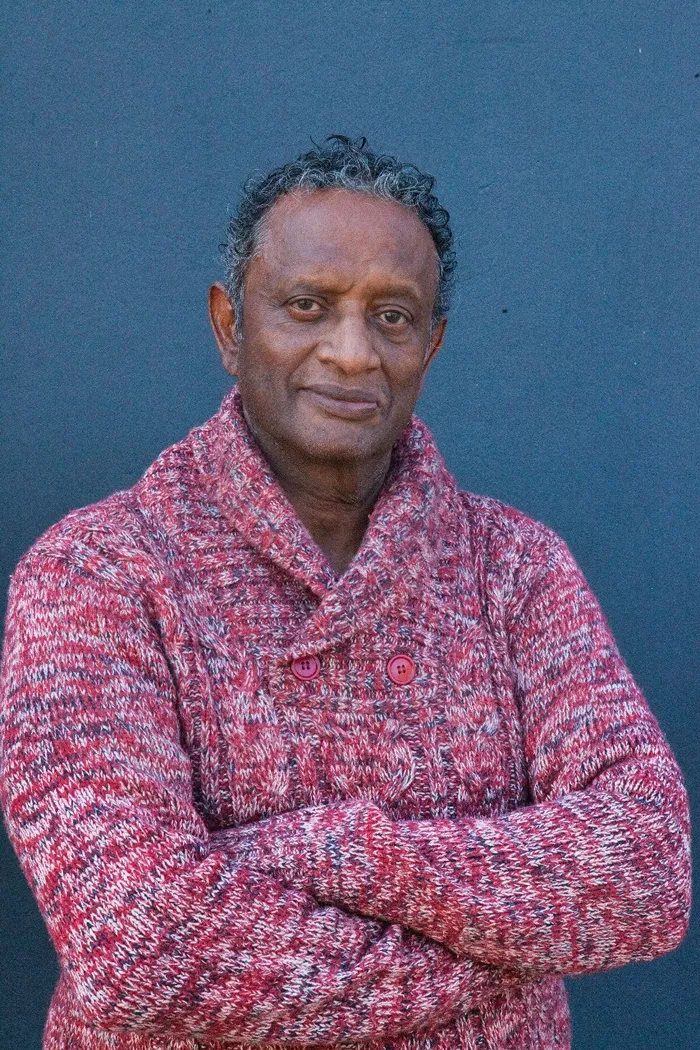
Hassen Lorgat is a social justice activists specialising in media and advocacy and the impacts of mining on the communities and the wider environment.
Image: Supplied / Hassen Lorgat
* Hassen Lorgat is a social justice activists specialising in media and advocacy and the impacts of mining on the communities and the wider environment.
** The views expressed do not necessarily reflect the views of IOL or Independent Media.