

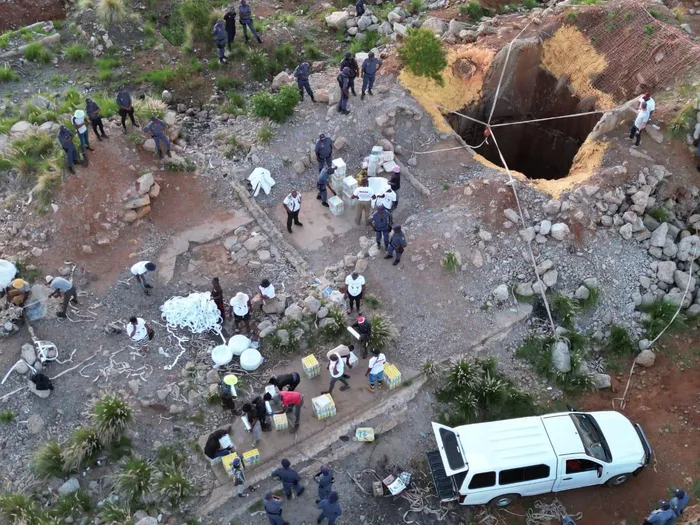
The South African Human Rights Commission says it has identified key human rights challenges in South Africa, from mining disasters and torture to racism, water shortages, and load-shedding.
Image: Supplied
The South African Human Rights Commission (SAHRC) has raised alarm over a series of pressing human rights violations across the country, including from Stilfontein mining tragedies, Zanzou torture incidents, ongoing water shortages, racism, and the impacts of load-shedding.
Speaking during a media briefing in Johannesburg on Tuesday, the Commission released a series of reports highlighting the state of human rights in South Africa.
Dr Martin Nsibirwa, head of research at the SAHRC, said the findings stem from the Commission’s national monitoring conducted during the 2024 and 2025 financial years.
He said the most serious issue identified was the failure by the state and private actors to uphold the rights of people alleged to be in conflict with the law.
“This includes, for example, the Stilfontein case in North West province, where mining-related issues led to the violation of the right to life and access to food,” said Nsibirwa.
In the Stilfontein tragedy, over 78 miners were confirmed dead and 248 were rescued - many in critical condition - from abandoned mine shafts.
The deaths followed a police crackdown under Operation Vala Umgodi, a government initiative targeting so-called illegal miners.
Another high-profile case involved the Zanzou Bar and Lounge in Pretoria.
Disturbing videos surfaced last year showing nightclub bouncers violently assaulting patrons who allegedly failed to pay their bills.
The footage depicted severe human rights violations, including kidnapping, sexual assault and attempted murder, with victims filmed naked, hogtied and beaten.
In February this year, police arrested a 41-year-old Congolese man in connection with charges of assault and compelled rape related to the nightclub.
Nsibirwa said the second most pressing issue was the inadequate provision of basic services, particularly healthcare and water access.
“These are among the most complained about issues we receive,” he said.
“Water is fundamental to human rights, yet we continue to see challenges, including inconsistent supply due to ageing infrastructure and cost-recovery mechanisms that fail to meet the needs of the poor.”
He said that racism remains widespread, pointing out several high-profile incidents involving private individuals.
“Xenophobia, fuelled by misinformation and disinformation, also continues to be a concern,” he said.
Other issues flagged include cases of food poisoning, problematic public statements made during election campaigns, and a significant number of human rights complaints emerging from Limpopo and North West provinces.
He said climate change was also a concern as a growing human rights threat.
Nsibirwa said the flooding in KwaZulu-Natal, Eastern Cape and Limpopo has endangered the right to life and affected access to housing.
He also criticised municipal by-laws in Cape Town, Johannesburg and Durban that criminalise petty offences, which he said disproportionately affect marginalised communities.
“These petty offences essentially criminalise poverty,” he said.
He said election monitoring revealed inadequate inclusion of persons with disabilities and the elderly in electoral processes.
“The commission released a report following the elections, and we shared that with the IEC, hoping that in the future issues arising out of that will be addressed.”
Another serious concern identified was bullying in schools.
Nsibirwa said 68 percent of complaints received from schools related to bullying, calling it a key area for early intervention.
“Another issue which we thought is very important for us to highlight, which can have a negative impact on human rights many years down the line, is the issue of bullying in schools…and so if we have to address human rights, I think that's a place where we have to start with.”
He also addressed the ongoing issue of load-shedding and power cuts, which he said affect basic rights to education and healthcare.
“Only 51 percent of health facilities have backup systems. That means 49 percent don’t,” he said.
“And 30 percent of schools have no access to backup power. So when the power goes out, fundamental rights are at risk.”
IOL Politics