

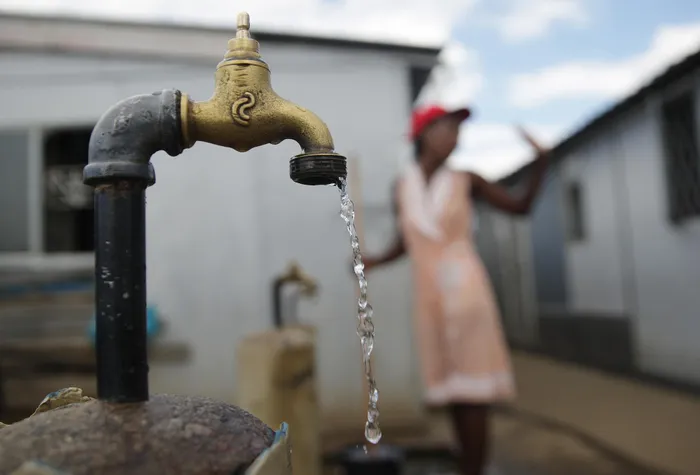
Many parts of Gauteng are facing severe water shortages.
Image: Independent Newspapers Archives
Life in South Africa’s economic heartland has become increasingly difficult as large parts of Gauteng continue to endure prolonged water outages, leaving households, schools and businesses scrambling to cope.
In recent weeks, residents in Midrand, Alexandra, Melvern, Fourways, Laudium and parts of Tshwane, including Attridgeville, have gone days without running water. In some communities, the disruptions have become so severe that basic routines such as cooking, bathing and keeping schools open have been brought to a halt.
Rand Water, the bulk water supplier to Gauteng, says the crisis is not the result of empty dams but of a water system under sustained pressure from high demand, ageing infrastructure and a series of recent operational failures.
At a bulk level, water availability remains relatively stable. The Integrated Vaal River System, which supplies Gauteng, was sitting at about 83.6% based on mid-February figures, with the Vaal Dam at around 61.7%. As recently as January 2026, the system was close to full capacity.
However, this apparent stability has masked serious vulnerabilities further down the supply chain. Rand Water has confirmed that reservoir levels in several key systems dropped below target in late January and early February, triggering intermittent outages, particularly in Johannesburg.
Rand Water spokesperson Makenosi Maroo expressed increasing concern over the sustained high water consumption by Johannesburg and Tshwane, which continues to strain the overall supply network.
“As a result, Rand Water is overstretching its assets to accommodate the high consumption,” Maroo said.
She acknowledged the slow recovery of supply in areas such as Midrand, Laudium, Atteridgeville and surrounding parts of Tshwane, as well as Tembisa in Ekurhuleni, following a recent power outage. While some interruptions persist in Tshwane and Ekurhuleni, she said these were less severe than the ongoing disruption in Midrand.
Rand Water said it was engaging continuously with the metros to stabilise the situation.
“The Midrand area has a long-standing problem of high water consumption, exacerbated by the growth of both formal and informal settlements. This is well understood by Johannesburg Water, which has embarked on upgrading the Midrand systems to augment supply in the area,” Maroo said.
The current crisis was triggered by a major electrical failure at Rand Water’s Zuikerbosch treatment plant in late January, which caused widespread supply disruptions across Johannesburg, Tshwane and surrounding areas. Although pumping capacity has since been restored, recovery has been uneven.
According to the City of Johannesburg, the situation was compounded by a series of cascading failures. Emergency repair work at the Palmiet Pump Station on January 26 required the isolation of critical infrastructure. This was followed by a power trip at Zuikerbosch on January 27, affecting the Eikenhof and Zwartkoppies supply systems and sharply reducing the volume of water entering the Palmiet system.
On January 31, another power failure struck the Palmiet Pump Station, further destabilising supply. A leak identified at the Klipfontein Reservoir on February 1 added to the pressure. Although repairs were completed and commissioning finalised by February 2, reservoir levels serving Midrand and the surrounding areas had already dropped to critically low levels.
Areas affected included Erand, President Park, Grand Central, Rabie Ridge and Diepsloot.
Johannesburg mayor Dada Morero has since assured residents that the city’s water facilities are now back on track, with gradual improvements recorded in several reservoirs. Low-lying areas have begun receiving water, while supply to higher-lying areas is expected to improve as the system stabilises.
Beyond technical failures, Rand Water has raised an alarm over consumption levels across Gauteng’s major metros. The utility currently produces about five billion litres of water a day, with 77% consumed by Johannesburg, Tshwane and Ekurhuleni.
Johannesburg’s daily demand stands at about 1,717 million litres, more than 360 million litres above its efficiency target. Tshwane is exceeding its limit by roughly 189 million litres a day, while Ekurhuleni is also over its allocation. Overall, demand across the system is estimated to be around 20% above sustainable levels.
Per capita water use in Gauteng averages about 279 litres per person per day, well above international benchmarks for water-stressed regions. Leaks, illegal connections and ageing infrastructure continue to worsen the problem, forcing Rand Water to push its systems beyond intended capacity.
Midrand, in particular, has been flagged as a long-standing pressure point due to rapid population growth. While infrastructure upgrades are underway, Rand Water has warned that these interventions will take time to deliver meaningful relief.
For residents, the impact has been immediate and deeply personal. In some areas, roaming water tankers have become the only reliable source of supply, with municipalities warning that deployments may change daily based on need.
Schools have also felt the strain. One Midrand school recently informed parents that classes could not resume fully due to ongoing water outages, urging families to keep children at home where possible because of hygiene concerns. Although staff remained on site and learning materials were shared online, the disruption underscored how quickly water shortages spill over into education and childcare.
Parents and residents have voiced growing frustration. Modiegi Modise said the knock-on effects were becoming unbearable.
“When children can’t go to school, parents are forced to stay at home as well,” she said. “We go for days without water to bathe or even flush toilets. Now, schools are saying children must stay at home. We can’t leave them alone, so we miss work and go to work without having bathed.”
Rand Water and the City of Johannesburg have urged residents to use water sparingly as the system continues to recover. While officials maintain that pumping is now at full capacity, they warn that sustained high consumption could slow recovery and trigger further outages.
“We acknowledge the inconvenience caused to residents, businesses and institutions, particularly in Midrand,” the city said. “Restoring system stability and a reliable water supply remains our highest priority.”