

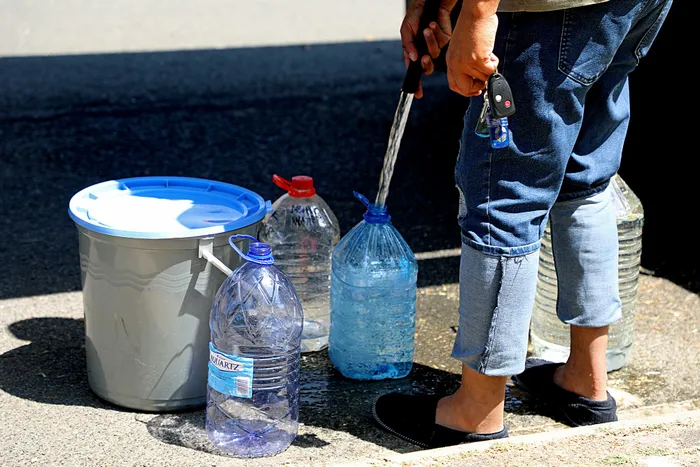
Rand Water says excessive water consumption in Johannesburg and Tshwane has worsened supply disruptions.
Image: File/ Timothy Bernard/ Independent Newspapers
South Africa’s water crisis is intensifying, with Gauteng’s bulk supply system under growing strain and coastal towns such as Knysna edging dangerously close to running dry. While the causes vary, from soaring urban demand to ageing infrastructure and uneven rainfall, the message is the same: consumption is outpacing supply, and the system has little room left to absorb shocks.
In Gauteng, Rand Water has begun restricting supply to some of the province’s largest metros, including Johannesburg and Tshwane, warning that persistently high usage is pushing the bulk system beyond its design limits.
The utility said prolonged overconsumption has forced it to operate under sustained pressure, leaving parts of the network vulnerable to failures and slow recovery times.
“As a result of sustained high demand, Rand Water will be reducing water supply to high-consuming municipalities to restore supply in affected areas and stabilise the bulk water supply system,” it said, calling on municipalities and residents to urgently curb usage.
Johannesburg Mayor Dada Morero on Monday acknowledged the scale of the challenge, saying rapid urban growth has outpaced water and sanitation infrastructure. He confirmed that the city is building a new reservoir in Midrand, an area that has been particularly hard hit by outages.
“Johannesburg has grown, and the city must catch up in terms of water and sewage infrastructure,” Morero said. “We do admit to challenges, but we are working on this. We are also aware of the residents who are affected and have committed to dealing with backlogs and infrastructure development.”
Morero said the system has been slow to recover and that full stabilisation could take up to 10 days, with normal supply expected to resume later in the week. He urged residents across the province to use water sparingly to ease pressure on the system.
In Tshwane, the city has confirmed that it currently draws about 861 megalitres of water a day from Rand Water, a figure that fluctuates with seasonal demand. City spokesperson Lindela Mashigo said the situation reflects a national challenge rather than a failure unique to the capital.

Water outages in Midrand and Laudium have sparked protests as Rand Water blames above-normal consumption and system failures for worsening shortages across the province.
Image: Picture: Timothy Bernard / Independent Newspapers
“Water demand exceeding supply is a national crisis in South Africa, not just a Tshwane issue,” Mashigo said, citing population growth, expanding informal settlements, backyard dwellings and changing weather patterns as major drivers.
The rapid spread of new housing developments has also raised concerns about whether bulk infrastructure has kept pace. Tshwane maintains that all land-use applications go through formal planning processes and that developers are required to contribute to bulk infrastructure through legally binding agreements.
Despite this, residents in several parts of the city continue to report intermittent supply and low pressure, particularly during peak hours, suggesting the system is struggling to cope with everyday demand.
On Monday, Tshwane Deputy Executive Mayor and Finance MMC Eugene Modise said the city had spent 46% of its year-to-date capital budget by the end of the second quarter, an improvement from 35% during the same period last year. He pointed to several completed projects, including water pump station upgrades, sewer pipeline replacements and bulk water pipeline refurbishments, alongside electricity, road and housing-related infrastructure.
IOL reported over the weekend that in Johannesburg, the crisis has proven more difficult to resolve, despite hundreds of millions of rand being invested in upgrades. Johannesburg Water has confirmed that major projects are underway in the Brixton, Crosby and Hursthill supply district, which serves key institutions such as Helen Joseph and Rahima Moosa hospitals, the University of Johannesburg and the SABC.
The R306 million upgrade of the Brixton reservoir, tower and pump station is nearing completion and is currently being tested. A separate R311 million New Crosby bulk infrastructure project is scheduled for completion in October and is about 36% complete. Additional work includes the refurbishment of the Hursthill 1 and 2 reservoirs to address leaks and ageing pipework.
Despite these investments, areas such as Midrand and parts of western Johannesburg remain heavily affected by outages. While additional water tankers have been deployed, residents and businesses say supply remains inconsistent and unreliable.
The social cost of prolonged shortages is becoming increasingly visible. Cosatu in Gauteng has warned that ongoing outages are disrupting daily life and creating serious health risks.
“The continued failure to provide water has severely affected families’ ability to cook, clean and maintain proper hygiene,” the federation said, adding that children are among the worst affected, with some missing school as households spend hours searching for water.
Civil society groups have also criticised how the crisis is communicated. WaterCAN executive director Dr Ferrial Adam said information reaching residents is often fragmented, overly technical and filtered through political messaging, particularly in an election year. She has called for daily, time-bound public briefings in plain language to explain outages and recovery timelines.
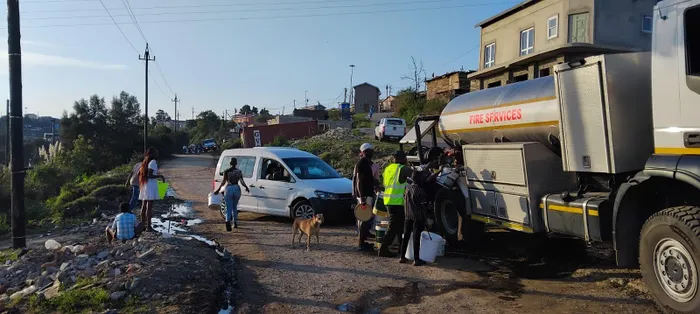
A fire truck delivers water to Knysna residents amid the water shortage crisis
Image: SANParks/Supplied
Schools have also been forced to adapt. Several in Gauteng have asked parents to send water with their children or to keep them at home. Pinnacle College Founders Hill told parents that the water supply had not yet been restored and that communication from authorities remained limited. Other schools, including Little Arcons, issued similar messages citing hygiene concerns.
While Gauteng grapples with overconsumption and infrastructure strain, Knysna in the Western Cape faces a more immediate threat: running out of water altogether.
The town’s main storage, the Akkerkloof Dam, has hovered between 18% and 22% capacity in early 2026, leaving as little as two to three weeks of supply at current usage levels. Smaller balancing dams offer limited relief.
Knysna Municipality has declared a local water crisis and imposed Level 4 water restrictions, among the strictest in its drought framework. Residents, businesses and visitors have been urged to drastically cut consumption to avoid a “Day Zero” scenario.
The shortage has been driven by below-average rainfall, low river flows, ageing infrastructure, high water losses due to leaks and vandalism, and sustained consumption. The national government has stepped in with R20 million in emergency funding to support borehole development, leak repairs and system optimisation, though officials warn the situation remains fragile.