

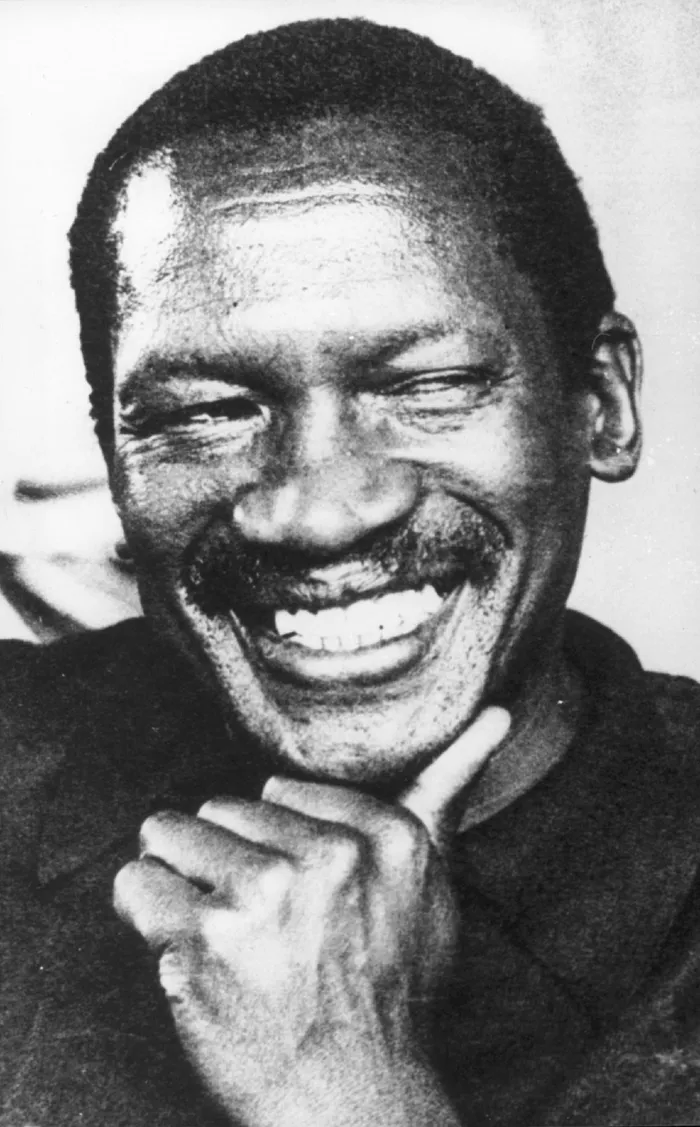
Sobukwe legacy honoured amid backlash: Family and PAC defend name change.
Image: Handout/ Supplied
Anger and pride have collided in the Karoo as Graaff-Reinet officially becomes Robert Sobukwe Town, with the grandson of the legendary anti-apartheid activist admitting the moment is as painful as it is powerful.
"I do appreciate that they at least gave my grandfather's legacy an opportunity to live on and for more people to know about him," said Tsepo Sobukwe
Speaking to IOL, his voice was heavy with emotion as backlash erupted across social media and local communities.
The change of the town's name, which was founded in 1786, was formally gazetted by the Department of Sport, Arts and Culture after approval by Minister Gayton McKenzie.
This is part of 21 geographical name changes across the country.
The move forms part of a broader effort to redress colonial and apartheid naming legacies.
For the Sobukwe family, the decision is personal and painful in equal measure.
"The backlash was expected from my side. Graaff-Reinet is a small town that carries a lot of apartheid legacies.
"People in town that control the means of job creation, employment, things of that nature, are still in the hands of a minority in this country."
But even he was taken aback by the scale of resistance.
"What shocked me was how some people, particularly the youth, were also sounding opposition to the name change.
"But from the usual suspects, I did expect backlash and it went almost like a script," he added.
He touched on a broader national tension: how to memorialise past leaders without inviting future erasure.
"There are always issues with memorialising people and leaders, using statues and names because another political power can come along and wipe all that out."
Yet despite the bitter online debates and protest letters, Sobukwe believes there is good in the decision.
"But I do appreciate that they at least gave my grandfather's legacy an opportunity to live on and for more people to know about him.
"I'm kind of torn about it.
"It is very painful to read all the backlash and all the negative things that are being said about it but I'm happy that his legacy will be remembered."
He also urged the government to focus on the future, saying that names matter, but they should not distract from the country's deeper challenges.
"People must embrace change. We come from a very painful past and a lot of the names were forced upon us, and we were not part of the decision-making process."
However, Democratic Alliance member and Deputy Minister of Electricity and Energy, Samantha Graham-Mare has come out strongly against the change.
She argued that it does not reflect the will of the local community.
"While Robert Sobukwe was a very strong figure who played a significant role in South African history, he's representative of only a portion of the residents of Graaff-Reinet," she said.
She insisted the town's existing name carries deep meaning for its residents.
"The name Graaff-Reinet is deeply entrenched in the community, and one political role-player should not be recognised over anyone else within our town."
She described the renaming as politically driven rather than restorative. According to her, local voices were sidelined.
"Our feeling is that the choice of name was not made by anybody who comes from the town.
"It was done as a political act, not as a form of redress," she said.
She warned the consequences could be severe and revealed that legal objections are already under way.
"Once the name is gazetted, you have 30 days to make an objection to the minister.
"So, we are busy with objection letters, and we believe there is a fundamental flaw in the gazette that local attorneys are going to challenge. We have until March 8 to submit objections."
At the same time, the Freedom Front Plus (FF Plus) has weighed in, calling on Afrikaners and fellow South Africans to oppose the renaming.
"The party calls on the people of Graaff-Reinet, the broader Eastern Cape and the rest of South Africa to ignore the name change," said Dr Corné Mulder, the party's leader.
"It has become customary to expect Afrikaners, and only Afrikaners, to sacrifice their heritage on the altar to appease the rest.
"We refuse to keep doing it." He insisted the original name carries national significance.
"So, the party implores everyone who values the name Graaff-Reinet to remain loyal to the name, which is inextricably part of everyone in the country’s shared heritage and national identity," he said.
He claimed that the renaming would create division while urgent national issues are ignored.
The party founded by Robert Sobukwe himself in 1959 has also entered the fray, defending the change.
The Pan Africanist Congress of Azania (PAC) accused critics of clinging to the past.
"The continued rejection by the DA and FF Plus of the renaming of Graaff-Reinet to Robert Sobukwe Town reflects a lingering fear of the ideas Sobukwe represented."
The PAC argued that this fear runs deep, reminding South Africans that: "Sobukwe represented ideas so powerful that even the apartheid regime treated him as a prisoner unlike any other."
He was infamously subjected to solitary confinement on Robben Island, separated even from other political prisoners.
"This rejection is not about process or consultation, it is a resistance to decolonisation, historical truth and the inevitable dismantling of apartheid symbols," the party said.
IOL News