


ANC secretary general Fikile Mbalula has admitted that they failed to stop the SACP from contesting elections independently.
Image: X/FikileMbalula
ANC secretary-general Fikile Mbalula has admitted the party “failed” to convince the SACP not to contest elections independently, but said the ANC still opposes the decision and will announce how it plans to respond ahead of the upcoming local government elections.
He made the remarks during a media briefing on Friday at Birchwood Hotel and Conference Centre.
The ANC’s top leadership is set to convene a special National Executive Committee (NEC) meeting to address the strained relationship between the ANC and the SACP following the latter’s decision to contest elections independently.
“We met with the Communist Party before and after the resolution of their congress, which empowers the SACP to contest elections,” Mbalula said.
“We have engaged with the Communist Party after that resolution and have failed to persuade it not to stand alone. As the ANC, we circulated a perspective that was adopted by the NEC.”
He said the perspective was outlined in a General Council discussion document, highlighting the dangers and challenges posed by the SACP’s decision.
“As the ANC, we are opposed to the party standing on its own in this election. Nonetheless, we failed to persuade them, as they retain their independent authority to make their own decisions. That decision stands.”
Mbalula said the key question - why the SACP chose to contest elections independently - can only be answered by the party itself.
“In recent by-elections, the party has already stood on its own, not in support of the ANC. This was not a test, but an implementation of their decision,” he said.
He added that the ANC’s General Council mandated the NEC to determine how the party should respond to the development while maintaining alliance relations.
“We are committed to the National Democratic Revolution (NDR) and common manifesto platforms. However, for the first time in a democratic dispensation, we will not be contesting power solely through the ANC platform.”
Mbalula also addressed the issue of dual membership, saying that while the ANC constitution allows it, members who stand against the ANC in elections would forfeit their membership.
“The constitution allows dual membership, but it also states that anyone who contests elections against the ANC cannot remain a member,” he said.
“This raises critical questions about maintaining cohesion within the alliance. We are not talking about breaking the alliance, but about managing a situation where an ally is contesting elections independently.”
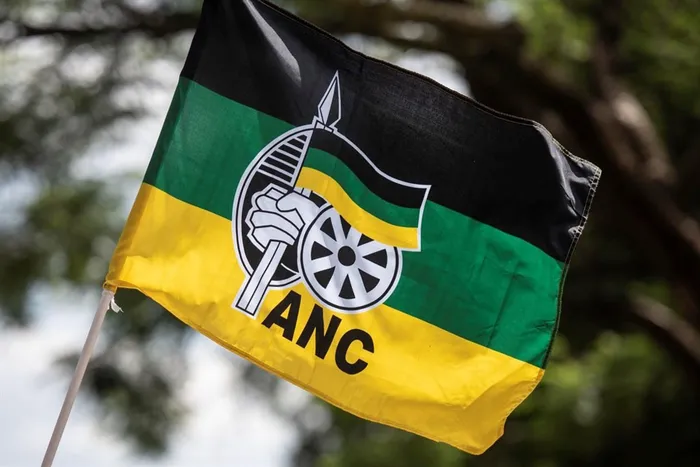
The ANC faces a pivotal moment as its alliance partner, the SACP, moves to contest elections independently.
Image: Independent Newspapers Archives
He said the ANC’s primary concern is how to manage relations with the SACP both during and after the elections.
“We have moved past the stage of agreeing or disagreeing. The issue now is how we relate to this decision and its practical implications.”
Mbalula emphasised that the NEC meeting would focus on these practical considerations, including candidate selection and campaign dynamics.
“You cannot have the same individuals serving two organisations in competition. That is a practical matter that must be resolved,” he said.
Despite tensions, he reiterated that there is no mandate to dissolve the alliance.
“There is no decision to break the alliance. Our structures have instructed us to deal with the practical realities, not to end the relationship.”
He added that coalition politics, an emerging feature of South Africa’s political landscape, must also be addressed in the ANC’s strategic framework.
“Coalition politics is a new phenomenon that the ANC must properly characterise and respond to,” he said.
The SACP has long indicated its plans to contest the 2026 national elections independently of the ANC.
A key factor is the ANC’s coalition with the Democratic Alliance (DA) in the current Government of National Unity (GNU).
SACP general secretary Solly Mapaila has repeatedly criticised the GNU, saying it does not represent the interests of black South Africans and the working class.
Meanwhile, in an opinion piece published on IOL, Dr Reneva Fourie said: “This week, as we commemorate Solomon Mahlangu, executed by the apartheid regime on 6 April 1979, and the assassination of Chris Hani on 10 April 1993, the contrast between past sacrifice and present political reality is stark.
“Mahlangu embodied the courage of the working class and youth in the armed struggle. Hani, as general secretary of the South African Communist Party, member of the African National Congress national executive committee, and chief of staff of Umkhonto we Sizwe, epitomised the principle of dual membership that bound communists and nationalists in a common revolutionary project.
“Yet today, the ANC leadership treats its longstanding alliance partner, the SACP, as enemy number one while embracing neoliberal and right-wing parties such as the Democratic Alliance and Freedom Front Plus.
“The ANC has always constituted an ideologically contested terrain, a multi-class nationalist movement whose internal contradictions reflect the broader class dynamics of South African society.”
Fourie, a policy analyst specialising in governance, development and security, said tensions with the SACP, rooted in scientific socialism, have always existed.
Nonetheless, the two converged as the ANC saw the black working class as the primary motive force of national liberation. Racial oppression under colonialism and apartheid made national consciousness essential before class consciousness could develop. Communists recognised and adapted to this reality.
She said the International Socialist League, founded in 1915, and the Communist Party of South Africa after 1921, contested elections independently or with the Labour Party until the 1950 Suppression of Communism Act.
However, following a Comintern decision, the CPSA at its seventh conference (December 29 1928 to January 2 1929) resolved to work within national organisations such as the ANC while maintaining its independence. This strategy paved the way for the alliance of communists, nationalists and labour, legitimising dual and triple membership.

SACP general secretary Solly Mapaila has long criticised the GNU, arguing that it does not represent the interests of the Black people.
Image: Itumeleng English / Independent Newspapers
This rationale was rooted in material conditions. Colonial capitalism entrenched racial and gender discrimination so deeply that only the broadest united front could dismantle it. National unity was needed before class unity. When racism and state repression defined life, the SACP put aside immediate socialist agitation in favour of national liberation without abandoning its long-term goal.
That disciplined approach shaped the SACP’s 1993 Central Committee paper, “The role of the SACP in the transition to democracy and socialism”.
“As from the 1994 elections, the party ran under the ANC banner but reserved the right to assume more autonomy ‘if the national liberation struggle is hijacked by some liberal project, or undermined … or if our NLM unity is broken and the strategic purpose is lost’,” she said.
The paper assessed how bourgeois forces operate in liberation movements after state power is gained.
Since 2022, she said, those conditional warnings have become increasingly relevant. Tensions within the ANC-SACP-Cosatu alliance have intensified, reaching a peak at the ANC’s fifth National General Council.
Sections of ANC leadership now openly frame the SACP as a destabilising force.
At a recent funeral attended by ANC national chairperson Gwede Mantashe, he warned, “We in the ANC will force them to choose between SACP or ANC. I am cautioning you, Madoda!”
At the same time, the ANC has deepened coalition arrangements with parties positioned to its right on the political spectrum.
Partnerships with the Democratic Alliance and the Freedom Front Plus have become normalised.
These alliances coincide with and increase the role of the private sector in managing strategic state assets. For many within the alliance and the broader working class, these decisions signal a departure from the movement’s historical commitment to redistribution, social justice and economic transformation.
Persistent unemployment, poverty, inequality and food insecurity remain structural features of the economy.
The SACP has accordingly argued that the working class requires an organised and influential presence within governing structures, precisely because the ANC, as a nationalist movement, is not ideologically structured as a socialist organisation.
This creates legitimate space for ideological divergence, yet the ANC leadership increasingly responds by characterising this reality as confrontational, Fourie wrote.
IOL Politics