

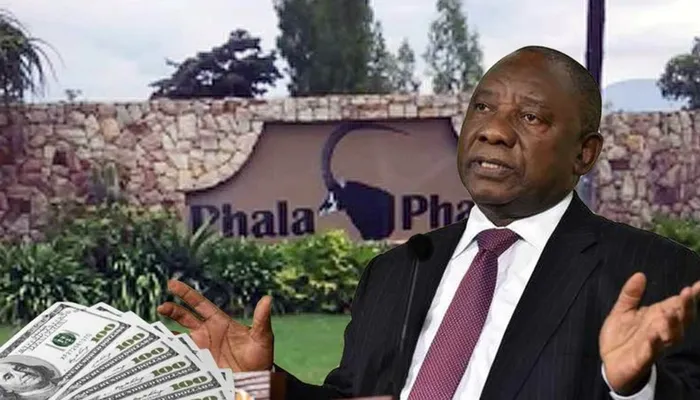
President Cyril Ramaphosa is set to know his fate on Friday when the Constitutional Court delivers its verdict on the matter brought by the EFF.
Image: IOL
A burglary at the Phala Phala farm in Limpopo has evolved into one of the most consequential constitutional tests of South Africa’s democracy, with the Constitutional Court set to rule on whether Parliament acted lawfully in halting an impeachment process against President Cyril Ramaphosa.
On Friday, May 8, 2026, the court will hand down its judgment. Chief Registrar Simoné-Lanique Tjamela confirmed the timing: "Kindly be informed that the judgment in this matter will be handed down at the Constitutional Court on Friday, 08 May 2026 at 10h00."
The ruling comes 521 days after the matter was argued, following a protracted legal and political battle rooted in the February 2020 burglary at Ramaphosa’s Phala Phala game farm – a story initially broken by Sunday Independent.
The incident involved the theft of a large sum of foreign currency, reportedly around $580,000, concealed in furniture at the President’s private residence. Ramaphosa has consistently maintained that the money was a payment from a Sudanese businessman for the purchase of 20 buffalo.
However, the Section 89 Independent Panel, chaired by former Chief Justice Sandile Ngcobo, found significant gaps in that explanation.
The Independent Panel was tasked with determining if sufficient evidence exists to show that Ramaphosa committed a serious violation of the Constitution or the law, or serious misconduct regarding the burglary at his Phala Phala farm.
The Panel concluded that the information placed before it discloses prima facie evidence that the President may have committed several serious violations and acts of misconduct. Key findings include:
The panel noted that the buffaloes remained on the farm long after the alleged transaction and that details of the buyer were not properly recorded.
In November 2022, the panel concluded that there was prima facie evidence that the President may have committed serious violations of the Constitution and the law, and recommended that a full impeachment inquiry be initiated.
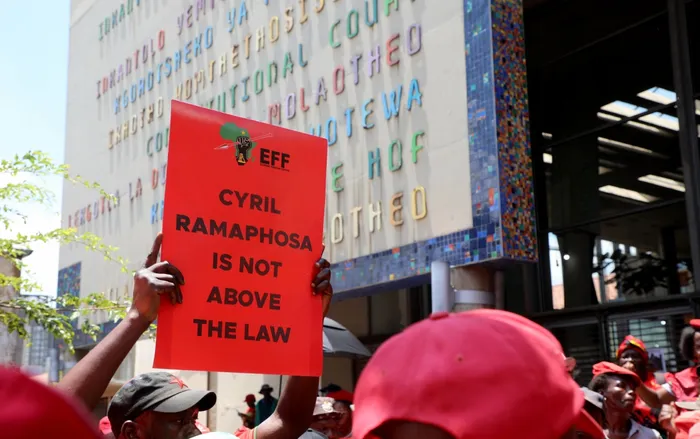
EFF supporters gathered at the Constitutional Court in Braamfontein on November 28, 2025, to demand the release of the Court's Phala Phala judgment.
Image: Timothy Bernard / Independent Newspapers.
Further pressure emerged with the declassification of a report by the Independent Police Investigative Directorate (IPID), which examined the conduct of members of the Presidential Protection Unit.
IPID national head of investigations, Thuso Keefelakae, stated: "Our investigation found that there were some transgressions."
Among the findings: "Major General W.P. Rhoode failed to register or ensure that a case docket of housebreaking and theft was opened."
The report found that Ramaphosa informed Major General Wally Rhoode of the theft shortly after it occurred. Despite the seriousness of the crime, no formal police case was opened at the time. Instead, Rhoode led an internal operation to recover the money.
According to IPID, this operation involved the use of state resources for what was described as a private matter. Investigators also identified the falsification of official documentation, including travel records, to conceal the nature of the operation. In some instances, the President’s name was used to avoid scrutiny.
The report also detailed the handling of suspects. Former Public Protector Busisiwe Mkhwebane said: "They even travelled to Namibia to arrest those people, to beat them and it's very gruesome what they did."
Responding to the report during an oversight visit to Kusile Power Station, Ramaphosa said: "The IPID report is what you would have read. I had nothing to do with it. So, that is a process, as I've always said, processes must play themselves out, and all these matters are being handled by the right institutions, and we must allow those institutions to handle those matters."
Civil society organisations have called for greater transparency. Wayne Duvenage, CEO of the Organisation Undoing Tax Abuse, said: "I do think there are a lot of questions that the president seems to be evading. We shouldn't have this lack of transparency on matters of interest."
Despite the Section 89 panel’s findings, the process did not proceed to a full impeachment inquiry.
On December 13, 2022, the National Assembly of South Africa voted on whether to adopt the panel’s report. The motion failed, with 214 members voting against, 148 in favour, and two abstentions. The African National Congress had resolved internally to oppose the motion.
That vote effectively terminated the impeachment process. The Economic Freedom Fighters challenged Parliament’s decision, arguing that once the panel found a prima facie case, the National Assembly was obligated to proceed with a full inquiry.
In court papers, the party stated it was seeking a ruling that would "uphold the constitution without fear or favour and affirm the principle that no one is above the law."
EFF leader Julius Malema also raised concerns about the delay in delivering judgment, writing to Chief Justice Mandisa Maya: "The matter has become one of the most delayed judgments in the modern history of the Constitutional Court," adding that the delay was "now exceeding 480 days post-hearing, more than five times the maximum standard contemplated by the norms and standards."
He further stated: "The continued delay in this matter risks creating a perception that the Constitutional Court is no longer immune from political pressures."
The declassified IPID report has renewed calls for accountability.
ActionSA national chairperson Michael Beaumont said: "The Phala Phala Report makes serious findings against members of the Presidential Protection Unit. Yet PPU Head Major General Wally Rhoode remains in his position without having been held accountable for clear wrongdoing."
The African Transformation Movement wrote to National Assembly Speaker Thoko Didiza, stating: "It is clear there were efforts to conceal this crime in Phala Phala. We have therefore written to National Assembly Speaker Thoko Didiza, asking her to institute Section 89 proceedings over the Phala Phala theft scandal."
Others have rejected calls for impeachment. Patriotic Alliance spokesperson Steve Motale said: "South Africa cannot afford to be dragged into cycles of manufactured outrage and political theatre. There is a difference between accountability and opportunism, and we are not interested in confusing the two."
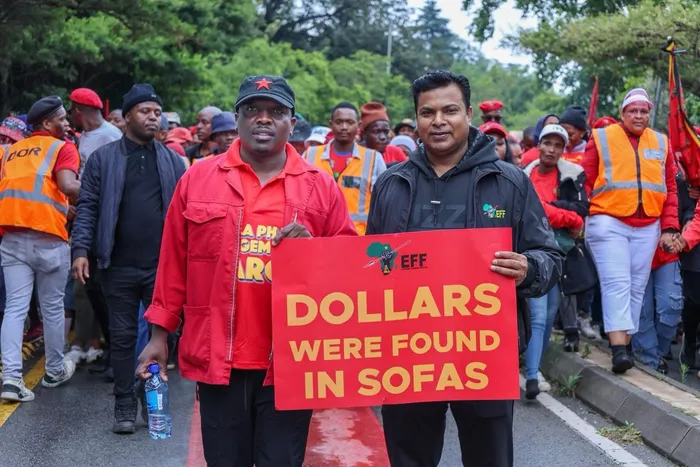
Members of the EFF march to the Constitutional Court demanding a release of the Phala Phala judgment.
Image: EFF South Africa
Party leader Gayton McKenzie added: "We are not going to remove a sitting President based on noise and political games. South Africa needs stability."
The Constitutional Court is not being asked to determine whether Ramaphosa is guilty of any wrongdoing. Instead, it must decide whether Parliament acted constitutionally when it voted against adopting the Section 89 panel’s findings.
If the court rules against Parliament, the report may have to be reconsidered or an impeachment inquiry initiated. If it rules in Parliament’s favour, the process will remain closed.
The political context has shifted since the 2022 vote. Following the 2024 national election, the ANC no longer holds an outright majority in Parliament, potentially altering the outcome of any future vote.
ANC MP Sihle Zikalala said: "Nothing should be hidden from the eyes of the public. We should know exactly what is happening, especially because we are dealing with public entities, public offices, and public funds."
In his most recent State of the Nation Address, Ramaphosa stated: "We must fight crime and corruption, and restore trust in the criminal justice system. Let this message be clear: there will be no impunity for acts of corruption and criminality."
The Constitutional Court’s ruling, scheduled for 10h00 on Friday, will determine whether the parliamentary process that followed the Phala Phala findings complied with the Constitution.
7 Most important findings from Section 89 Independent Panel Report