

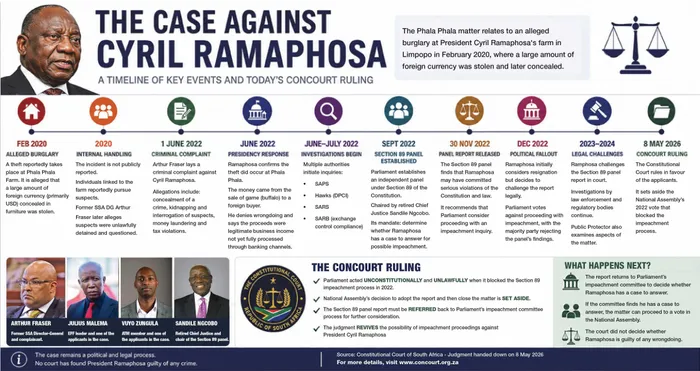
A timeline of the case against President Cyril Ramaphosa involving the Phala Phala saga.
Image: ACM Studio
THIS week's Constitutional Court judgment did more than reopen the Phala Phala matter. It tore through the political and institutional shield that had protected President Cyril Ramaphosa for nearly four years and placed South Africa’s accountability institutions directly in the dock alongside him.
For the first time since the scandal erupted in 2022, the focus is no longer only on the millions of US dollars stolen from a couch at the President’s Limpopo game farm. The spotlight is now shifting toward the institutions that investigated, cleared, defended or remained silent while the controversy consumed the country.
The Constitutional Court ruled that Parliament acted unconstitutionally when it blocked the Section 89 impeachment process against Ramaphosa, finding that the National Assembly’s rejection of the independent panel report was irrational and invalid.
That ruling now sends the matter back to Parliament’s impeachment committee, reopening a process many believed had been politically buried by the ANC’s parliamentary majority in 2022.
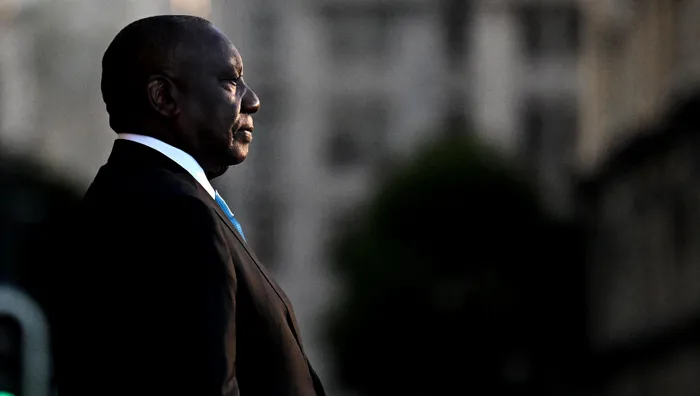
The Constitutional Court judgement on Friday has placed President Cyril Ramaphosa in a difficult position
Image: Phando Jikelo / RSA Parliament
But according to lawyer Barnabas Xulu, what comes next could become one of the most far-reaching accountability processes in democratic South Africa.
“There are various implications in terms of what Parliament needs to do,” Xulu said.
“This also includes other institutions that have played a role in getting to the bottom of this saga will be drawn in. They will need to be made accountable. That includes SARS, Reserve Bank, NPA and Public Protector and SAPS.”
His remarks point to a reality that is becoming increasingly difficult for the political establishment to avoid: Phala Phala may evolve from a presidential scandal into a national institutional crisis.
At the centre of the storm is the Section 89 panel report, chaired by former Chief Justice Sandile Ngcobo, which found prima facie evidence that Ramaphosa may have violated the Constitution, anti-corruption laws and his oath of office.
At the time, ANC MPs used their majority to block further impeachment proceedings. But Friday’s ruling effectively revived the credibility of that report while simultaneously raising serious questions about the institutions that later cleared the President.
“The judgment has endorsed the Section 189 findings,” Xulu said.
“The Reserve Bank, SARS or Public Protector have not been endorsed by any court. Section 189 has been endorsed by the apex court.”
That distinction matters politically and legally.
For nearly two years, Ramaphosa’s allies pointed to findings by the South African Reserve Bank, the Public Protector and prosecutorial authorities as evidence that the President had been exonerated. But the Constitutional Court ruling now changes the hierarchy of credibility surrounding those findings.
Xulu believes those institutions will now face scrutiny over whether they acted independently or politically.
“No one will be able to escape accountability and their integrity will be tested,” he said.
“At least we will have everyone being accountable under one roof so that we get a proper picture.”
The implications are potentially enormous.
Questions that once lingered on the fringes of political debate may now move to the centre of parliamentary inquiry: Did law enforcement agencies deliberately avoid pursuing sensitive leads? Was the movement of foreign currency properly investigated? Did state institutions protect the President from legal exposure? And who authorised the covert operation that followed the farm burglary?
Xulu says even border control authorities may now be forced to produce evidence linked to the original theft.
“The Border Management Authority will have to produce proof that the person entered the country on a particular day.”
He argues that Phala Phala was never simply about hidden foreign currency.
“People have been immune to different institutions. It was not the President doing this on his own. Many other people were involved in concealing this and all that information will need to come out.”
Xulu directly questioned the conduct of several senior officials and institutions.
“What did Shamila Batohi do as the head of NPA? What did the police commissioner do? What did the head of SARS do? What did Lesetja Kganyago do? What did the Public Protector do? They all have to answer questions.”
For political analyst Professor Ntwanano Mathebula, the ruling represents both a constitutional victory and a devastating indictment of Parliament’s failures under Ramaphosa’s presidency.
“Firstly, we welcome the ruling by the Constitutional Court. It's a landmark judgment,” Mathebula said.
“It is a sad day for President Cyril Ramaphosa. It is a sad day for the African National Congress. And it's indeed a sad day for the National Assembly and the Speaker.”
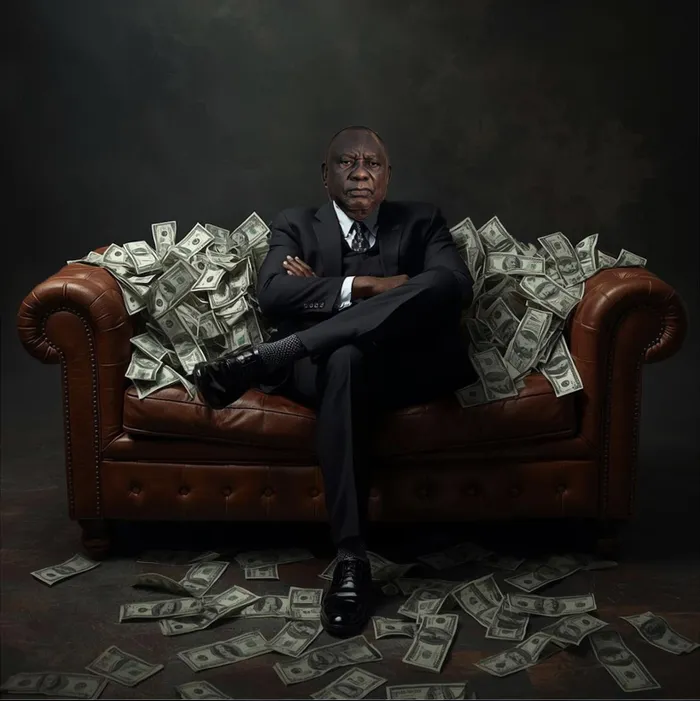
Phala Phala scandal resumed to haunt Ramaphosa following the Constitutional Court ruling on Friday, leading to the EFF calling for his resignation.
Image: IOL Graphics / Shaakirah Lagadien
According to Mathebula, the judgment exposes a deeper structural problem within South Africa’s parliamentary democracy: the dominance of party loyalty over constitutional oversight.
“What the judgment suggests is that the National Assembly continue to show cracks and loopholes in playing their role of holding the executive to account.”
He said Parliament repeatedly fails because MPs often protect party interests instead of fulfilling constitutional obligations.
“So what the judgment says is that this whole notion of majoritarian politics is what characterises our Parliament, where decisions are taken not out of rationality and proportionality, but because of simple numbers.”
That criticism echoes long-standing concerns about how Parliament handled not only Phala Phala, but also state capture, Nkandla and other scandals involving executive accountability.
Mathebula believes the Constitutional Court ultimately rescued the integrity of the Constitution itself.
“It is a win for the constitution, which is 30 years old. It is a win for the principle of accountability. It is a win for the principle of consequentialism.”
But he also warned that South Africa has become dangerously dependent on the judiciary to enforce political accountability.
“Why is it that every time we need to hold the executive to account, we should take them to court? It should not be like that.”
The judgment now opens a politically volatile new phase.
Unlike in 2022, the ANC no longer commands a comfortable parliamentary majority. The Government of National Unity has fundamentally altered the balance of power inside Parliament, raising uncertainty over how coalition partners may vote if impeachment proceedings intensify.
Mathebula says that changes everything.
“By the time this issue was brought up, we were not in the GNU yet. And now the balance of powers is different.”
He specifically pointed to the Democratic Alliance’s indication that it would not support wrongdoing simply to protect the ANC.
“And I guess that is something that other political parties within the GNU should do as well.”
One of the most politically explosive questions now looming is whether any future impeachment-related vote could be conducted through a secret ballot, potentially allowing ANC MPs to break ranks without fear of party retaliation.
“That is something that we want to see,” Mathebula said.
For Ramaphosa personally, the judgment may become the defining crisis of his presidency.
The President has spent years attempting to politically contain the scandal while maintaining an image of constitutionalism and ethical governance. But Friday’s ruling has reignited the scandal at the highest possible legal level.
Mathebula believes the political damage may now be irreversible.
“The Phala Phala scandal is yet to go away. President Ramaphosa will have this cloud, this Phala Phala saga to his grave,” Mathebula said.
He added that the credibility of institutions that previously cleared Ramaphosa has also now been severely weakened.
“We had institutions such as SARS, such as the Public Protector, clearing him of any wrongdoing. And we are not saying that he's guilty of something, but the Constitutional Court, which is the apex court, says there's prima facie evidence of wrongdoing.”
That contradiction, he said, raises troubling questions about the state of South Africa’s accountability architecture.
In many democracies, a ruling of this magnitude would trigger immediate political resignation pressure. Mathebula says South Africa may now be approaching that point.
“In a different country, in a different setting, that is where you would see a President resigning.”
Yet Xulu believes resignation could ultimately weaken the accountability process by allowing institutions to escape full scrutiny.
“I pray Ramaphosa does not resign and goes through the impeachment process to get all of these agencies in one room,” Xulu said.
“Resignation might make it not seem important for the process. He must not resign.”