Motsoaledi: Health system needs overhaul
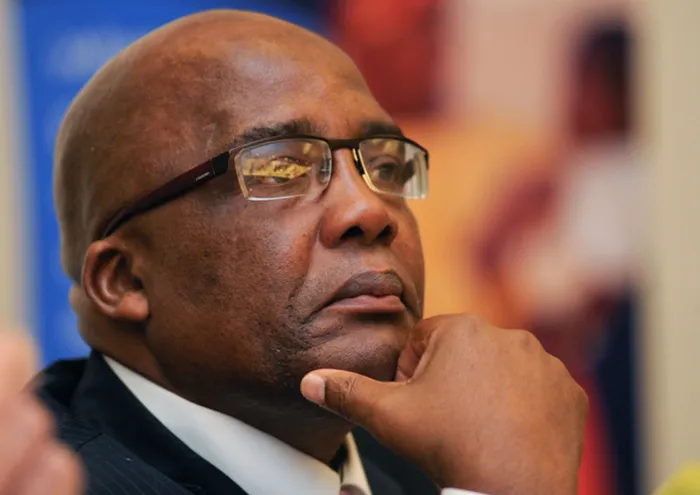
Health Minister Dr Aaron Motsoaledi says there is no evidence so far that a Nigerian doctor who worked at the BJ Vorster Hospital, in the Eastern Cape, is a bogus doctor. Photo: Independent Newspapers Health Minister Dr Aaron Motsoaledi says there is no evidence so far that a Nigerian doctor who worked at the BJ Vorster Hospital, in the Eastern Cape, is a bogus doctor. Photo: Independent Newspapers
Cape Town - South Africa must overhaul its entire health care system and move towards primary health care, Minister Aaron Motsoaledi said in Parliament on Wednesday.
Motsoaledi said in a briefing to the portfolio committee on women, children and people with disabilities that people were going straight to hospitals for treatment.
“We need to overhaul the whole health care service and move it towards primary health care because some need to be treated at clinics,” he said.
“People in South Africa are not utilising clinics. They are utilising tertiary hospitals. This not how health care must be conducted. You don't wake up and go to the highest hospital. You start at clinics.”
Most people who went to the Chris Hani Baragwanath Hospital were not supposed to be there, he said.
“This is one of the biggest hospitals in the southern hemisphere. You don't just wake up and go there. This causes overcrowding, it causes congestion, it causes nurses to have nerves fraying and doctors to be angry.”
Motsoaledi said he felt “disturbed” when he recently addressed a gathering of traditional leaders.
“One of them stood up and said: ‘Minister you are forcing us to go to clinics. We don't want to go to clinics, we want to go to hospitals’.”
“I got very scared. That type of health care doesn't survive anywhere. In fact one of the reasons health care is so expensive in South Africa is because of that.”
The health care system was unsustainable, “extremely expensive”, curative and was “hospicentric”.
“We need to launch a massive primary health care campaign in South Africa. In Britain in terms of the National Health Service, no one goes to hospital unless they are referred by a general practitioner at primary health care level. Otherwise they will turn you back home. In South Africa if you turn anyone away it will be headlines.”
In the next six months Motsoaledi would appoint four key people in each district to deal with primary health care, maternal mortality and infant mortality.
“One of the ways is to take the doctors out of the hospitals and put them in clinics,” he said.
He also told the committee that vulnerable young women were engaging “sugar daddyism” and as a result were becoming infected with HIV.
Surveys showed that early on in life there were more HIV-positive males than females, but when sexual activity started, females with HIV started “jumping up”.
Later on in life however, the infection rate of the males increased, meaning that young women suffer the brunt more than young men.
“There is only one explanation - sugar daddyism,” Motsoaledi said.
“It shows that older men are having sex with young girls, from that belief that if you sleep with a virgin, etcetera.”
He referred to a school in Limpopo where 57 girls between the ages of 13 and 15 had become pregnant.
“It means that they slept with each other without condoms. It is not only pregnancy but also HIV,” he said.
Most of the girls who became pregnant were orphans whose parents had died of HIV.
“They are easy prey for men who come with money,” he said. “Because they are poor. They sleep with them then they fall pregnant. It becomes a vicious cycle.
“If your parent dies of HIV/Aids, you are likely to die of HIV/Aids.”
Abortions were another problem with women using it as a form of contraception. Since the Termination of Pregnancy Act in 1997, 702 354 young people had committed abortions.
“It is now going a little bit down. We suspect quite a number of institutions are overwhelmed. They are no longer doing it.
“What is making these young kids commit abortions? It means no family planning or they are not practising it or they have forgotten about it, despite the fact we are distributing condoms,” said Motsoaledi. - Sapa