

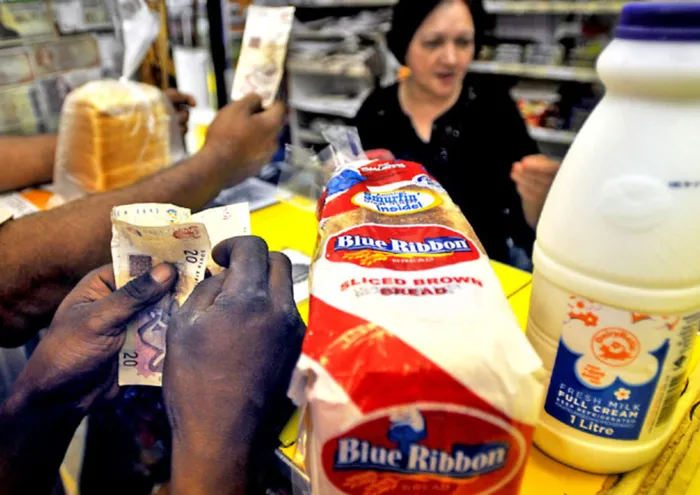
Cape Town-111213-Food prices are soaring, leaving people seriously stressed and short of cash. Rose Corner Cafe Bo-Kaap, Cape Town. Owner; Julaiga Jamalloodien. Reporter: Lynnette, Photo:Ross Jansen Cape Town-111213-Food prices are soaring, leaving people seriously stressed and short of cash. Rose Corner Cafe Bo-Kaap, Cape Town. Owner; Julaiga Jamalloodien. Reporter: Lynnette, Photo:Ross Jansen
Consumers looking to fill their shopping trolleys this festive season will pay more for most food items, from chicken and red meat to vegetables.
High prices have been fuelled by the rise in diesel and paraffin prices, the effects of climate change and a critical maize shortage. And economists warn prices will continue to rise in the new year.
Shoppers interviewed by the Cape Argus said they were spending hundreds of rand more a month on food compared with last year.
Statistics SA has food inflation at 10.7 percent and it is predicted to hit 14 percent by mid-2012 before declining. But a decline does not mean lower prices, simply that prices will drop at a slower rate, say analysts.
On Wednesday, Stats SA said the CPI (consumer price index) or consumer inflation had risen to 6.1 percent, breaching the Reserve Bank’s 3 to 6 percent inflation target for the first time in nearly two years. The bank uses the target as a deciding factor in its interest rates deliberations.
Some economists said higher food and petrol prices were contributing factors.
Consumers have seen big increases over a short time: last June food inflation was 0 percent.
The SA National Consumer Union has urged shoppers to look for bargains, to spend wisely and to budget.
Red meat has gone up by 14.6 percent and processed meat, traditionally cheaper, rose by a staggering 23.4 percent year-on-year. The cost of red meat has escalated due to the rising prices of input costs such as feedstock, electricity and fuel.
Red Meat Producers’ Organisation of SA chief executive Gerhard Schutte said there had been significant price increases in the past year.
Generally, in the first two weeks of December, red meat prices spiked because of the demand.
“People will pay top prices for red meat before Christmas. The changing weather patterns and cost of animal feeds has increased the producer prices. Animals have also been plagued by diseases such as Rift Valley fever. This has hit farmers hard. In the past year the producer price of beef has increased by 34 percent and mutton by about 15 percent.”
“This is well above the inflation rate. But, the demand is high.”
Philip Tozer, spokesman for Astral Foods, a leading poultry producer, said chicken prices were much higher than in previous years.
The high cost of maize had pushed up the price of animal feeds, which affected the chicken price. The higher demand during the festive period also pushed up prices.
Another factor driving food prices is the price of oils and fats, which rose by 22.6 percent in the past year. These are key ingredients in most products and so create a knock-on effect in other food prices.
Even though global food prices are declining, SA prices are playing catch-up with the rest of the world.
The weak rand, hovering around R8 to the US dollar, means imports are more expensive. The country has to import grain and the weak rand equates to more expensive grains.
The effect of the weak rand is starting to show and predictions are that we are seeing only the start of its impact. Last year SA had ample wheat and maize crops, but now there is a shortage and SA has to import during a global shortage.
Recently, the Department of Agriculture, Forestry and Fisheries announced higher food prices as a result of the maize shortage. The surge in prices, it said, would be caused by a shortage of grain feed for animals after SA’s maize surplus was exported. Grain is important for most food production.
The shortage was attributed to the unusually hot, dry weather in July and freezing temperatures in September.
Agricultural Business Chamber chief executive John Purchase warned at the recent COP17 climate talks that the effects of climate change on food security could be the biggest shock yet and that the days of cheap food were gone.
Cadiz Asset Management economist Adenaan Hardien said: “If we look at food prices at producer and manufacturer level it suggests food prices at consumer level will continue increasing.”
In the short term food price inflation would probably increase over the next few months, which was not good news.
“It means further eroding of consumer purchasing power.”<&eh>
ohn Loos, FNB’s household sector and property strategist, said from a low of 3.2 percent year-on-year in September last year, the CPI rose to 6 percent in October.
“This means inflation is steadily eating into disposable income, which should exert downward pressure on growth in real disposable income.
“Over the past two years retailers have experienced a relatively good trading environment, and certainly much improved on the recession period of 2008-9.”
But he predicted retail trade would be tough over the next few months.
Clif Johnston, SA National Consumer Union vice-chairman, said the only way to keep prices down was for retailers to have stiffer competition.
“We believe customer loyalty schemes are somehow providing us better value, without questioning how they are paid for, and without checking to see if prices are lower elsewhere for the same products.
“We have short memories, and don’t notice when a popular brand of relish reduces the size of its bottles from 750ml to 700ml, or when the size of chocolate slabs is quietly reduced from 100g to 90g, and even 80g, in the same external packaging. Obviously the supplier won’t draw our attention to such changes, but the information is there on the package, it is required to be there by law.”
[email protected] - Cape Argus