

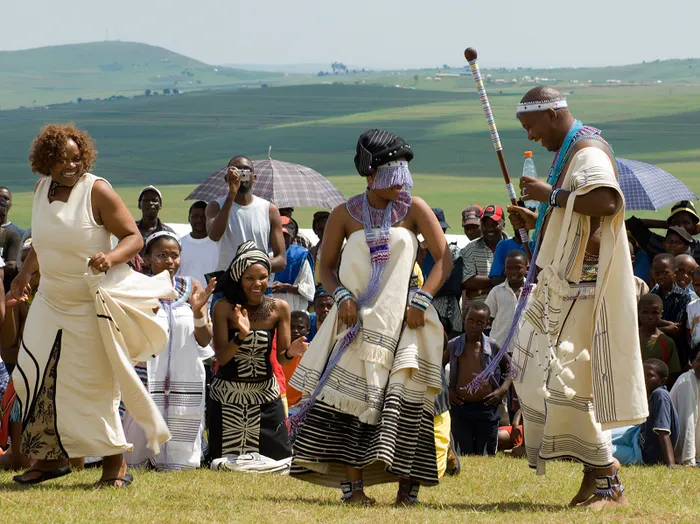
A legal expert shares some knowledge on how to navigate customary marriages, especially when it turns into a divorce.
Image: VDM Law
In South Africa, a customary marriage may begin with ancestral blessings, lobola payments and the union of two families – but when that union breaks down, tradition alone will not suffice.
According to Cor Van Deventer, Director of Sandton-based law firm VDM Incorporated, while the Recognition of Customary Marriages Act (RCMA) gives full legal status to cultural marriages, it draws a firm line when it comes to divorce, as only a court of law can dissolve them.
He pointed out that a customary marriage will automatically default to ‘“in Community of Property” (COP). “A customary marriage carries the same legal weight as a legal marriage in South Africa; though registration is encouraged, a marriage can still be valid without it,” Van Deventer explains.
He added that unless an antenuptial contract was entered into before the customary marriage, the union will be in community of property. This means that upon divorce, the joint marital estate – assets and debts - will be divided equally between both spouses. South Africa’s Recognition of the Customary Marriages Act ensures that these marriages are protected, and it also outlines the process for their dissolution, with specific legal steps for divorces.
“While the divorce process largely mirrors that of civil marriages, there are unique aspects to navigate, particularly regarding registration and proof of marriage,” Van Deventer said. That is why he recommends that customary marriages be registered at the Department of Home Affairs within three months of the ceremony.
“Although failure to register does not invalidate the marriage, registration simplifies the divorce process because it provides an official proof of the union". One of the elements that the divorce courts consider is the payment of lobola.
Van Deventer says that while the RCMA and Divorce Act are silent on lobola refunds in divorce, customary law traditions are often taken into consideration. Courts may also look at the duration of the marriage, reasons for the breakdown, and misconduct when considering the equitable division of assets, potentially reflecting the principles similar to the forfeiture of benefits in civil divorces.
Claims for a lobolo refund may still be competent under customary law, although they’re not explicitly covered in legislation. He says it is critical that antenuptial contracts are signed before marriage - if they’re signed afterwards, they will require court approval.
When death becomes a factor in a customary marriage and the allocation of the deceased’s estate is questioned, the courts and even legal entities such as the Pension Funds Adjudicator can be approached.
If a customary marriage is not registered and the couple wants to divorce, they may need to apply to the court to order home affairs to register the marriage and provide the court with sufficient evidence to prove the customary marriage is valid.
Once the court is satisfied that a valid customary marriage exists (or orders it to be registered), Van Deventer says the divorce process proceeds similarly to a civil divorce, governed by the Divorce Act. If the court is convinced of its irretrievable breakdown, it will grant a decree of divorce, legally dissolving the customary marriage, he adds.