

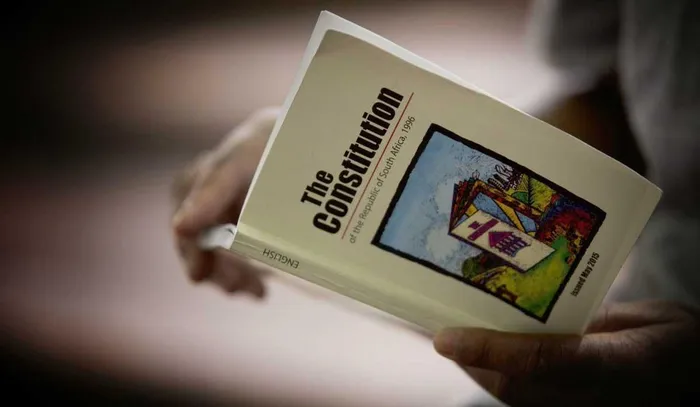
Political analysts and a civic movement are of the view that a constitutional review would address ambiguities and better serve the needs of citizens.
Image: North West Provincial Legislature
Political analysts and a civic movement have called for a constitutional review to correct ambiguities and put South Africans first.
This is despite the South African Constitution being hailed by legal experts and international observers as one of the most progressive and democratic in the world.
The call came at a time when South Africa is gearing up for the Human Rights Day commemoration on Saturday, March 21, 2026, under the theme ‘Bill of Rights at 30: Making Human Dignity Real’.
The national event will take place in Kimberley, Northern Cape, at the AR Abass Stadium, where President Cyril Ramaphosa will deliver the keynote address. This event marks 30 years of the Constitution and commemorates the 1960 Sharpeville Massacre.
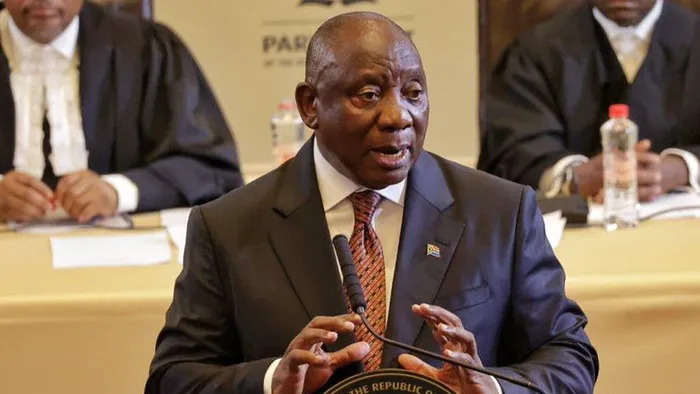
President Cyril Ramaphosa will deliver the keynote address for the Human Rights Day commemoration on Saturday, in Kimberley, Northern Cape, at the AR Abass Stadium.
Image: GCIS
Chief among the concerns about the Constitution in its current state is that it contains loopholes, which leaves room for manipulation and misinterpretation, resulting in the avoidance of responsibility and the trumping of the country’s laws.
Jacinta Ngobese, founder of the civic movement March and March Movement, said her organisation considers the Constitution very important to the country; however, if the Constitution is not serving the people of South Africa, it should be subject to change.
“We do believe that the Constitution should be explicit, and it is not because, in the current format, there is anything wrong with it; however, it does leave room for people to manipulate it and interpret it in a way they feel they should. We know for a fact that it is not a big deal the way it is, however, because people interpret it in a manner they want to, which leaves some loopholes, which is our biggest concern,” Ngobese said.
She highlighted that the part that must change is the one that clearly defines who ‘everyone’ in the Constitution refers to.
Ngobese added that it must also emphasise the responsibilities of the country’s citizens and the importance of the country’s sovereignty.
“It is very important for us that the Constitution of the country speaks to us exactly what we are saying, which is that it needs to adapt to the current challenges of the country, because I don’t think that 30 years ago, they would have foreseen that there would be an illegal immigration crisis that we have in the country,” she stated.
Ngobese added that the laws reflect the vision that was held when they were drafted. Thirty years later, if there needs to be a change, it shouldn’t take the government decades to make amendments that the people are calling for.
She said that human rights are important, and every human being’s rights should be protected and safeguarded; however, her organisation believes that people’s responsibilities and the laws must be overlooked just because people have rights.
“The tendency that we see is human rights that are now being highlighted, trumping even the laws of this country. So, it’s human rights, responsibilities, and laws hand in hand,” she said.
On service delivery, she said there should be more stringent measures to deal with the government, and it should not be an issue of people quoting the Constitution willy-nilly to support failures they have had for many years.
“We do appreciate that in 30 years, if the government has failed and failed its people, there needs to be a way of making amends, but we know that they will probably say that elections are exactly that, but we will see when the time comes,” Ngobese stated.
Professor Bheki Mngomezulu, a political analyst at Nelson Mandela University, said South Africa needs a constitutional review, highlighting that an amendment will not work since no political party has a two-thirds majority.
“South Africa does not have a post-apartheid Constitution. The one we gave was a copy and paste from the Interim Constitution of 1993,” he stated.
Mngomezulu said Chapter 9 institutions either lack funding or are co-opted by the political elite, adding that these two factors have rendered them ineffective.
He stated that politicians are in contravention of the country’s Constitution, and people have been lied to for so long.
“Our politicians have failed this country. Service delivery is lagging, even in areas that have abundant water, such as Jozini (KZN) and the surrounding areas, which are not provided with water. Older political parties such as the ANC, IFP, and the DA will face the consequences of their failure to deliver services,” Mngomezulu said.
He added that in the 2026 Local Government Elections, South Africans will either vote for new parties or not vote at all.
Professor Siphamandla Zondi, a political analyst at the University of Johannesburg, said the government is in a state of constitutional breach in every definition of the idea.
“It has betrayed the hopes of many. It has shattered the aspirations of quite a sizeable part of the population. It has disappointed them,” he said.
Zondi stated that there are already signs of social disillusionment, such as a sharp decline in trust in regard to government institutions and the public’s version of democracy.
“We have seen massive protests that strike at the heart of the very constitutional order and demand for fundamental change. People do not eat ideas and ideology of freedom, Amilcar Cabral warned in 1966. They want to see material change in the quality of their lives,” Zondi stated.
The centre has long almost dissipated. It has been in patchwork for a while now. It is tattered in many ways. The move towards coalition government is an attempt at a patchwork that the citizens forced, and they may look for another way if this does not deliver a better life, he warned.
On the lived reality opposed to paper rights of South Africans, Zondi said, increasingly, there is evidence that South Africans vote with their material interests in mind.
“They are able to punish underperformers and give others a chance. This will affect bigger and more dominant parties in many provinces, more so in Gauteng and KwaZulu-Natal, where that trend was evident in the past two local-level elections.”
Zondi stated that the Chapter 9 institutions have not been able to influence the behaviour and conduct of the government in areas that matter to citizens. “They have a credibility challenge as a result.”
On whether the 2026 theme is ‘Bill of Rights at 30: Making Human Dignity Real’, being a genuine policy shift, he said the government has always been much more creative in words than effective in actions.
“We have no shortage of great slogans from a Better Life for All in the 1990s to Together We Build a Prosperous Country more recently. We don’t run short of great policy ideas, either. We just are not good at implementing effectively and seriously. This applies to the nice slogan for 2026,” Zondi said.