

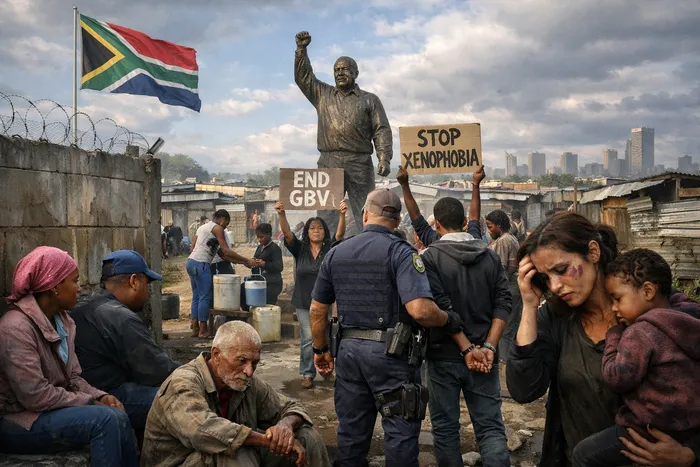
According to the SAHRC’s recently released 2025 State of Human Rights Report, numerous challenges plague the country’s efforts to uphold and protect human rights.
Image: Sora
The 21st of March 1960 etched its mark in South Africa's history, serving as a somber reminder of the relentless pursuit of human rights in a nation once oppressed by apartheid. As South Africa commemorates Human Rights Day in 2026, the South African Human Rights Commission (SAHRC) takes this opportunity to reflect upon the sacrifices made by brave individuals who fought tirelessly for equality, freedom, and justice.
However, amid the remembrance and honouring of those past struggles, the Commission has highlighted pressing human rights challenges that persist in contemporary South Africa.
According to the SAHRC’s recently released 2025 State of Human Rights Report, numerous challenges plague the country’s efforts to uphold and protect human rights.
Among these, issues concerning the treatment of individuals in conflict with the law, inadequate provision of basic services, and the spectres of racism and xenophobia remain prominent.
The Commission underscores the urgency of imminent crises stemming from local government inefficiencies, climate change, and the disproportionate enforcement of petty offences impacting the most vulnerable, including the homeless and informal traders.
Compounding these issues, the SAHRC's Section 184(3) Report highlights severe underutilisation of the housing budget, resource shortages in the healthcare sector, and alarming backlogs in the provision of essential services, such as child foster grants and educational resources.
Such findings indicate a grim reality: South Africa is far from fulfilling its constitutional responsibilities, with the current state of human rights taking a worrying turn towards stagnation, if not regression.
The indicators presented reveal a significant concentration of human rights complaints primarily in the socio-economic arena, a trend that has persisted for years. The Commission warns that if these issues are not addressed, South Africa's human rights status could become a ‘ticking time bomb’ threatening the very fabric of constitutional democracy.
In response, the SAHRC rigorously evaluates human rights by investigating over 7,000 complaints each year, conducting inquiries, and publishing reports with vital findings and recommendations.
Noteworthy publications during the financial year include in-depth investigations on a range of issues from food rights, the conditions within mental health facilities, to systemic discrimination in various locales. These reports lay the groundwork for identifying solutions and advancing human rights standards in the nation.
As the Commission moves forward, it reiterates the imperative for the government and relevant stakeholders to consolidate efforts and address the critical issues of unemployment, gender-based violence (GBV), inequality, and poverty that continue to gnaw at the country’s social fabric.
The road ahead demands a collective and determined partnership, ensuring that the ideals fought for on Human Rights Day nearly seven decades ago do not become mere echoes of the past, but rather a cornerstone for a fair, just, and inclusive South Africa today and in the future.
IOL