

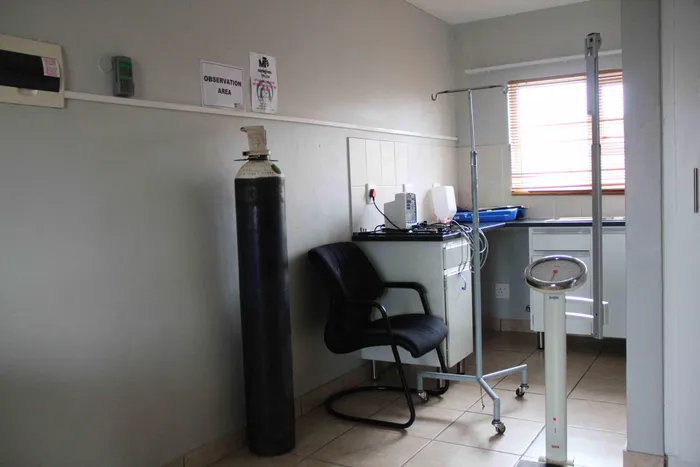
The report by the Rural Health Advocacy Project (RHAP) reveals that only 54.9% of the country’s clinics met the required standard for proper healthcare between 2019 and 2020.
Image: Sandi Kwon Hoo / DFA
A report by the Rural Health Advocacy Project (RHAP) has revealed a dire state of public health services linked to poor infrastructure, medical supply, shortage of health professionals, and inadequate water supply in rural areas.
The report revealed that in 2019 and 2020, only 54.9% of the country’s clinics met the required standard for proper healthcare.
The data indicated that rural provinces were the worst affected, with significantly lower compliance rates in areas like Limpopo (28.9%), Eastern Cape (32.5%), and the Northern Cape (34.6%).
The district with the lowest percentage of ideal clinics was Vhembe in Limpopo (8.1%), followed by Frances Baard in the Northern Cape (20.0%), Ehlanzeni in Mpumalanga (22.3%), and OR Tambo in the Eastern Cape (27.8%).
This suggests that the quality of care remains a critical concern, particularly in the lead-up to the full implementation of the National Health Insurance (NHI).
The health system is currently facing a critical crisis, characterised by chronic underfunding, a severe workforce crisis (0.9 doctors per 1,000 people), and deteriorating infrastructure, impacting over 84% of the population.
Corruption, poor management, and a high burden of disease have led to widespread service failures, including long wait times, equipment shortages, and poor quality of care.
The report stated that true access to health services isn't just about the number of hospital beds; it is equally about the quality, reliability, and functional capability of local clinics (PHC level) to provide care according to high standards.
In the Western Cape and Eastern Cape, it has been found that the factor that had the biggest impact on the probability of patients attending public health facilities was receiving the medicine they needed.
The study also found that patients were prepared to tolerate long waiting times due to poor staff attitudes and lack of direct access to doctors if they received their medication and quality clinical care, such as a thorough examination and a clear explanation of their diagnosis.
“However, it has been acknowledged globally that there is not enough data available to accurately assess the access to essential medicines indicator. In South Africa, the Stock Visibility System had not improved the availability of this data by 2019. An alternative indicator proposed in the South African Health Review 2019 is the proportion of primary care facilities that experienced a stock-out of any tracer item for any time during the period under review,” stated the report.
The report stated that some indicators of service capacity and access are difficult to assess because their optimal levels, or targets, are not known.
The report stated that professional registries like the Health Professions Council of South Africa (HPCSA) often overestimate the active workforce because they don't track retirements, migrations, or specific work locations. While public sector employees are recorded in the PERSAL system, there is no equivalent registry for the private sector, making it difficult to pinpoint where and in which sector professionals are actually practising.
Asked what the national Health Department is doing about the situation, spokesperson Foster Mohale did not respond at the time of publication.
In a submission to the Select Committee on Appropriations, which is currently processing the 2026 Division of Revenue Bill, Section27 and the Treatment Action Campaign, said that as clinics and hospitals remain under pressure across the country, patients continue to face long waiting times, overcrowded facilities, and inconsistent access to care.
The submission stated that for many communities, particularly in rural and under-resourced areas, access to healthcare is undermined by underfunding, overcrowding, and stockouts. The organisations added that clinics and hospitals are struggling to provide care in spaces that are overcrowded, worn down, and often unsafe.
The organisations said these are the places where people go to seek dignity, yet too often they encounter systems under strain.
The organisations, demanding an increase of R15 billion in the health sector, said that, despite the challenges facing the public health facilities, funding for healthcare infrastructure continues to decline in real terms, deepening a pattern of underinvestment.
“The Health Facilities Revitalisation Grant (HRFG), which funds the construction, refurbishment, and upgrading of clinics and hospitals, receives a nominal increase of only R149 million, or 1.69%. In real terms, the funding for the grant is cut by R104 million or 1.38%. In the past, we have cautioned against cuts to this grant, provincial departments have no resources to build new clinics and hospitals or even maintain the currently overcrowded health facilities,” said the organisations, adding that a modest real increase may be a step, but at this stage, “it is not sufficient to shift the material conditions of our people in a meaningful way”.
“Recent data further highlights the depth of the crisis. 82% of facility managers surveyed reported staffing shortages, with the situation particularly severe in districts such as OR Tambo and uMgungundlovu. From the patient perspective, 61% reported critical staffing shortages, highlighting how visible these challenges are within facilities,” stated the submission.
Meanwhile, the National Education, Health and Allied Workers’ Union (Nehawu) said the union has been of the view that healthcare services, as a fundamental human right in our country remains inequitably distributed.
The union said this is due to the historical injustices of the past, which relegated black communities to underdeveloped and underserved rural areas, and largely due to the absence of comprehensive universal health coverage, notwithstanding other contributing factors.
Spokesperson Lwazi Nkolonzi added that one of the most pressing challenges confronting the public healthcare system is the recurring budget reductions arising from government austerity measures.
Nkolonzi said these fiscal constraints have had a direct and adverse impact on service delivery, resulting in critical staff shortages, inadequate supply of essential medicines, and deteriorating infrastructure within healthcare facilities.
Democratic Nursing Organisation of South Africa (Denosa) general-secretary Kwena Manamela attributed the problem to corruption in the health sector, adding that criminal syndicates realised that there was a lot of money in the sector.
The RHAP report added that rural areas experience unique challenges with access to healthcare services, adding that although it has low population densities, this may still result in a lack of access because people are sparsely distributed and may thus live far away from the available health facilities.