

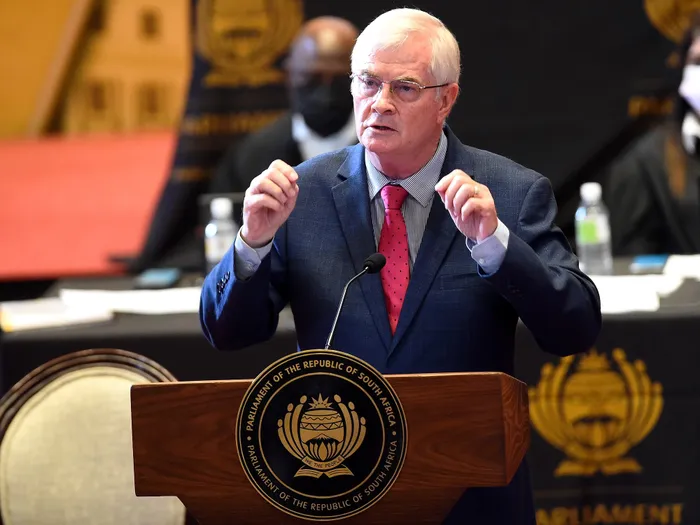
Correctional Services under fire after parliament uncovers ‘irrational’ food prices.
Image: Independent Media Archives
The Portfolio Committee on Correctional Services has raised alarm over what it described as shockingly inflated prices paid by the Department of Correctional Services (DCS) for basic food items, warning that the issue points to serious failures in procurement oversight and supply chain management.
The committee was briefed on Tuesday about the department’s ongoing renegotiation of contracts for perishable and non-perishable goods after officials uncovered excessive pricing on several items supplied to correctional facilities across the country.
Among the most startling revelations was that the department had been paying between R672 and R726 for a single litre of cooking oil under existing contracts. Following renegotiations, the same product will now cost between R26 and R29 per litre.
The committee also heard that gravy powder prices were drastically reduced after the contracts were reviewed. In Gauteng, the price dropped from R3,735 to R920, resulting in savings of more than R2,800 on a single item.
Committee Chairperson Kgomotso Anthea Ramolobeng said the focus should not be on celebrating the savings, but rather on understanding how such inflated prices were approved in the first place.
“The DCS presents the renegotiated prices as savings, but the real issue is that the original prices were irrational and should never have passed internal procurement controls in the first place,” she said.
“The concern is not necessarily the reductions achieved afterwards, but how such inflated figures were initially accepted.”
Ramolobeng warned that reducing inflated prices after contracts had already been signed could not be presented as sound financial management.
“We should be cautious not to celebrate the correction of failures as achievements. If one litre of oil was initially quoted at an amount far above the ordinary market value, reducing that price later cannot be framed as prudent financial management. Instead, it exposes weaknesses in supply chain management systems and processes,” she said.
The committee heard that the DCS signed contracts with 115 service providers across all six regions of the country for the supply, delivery and off-loading of goods over a five-year period running from 1 April 2025 to 31 March 2030.
According to the department, suppliers within the same region were initially expected to charge uniform prices. However, multiple items were later identified as being priced far above market value, prompting the department to invoke contractual provisions allowing for price reviews and renegotiations.
Officials told Parliament that the review process remains ongoing, with approximately 4 600 transactions currently under scrutiny by supply chain management and contract management officials.
The DCS described the review process as “extensive and cumbersome”, a characterization that drew criticism from the committee chairperson.
“This is deeply concerning. Public finance oversight is supposed to be rigorous. The language used creates the impression that compliance is viewed as an inconvenience rather than a constitutional obligation,” Ramolobeng said.
“We ought to be cautious about the wording used in official presentations and remain mindful of our constitutional responsibilities.”
The department expects the review process to be completed by June 30, 2026, with newly negotiated prices set to take effect from July 1, 2026.
Ramolobeng also renewed calls for lifestyle audits targeting officials involved in supply chain management amid growing concerns over irregular expenditure and allegations of procurement manipulation.
“Given the scale of irregular expenditure and ongoing allegations of procurement manipulation, lifestyle audits would constitute reasonable oversight,” she said.
“Such a process would, however, require the sanction of the Minister, and the committee requests a report once the process has been concluded.”
IOL News