

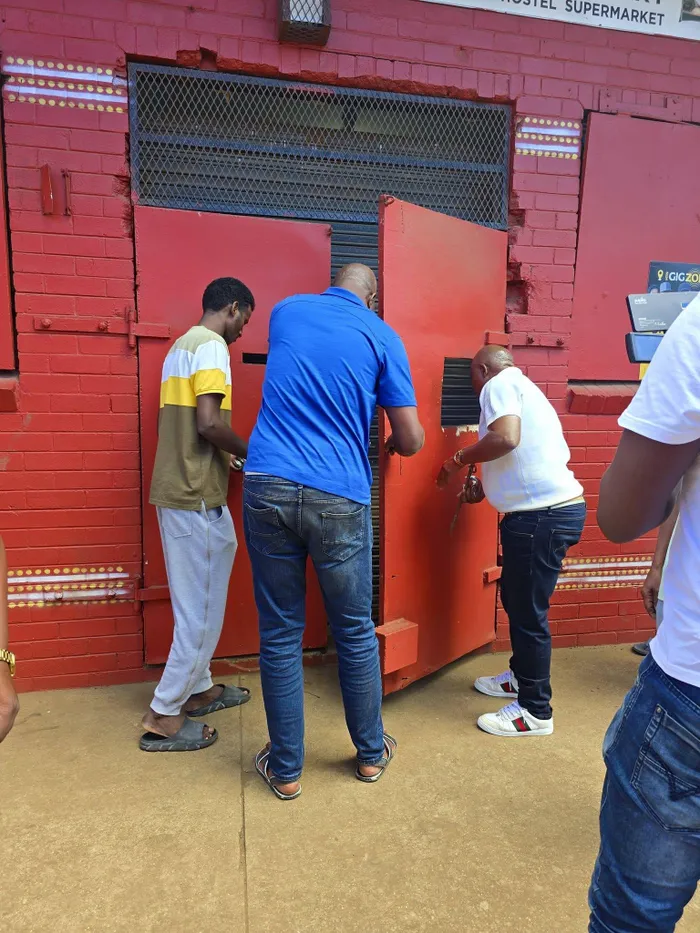
IFP eThekwini District members close a tuckshop at the KwaMashu Hostel.
Image: Facebook/ IFP EThekwini District
The IFP in the eThekwini District is intensifying its campaign against illegal foreign nationals, shifting its focus from the Durban Central Business District (CBD) to townships where poverty is most pronounced. On Monday, the party’s ongoing programme targeted the KwaMashu Hostel.
IFP eThekwini district secretary Joshua Mazibuko said the party’s anti-illegal foreigners campaign has been a consistent item on the IFP’s agenda since the last national elections, as detailed in its manifesto. Premier Thamsanqa Ntuli’s first public event in office also addressed this issue, and the eThekwini District has been on the matter, joining March and March, confirming it as an ongoing IFP programme.
“We’ve been focusing on dealing with those in the Durban CBD. But now we said no. Primarily, our people are in townships in areas where they live. Let us refocus and go look where they live because that’s where poverty is at its worst,” Mazibuko explained
“We went there (KwaMashu Hostel) to see what their situation is in relation to the matter of illegal foreigners. We in the IFP believe that no job requires any particular skill that we can’t learn in school, which requires a foreign person to be hired.”
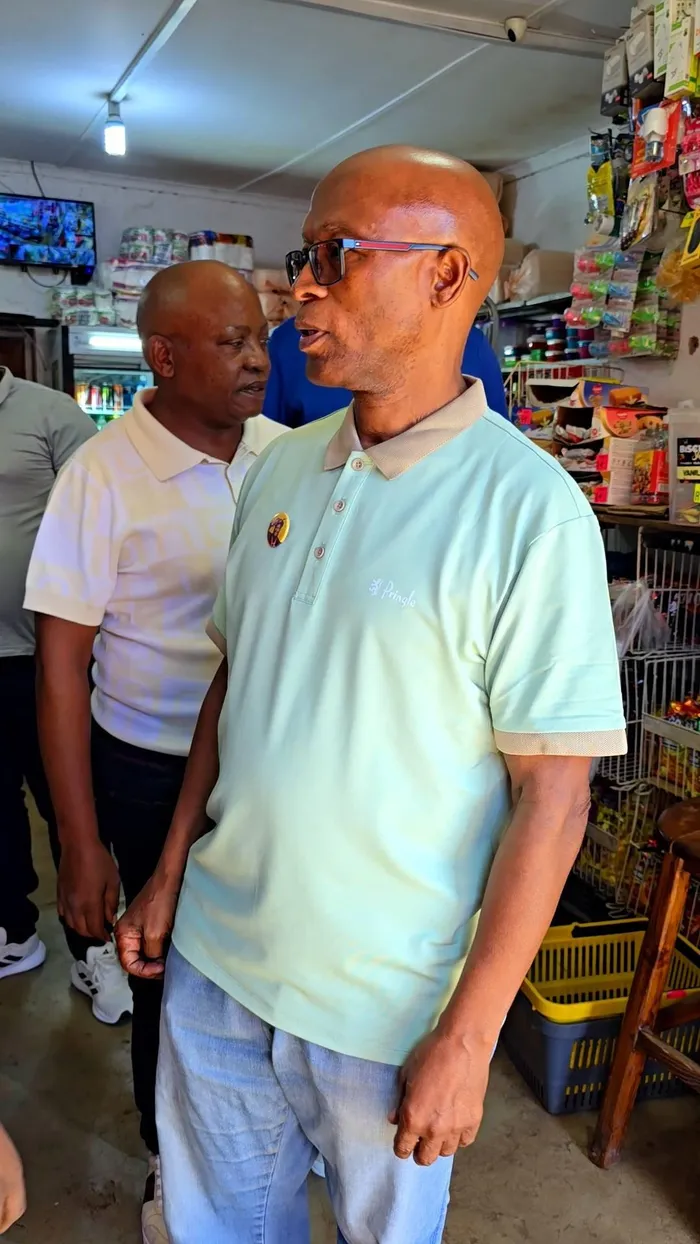
IFP eThekwini District members inspect a tuckshop in KwaMashu, reinforcing the party’s commitment to local employment.
Image: Facebook/ IFP EThekwini District
He said taking R20 bread off the shelf and giving it to someone does not require one to go to school.
“We were going to look at such things. That’s where our focus is, on making sure that such types of opportunities revert to our people. Our focus this time will be there, just visiting areas, looking at the businesses there, whether our people are in them, who own them, and what it is that we can do to ensure that they change hands,” Mazibuko said.
He noted that when they arrived, they found that many tuckshops were closed, probably because they announced where they would be targeting. They found a few shops open.
“We found one shop inside the hostel. When we engaged those who were inside, we discovered that they don’t have a trading licence. When we asked, they pointed to their manager. We told them to phone him, but he couldn’t be reached,” Mazibuko said.
“Some of them, their South African permit had already expired on March 4. They should have been out of the country already. Another one will expire in September.
“We decided that, look, close this shop, because you don’t have a trading permit, you can’t prove that you entered this building with a permit, and some of you should no longer be in South Africa, and thirdly, the job you are doing can be done by hostel residents. So we closed the shop.”
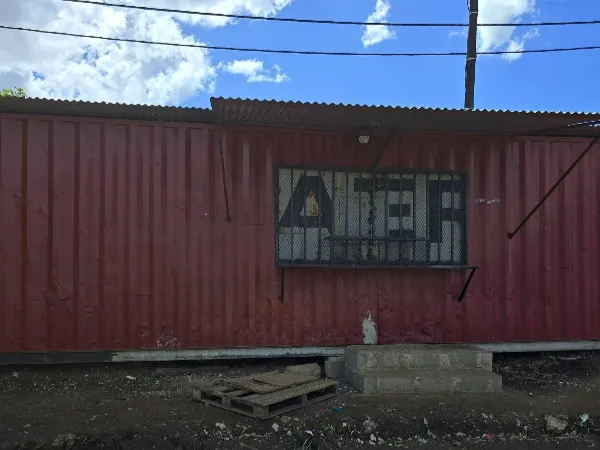
A closed tuckshop in KwaMashu highlights the IFP’s focus on local businesses and job opportunities for residents.
Image: Facebook/ IFP EThekwini District
Mazibuko also said that their job is to share the information with relevant authorities, like Home Affairs, about their findings, and ask them to continue the work because they are the government.
He said that the hostel community rejoiced at their actions, with one woman sharing that she used to work there as a seamstress. They were replaced by foreign nationals. She also said the owner lives in D Section.
“It is our people who either open their homes or whatever for these people (foreign nationals) to use, and others, we understand, maybe due to poverty,” Mazibuko said.
Meanwhile, IFP leader and Cooperative Governance and Traditional Affairs Minister Velenkosini Hlabisa recently stated in an interview on the YouTube channel “State of the Nation” with Mike Sham that the presence of undocumented foreign nationals poses a significant challenge. He emphasised that this issue is a national concern.
“You cannot account for and you cannot even budget for them because you don’t know who they are, but they receive all the services, go to hospitals, they go to schools, they want the housing services, which is a matter we have raised even during the debate and even in the Cabinet Lekgotla that the undocumented foreign nationals must be attended to and we have almost a common view now that they are an issue to receive the attention of the government,” Hlabisa said.