Echoes of Bandung as China and Africa rally towards high-quality cooperation
OPINION
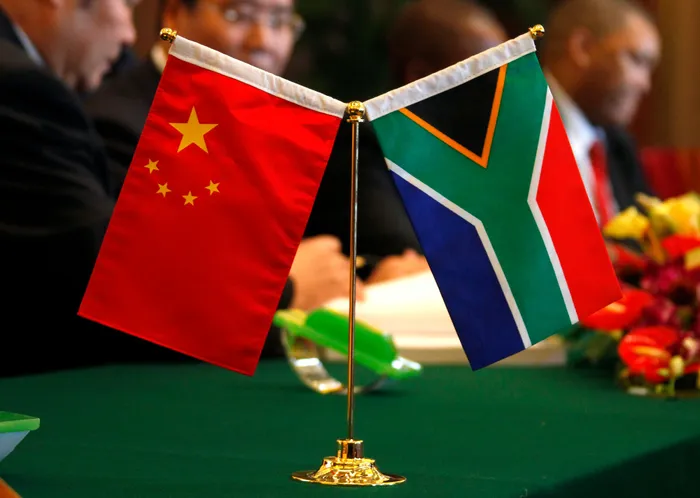
China is the world's second-largest economy, while the African continent is home to the largest number of developing countries.
Image: REUTERS/David Gray
The Ministerial Meeting of Coordinators on the Implementation of the Follow-up Actions of the Forum on China-Africa Cooperation (FOCAC) was held in Changsha, central China's Hunan province.
The Changsha meeting, held last month, invoked the spirit of Bandung, calling the Global South to unite in confronting contemporary global instability embedded in historical structural injustices that have exploited disunity within the Global South.
China is the world's second-largest economy, while the African continent is home to the largest number of developing countries. With an estimated combined population of over three billion people, Africa and China together form the backbone of the Global South, and a significant demographic and economic share of the world.
While the two sides have immensely stronger diplomatic and economic ties over the past two decades, and share decades of closer mutual solidarity, complex and turbulent geopolitical factors pose major threats to flourishing cooperation.
Intra-state conflicts in some African countries have aggravated economic and political pressures on continental development and international cooperation. A combination of amplified geopolitical tensions and conflicts between Ukraine and Russia, Israel and the people of Palestine, and now Israel and Iran has raised the prospects of unprecedented global instability.
The unilateral imposition of tariffs by the Trump administration on major trading partners, including China and countries in the African continent, risks upending global trade with severe consequences for developing countries. Most economies in the Global South will be vulnerable to economic shocks from heightened global inflation and the economic weight of external debts tied to the US dollar. These countries will also be squeezed for new capital to meet domestic development needs.
The Changsha meeting, which aimed to push for the full implementation of the FOCAC Beijing Summit outcomes, reemphasised the need for countries in the Global South to work together. The meeting was attended by representatives of the People’s Republic of China, 53 African countries and representatives of the African Union Commission. The delegates at the high-level gathering concluded with the signing of the Changsha Declaration, which in many ways invokes the spirit of the Bandung conference of 1955 in calling for deepened cooperation and solidarity in the Global South.
As published by the Ministry of Foreign Affairs of China, the Changsha Declaration states, “Guided by the consensus reached by our leaders during the 2024 Beijing Summit of the Forum on China-Africa Cooperation (FOCAC), gathered in Changsha to advance the full implementation of the Beijing Declaration on Jointly Building an All-Weather China-Africa Community with a Shared Future for the New Era: We agree that the rise and growth of the Global South represents the trend of the times and the future of development. China and Africa are both important members of and staunch forces in the Global South.”
The Changsha meeting and the subsequent declaration reflect growing unity and cooperation between China, Africa and the Global South, which was historically demonstrated at the Bandung conference in 1955 at the height of colonialism and the Cold War. The Bandung Conference was a landmark meeting which brought together 29 newly independent African states and Asian countries to discuss common challenges and promote cooperation in the face of international polarisation and oppressive hegemonic dominance.
Considering the pervasive challenge of Western colonial and neo-colonial domination, which parallels contemporary neoliberal unilateral hegemony, the Bandung Conference continues to resonate with the aspirations of the Global South for economic and political freedom and the need to deepen cooperation and solidarity among the global majority.
Its ground breaking 10-point "declaration on the promotion of world peace and cooperation," incorporating the principles of the United Nations Charter, and such principles as political self-determination, respect for national sovereignty amongst nations, non-aggression, non-interference in internal affairs, and equality laid the groundwork for the Non-Aligned Movement, and stands out as the basis for peaceful coexistence in the world.
The Changsha declaration reignited the spirit of Bandung by reemphasising the need for unity, solidarity, deepened cooperation and self-reliance amongst countries in the Global South. Its declaration reinvents and locates the principles of the Bandung conference at the centre of efforts by the Global South to confront emerging challenges in a turbulent world.
The Changsha declaration calls all countries of the Global South to work together to safeguard multilateralism, promote multipolarity and oppose unilateralism and bullying. It rejects the unilateral imposition of sweeping tariffs by the Trump administration on trading partners. Such protectionist policies and economic bullying could throw the global economy into jeopardy, triggering economic and political instability in developing countries.
The declaration also called all countries to work together to build a community with a shared future for humanity, promote the Belt and Road Initiative (BRI), the Global Development Initiative (GDI), the Global Security Initiative (GSI) and the Global Civilisation Initiative (GCI). These initiatives have brought together the Global South to collectively work towards a more just and equal global community of nations, promoting fair multilateralism in which all countries, nations and diverse civilisations are mutually respected.
The Changsha declaration strongly reaffirms the principles of solidarity, cooperation and mutual benefit, which underpin China-Africa relations, and makes a powerful statement against attempts to divide the Global South. It further reinforces growing China-Africa and unity within the Global South as bigger powers exercise responsible leadership.
While some major powers have embarked on a nationalistic posture, imposing tariffs and cutting aid to the most vulnerable and historically disadvantaged countries, China has steadily increased its support towards the sustainable development and modernisation of Africa and the Global South. For instance, China has committed to expanding its zero-tariff treatment on 100 percent of tariff lines to all 53 African countries with which it has diplomatic relations. Beijing has also extended its support for green energy, AI, science, and technology initiatives in Africa and the Global South.
The holding of the 4th China-Africa Economic and Trade Expo (CAETE) under the theme, "China and Africa: Together Toward Modernisation", signifies a shift towards the consolidation of relations of China-Africa cooperation. The Trade Expo highlighted progress towards the “Ten Partner Actions” of FOCAC 2024. African countries such as the Congo Republic, Kenya, Namibia, South Africa and Nigeria showcased their agricultural, mining and construction industry products, demonstrating deepening mutually beneficial China-Africa economic cooperation.
The theme of the Expo aligned with the China-Africa "Ten Action Plans", including cultural and people-to-people exchange, trade, industrial cooperation, connectivity, health, agriculture, green development, and security, to dovetail into the goals agreed at the FOCAC 2024. It also focused on green development goals and industries, renewables and "zero carbon exhibition", highlighting the shift towards climate-friendly development, a major issue in the demand for global social, environmental and economic justice.
As can be summed up from the five-point proposal made by Wang Yi, the Foreign Minister of China during the Changsha gathering, the perilous contemporary economic and political global context calls for consolidated cooperation amongst the nations of the Global South.
Wang Yi rallied African counterparts to work together in fostering mutual assistance, to defend and deepen solidarity amongst countries of the Global South, advance economic openness and international free trade promoting fair economic globalization.
He urged China and Africa to work together towards human progress, centred on mutually beneficial cooperation bearing win-win outcomes, based on mutual trust and respect. As echoed at Bandung, it's unity and cooperation, or we perish.
Gideon H Chitanga, PhD, is an International Relations Expert and political analyst