

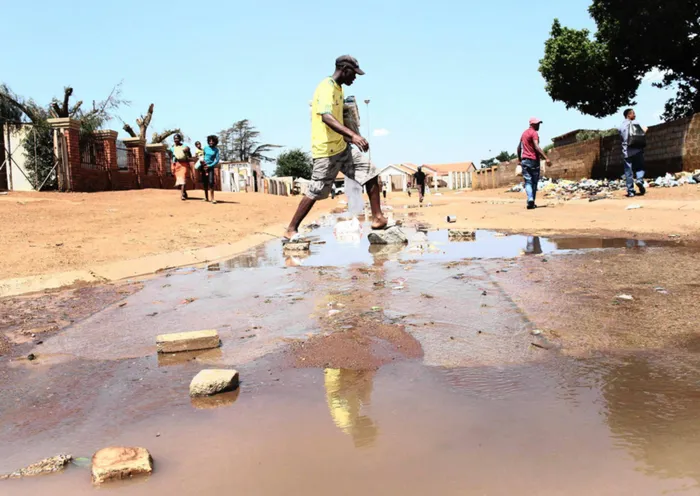
A man walk through a sewege in Bekkersdal. Townships battle daily with water shortages, broken sewage systems, and crime.
Image: File
South Africa is a country rich in history, resilience, and potential. But its progress is increasingly being held hostage by a hollow brand of leadership - one that prioritises personal image over public service, luxury over legacy, and spectacle over substance.
Where once we looked to leaders for courage, clarity, and compassion, we now see a growing number who are more preoccupied with fame, wealth, and social media clout than with the real and urgent needs of their people.
It is not difficult to see how this rot has spread. Across all levels of government, there is a growing trend of leaders flaunting expensive lifestyles while millions of South Africans struggle to meet their most basic needs. Lavish cars, designer clothes, overseas trips, and endless photo ops dominate their feeds, even as the country buckles under the weight of unemployment, crime, load shedding, and crumbling infrastructure.
Leadership in South Africa has, in many cases, become a performance exercise in optics rather than outcomes. Instead of being present in communities ravaged by poverty and service delivery failures, many public officials are more visible at red carpet events and luxury brunches. Social media, a potentially powerful tool for civic engagement, has become a personal PR machine for politicians eager to craft influencer-style personas. The line between statesman and celebrity has never been more blurred.
This obsession with image and materialism is not harmless. It erodes public trust and sends a dangerous message to young South Africans: that leadership is not about service or sacrifice, but about status and self-enrichment. In a nation still healing from the wounds of apartheid and economic exclusion, such displays of excess by the political elite are not only tone-deaf - they are deeply insulting.
Consider the contrast. In the same week that thousands of students protested the lack of funding for higher education, a senior government official was photographed arriving at a public event in a car worth millions.
As townships battle daily with water shortages, broken sewage systems, and crime, leaders are seen sipping champagne at beachfront hotels or posting their gym routines. These are not isolated incidents — they reflect a systemic shift in how leadership is perceived and practised. It wasn’t always this way. South Africa’s struggle for freedom was marked by leaders who were willing to suffer, even die, for the dream of a just society. Figures like Nelson Mandela, Chris Hani, and Charlotte Maxeke did not enter leadership to accumulate wealth or followers — they led to dismantle injustice and uplift the most vulnerable. Their integrity was not a branding strategy; it was a way of life.
Today, that spirit of service is at risk of being forgotten. While pockets of ethical, hardworking leadership still exist, in local communities, activist networks, and parts of civil society, they are often drowned out by the noise of self-promotion and political theatre.
What South Africa desperately needs is a new generation of leaders who reject this culture of vanity. Leaders who understand that power is a responsibility, not a reward. Leaders who walk the streets of their communities, not just pose for selfies. Who knows what it's like to stand in a clinic queue, catch a taxi, or worry about safety at night. Leaders who lead not from a podium, but from principle. The truth is, the future of this country cannot rest in the hands of those who prioritise personal gain over public good. South Africa needs visionaries, not influencers; servants, not showmen. It needs leadership that is grounded in the realities of its people and committed to building a society where dignity, justice, and opportunity are not just slogans, but lived experiences.
It’s time for South Africans, especially the youth, to demand more. Not more promises or more visibility, but more accountability, more humility, and more substance. The power of the vote, protest, and civic engagement remains one of our strongest tools. Let us use it wisely. Let us elevate those who reflect our values, not just our frustrations.
Leadership is not about being seen. It’s about seeing, and responding, to the needs of the people. Until that becomes the standard again, South Africa will continue to suffer under the weight of leaders who have forgotten what leadership truly means.