
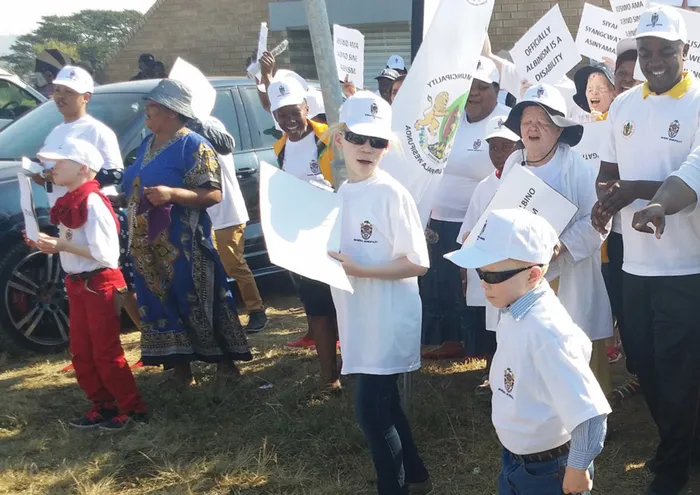
Members of the Albinism Society of South Africa march to raise awareness about albinism.
Image: Supplied
In South Africa, September is recognised and known as the National Albinism Awareness Month. Our theme for this year—“Defending Our Human Rights, Protect Our Skin, and Preserving Our Dignity”— speaks directly to the core issues that affect persons with albinism daily. It is a call to action for all South Africans to stand with persons with albinism in pursuit of a society that is inclusive, respectful, and protective of persons with albinism.
Firstly, defending our human rights is paramount. Nontsikelelo Loteni, National secretary of the National Albinism Task Force, says; Persons with albinism often face discrimination, stigma, and sometimes even violence simply because of our genetic condition and appearance.
“We must ensure our laws and policies protect us from harm and guarantee equal access to education, employment, healthcare, and all the freedoms enjoyed by every South African. Our human rights are not negotiable; they are our foundation.
In March this year, the University of Pretoria's Centre for Human Rights designed a Toolkit on using Equality Courts to combat race and colour-based discrimination against persons with albinism in South Africa.
Secondly, protecting our skin is essential for our health and well-being. Albinism is a genetic condition that results in a deficiency of melanin, a pigment that protects the skin from sun damage. Without melanin, the skin is more vulnerable to the damaging effects of ultraviolet radiation from the sun, leading to a higher risk of skin cancer.
Piet Lengoabala, Gauteng chairperson of the National Albinism Task Force, says; Our skin is sensitive and vulnerable to the harsh sun, which puts us at risk of painful sunburns and life-threatening skin cancers.
Lengoabala, who is also a skin cancer survivor, calls on the government and communities to improve access to sun protection products, specialised healthcare, and education on skin care. "Protecting our skin means protecting our lives and futures."
Finally, preserving our dignity means encouraging society to see us with respect and understanding.
Patrick Wadula, National chairperson of the National Albinism Task Force, says, "Our albinism does not define us — we are sons, daughters, friends, and colleagues with talents, dreams, and values. The dignity of persons with albinism must be upheld through awareness, acceptance, and celebration of our identity."
“As we observe this month, let us all commit to building a South Africa where persons with albinism live free from fear and prejudice, with full enjoyment of their rights and opportunities, protected in their health, and honoured for their humanity.''
The National Albinism Task Force