
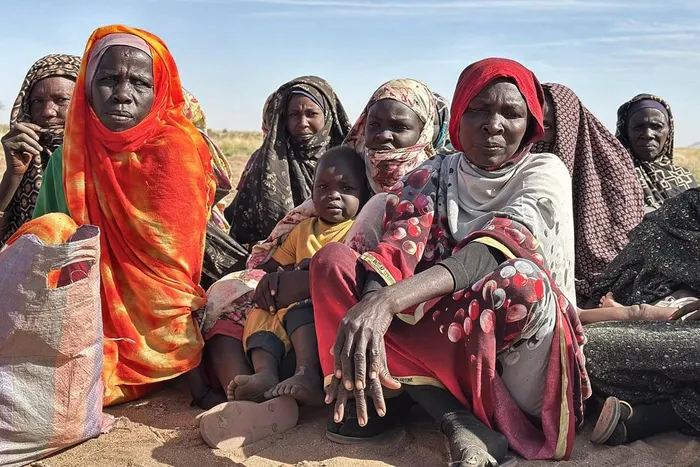
Displaced Sudanese women and children gather at a camp near the town of Tawila in North Darfur on February 11, 2025, amid the ongoing war between the army and paramilitary forces.
Image: AFP
It is disappointing how the world has been silent over the ongoing deadly Sudanese conflict, which has displaced over 13 million people, left millions in need of humanitarian aid, and killed over 150,000 people.
Despite the amplified efforts of international media outlets in reporting on the Sudanese civil war, the international community has continued to ignore the cries of Sudan’s helpless children.
Since April 2023, at the start of this deadly war, many women and children have been continuing to experience incidents of sexual violence, which is used as a weapon of war by the paramilitary group, Rapid Support Group (RSG), which has been waging a war against the Sudanese army. It is heartbreaking to witness how the world has muted its conscience, leaving the security concerns of the Sudanese people to echo unanswered.
This reminds one of the 1994 Rwandan genocide, 100 days of slaughter, which is believed to have left at least 800,000 people dead. At the time, the international community diverted its attention by focusing solely on the historical political transition in South Africa, where the first black president, Nelson Mandela, was elected to office.
At the same time, the soccer fanatics were living their best lives as they attended the FIFA soccer World Cup hosted in the United States in 1994, while multitudes of people were mercilessly killed and millions displaced into different countries from the East African country, Rwanda.
The African Union (AU) is the enabler of the military and political chaos taking place in Sudan, largely due to its lack of decisiveness. AU is a paper tiger. On the surface, it strives to display the image of a functioning and authoritative continental body, yet in reality, it is anything but. They have set themselves bigger, bolder, and ambitious goals of “Silencing The Guns by 2030”; surely, this will not be achieved with the current political attitude from those at the helm of power at the AU and African governments.
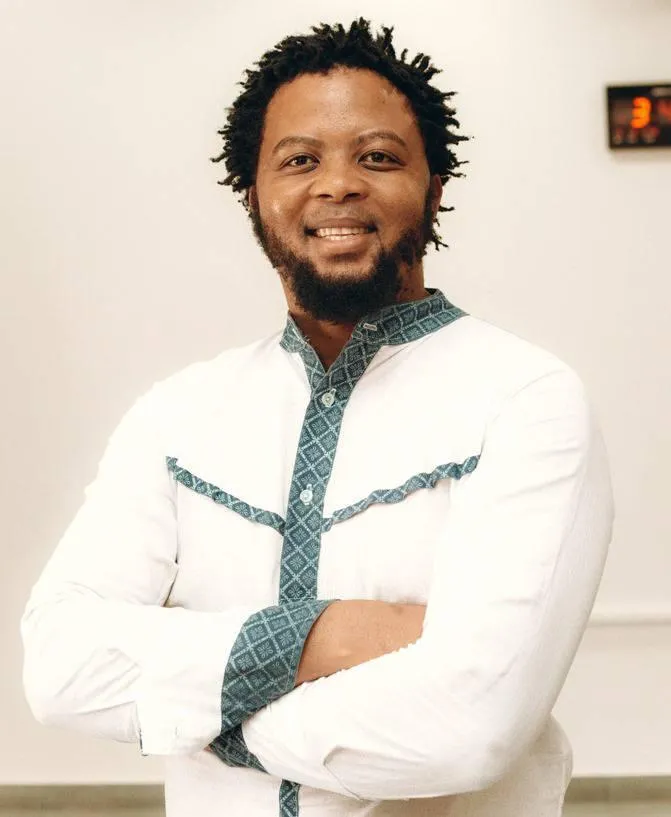
Kenneth Mokgatlhe is a fellow at the Middle East African Research Institute (MEARI)
Image: Supplied
Although South Africa, with limited success, had intervened in the political and military crisis in the Democratic Republic of the Congo (DRC) for years, it is quite disappointing that Africa has to rely on foreign countries to foster peace, security, and stability in its own backyard. This should be a wake-up call to all African countries, the AU, and the regional bodies to strengthen their capacity to mitigate and prevent conflicts without any reliance on other countries.
The Sudanese civil war should be a test for the African governments through the AU, having a responsibility to immediately stop the war and let the people live in peace and security. The AU has failed to pursue cessations of hostilities in the Sudanese civil war due to a lack of political will, limited resources, and visible divisions within the region.
What makes the conflict more complex is the external interference, largely driven by the interests of middle powers such as Jordan, Saudi Arabia, Egypt, and Qatar. These vested external and internal interests from neighbouring countries, such as Kenya and Uganda, present considerable challenges to addressing this conflict.
The fact that the Sudanese civil war has entered its third year is a testament to the failure of diplomacy by the AU and the entire international community. There is so much silence and inaction over this conflict, where multitudes of innocent people are killed daily, while many are displaced.
The deafening silence of the AU and African governments remains one of the chief enablers of ongoing conflicts across the continent. This inertia underscores the urgent need to overhaul the AU’s conflict-resolution mechanisms and to strengthen its capacity to act decisively through both diplomatic and political channels.
It is undeniable that every conflict in Africa reverberates far beyond its immediate borders, destabilising neighbouring states and undermining the continent’s collective progress. For this reason, African leaders cannot afford to remain bystanders in the face of crises such as the civil war in Sudan.
It is morally indefensible for the world to turn its back on the cries of the Sudanese people, who look to the international community for solidarity and decisive intervention. The responsibility to secure peace and stability does not rest solely with governments.
Media, activists, academics, researchers, politicians, and civil society all have a sacred duty to work alongside African governments, the AU, and the broader international community in championing peace, security, and human dignity. This obligation extends not only to Sudan but also to other conflict-ridden regions such as the Democratic Republic of Congo, where war continues to devastate millions of lives.
Kenneth Mokgatlhe is a fellow at the Middle East African Research Institute (MEARI)