

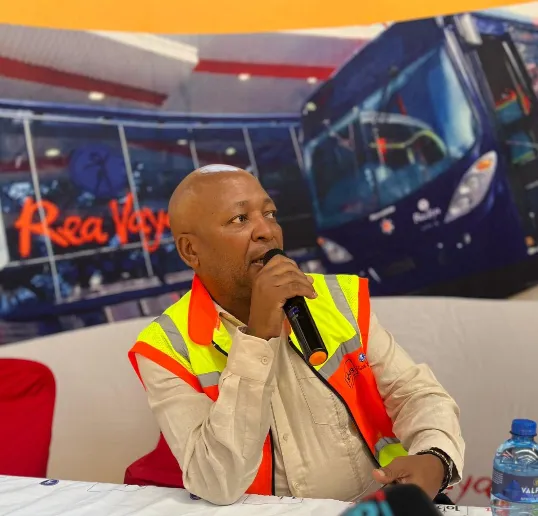
Kenny Kunene
Image: Facebook
President Cyril Ramaphosa just intervened to ensure Kenny Kunene gets his R1.4 million transport job back. Not to protect service delivery. Not to safeguard good governance. To appease a coalition partner threatening to collapse municipalities across South Africa if their controversial deputy president doesn't reclaim his old post.
Welcome to the Government of National Unity, where principles bend to political pressure and Johannesburg's stability hinges on satisfying one man's career ambitions.
The timeline raises eyebrows. In July, police raided the home of Katiso "KT" Molefe, accused of orchestrating DJ Sumbody's murder. Kunene was found there.
He resigned as transport MMC and stepped down as a councillor. The Patriotic Alliance suspended him pending investigation. Fast forward to September: law firm Cliffe Dekker Hofmeyr clears him. He's sworn back on Friday. By Tuesday, he'll likely reclaim his transport portfolio, or the PA walks away from the GNU.
ActionSA's Lebo Mokoka asked the obvious question: how do we trust an investigation conducted using information provided by the accused's own party? Yet here we are, fast-tracking Kunene's return because Gayton McKenzie threatened to pull the PA out of coalition governments in Johannesburg, Tshwane, Mogale City, and Port Elizabeth.
The mechanics reveal everything problematic about coalition politics. Joburg Mayor Dada Morero initially tried giving the transport portfolio to the EFF, honouring a long-standing promise. The PA objected. McKenzie went public with threats. Behind closed doors, the EFF warned they'd abandon every municipality co-governed with the ANC. Ramaphosa and ANC national leaders, concerned about investor confidence, ordered the portfolio returned to the PA by Tuesday.
Social media captured public frustration perfectly. "What a Joke of a president. Weak weak weak!!" tweeted @jack_improv, whilst @AnthonyWaldhau1 observed, "These coalition members can demand a lot and threaten to leave as and when. Blackmail loading." @tumelo29687590 highlighted another dimension: "EFF can't have all strategic portfolios acting like Premier Lesufi at provincial level; all important portfolios went to ANC and useless portfolios given to other parties."
ANC insiders admit both parties applied intense pressure. "Both of them have threatened to pull out of the coalition with us all across the country," one senior leader confided. Another was blunt: "PA were clever to go public because then No 1 (the president) had to come in."
This isn't governance. It's political chess where smaller parties leverage strategic positions. The EFF wants transport. The PA demands transport. The ANC scrambles to satisfy both whilst Johannesburg residents endure collapsing infrastructure. As @N_Simie asked: "When will these people get to serving South African people, busy playing mind games, busy playing with our lives?"
When did coalition stability matter more than transparent leadership processes? Kunene's explanation for being at Molefe's house raised questions that an internal investigation appears to have resolved. Yet the rushed reinstatement suggests political calculation trumped thorough process.
The GNU was supposed to demonstrate mature coalition governance. Instead, as @W_I_Group noted, "Some play Chess, Some play Checkers. Ours? They play with their tollies all day." Small parties with strategic positions leverage influence disproportionate to their electoral support. Johannesburg's transport portfolio becomes a bargaining chip whilst residents wait for buses that never arrive and roads that never get fixed.
Principle yields quietly in backroom negotiations, sacrificed for political stability that looks increasingly fragile.
Pikolomzi Qaba, Joburg