

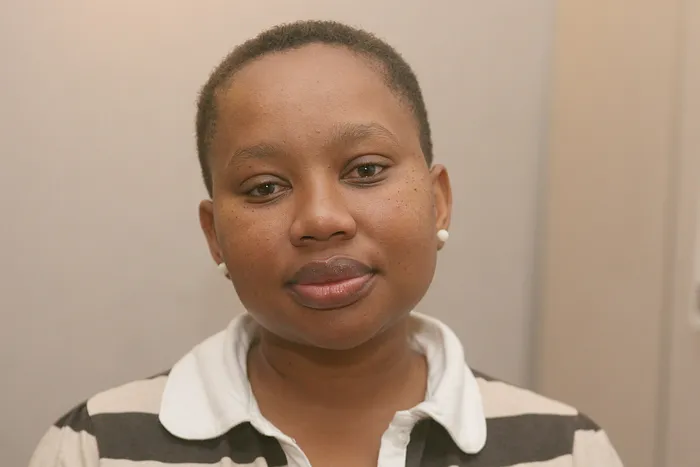
Axed Social Development department spokesperson Lumka Oliphant File picture: Sydney Seshibedi/Independent Media Social Development department spokesperson Lumka Oliphant File picture: Sydney Seshibedi/Independent Media
Image: Independent Media
For far too long, Lumka Oliphant clung to the corridors of power under the guise of public service, wielding her position not with professionalism but with arrogance and defiance. Her eventual fall from grace was not only inevitable, it was necessary. The recent Supreme Court of Appeal ruling ordering former Social Development Minister Bathabile Dlamini to repay over R2 million to the South African Social Security Agency also pulled back the curtain on just how deep Oliphant's entanglements ran. It is now glaringly clear that her departure was overdue, and the nation is better off without her in office.
The judgment confirmed what many had long suspected. Dlamini abused her position to secure state funded protection for her children and for Oliphant and her children, costing the taxpayer nearly R3.5 million. Over R1.4 million of that amount was spent protecting Oliphant and her family, not because of a direct threat, not due to official protocol, but because power was available and they believed they could get away with it. The court found this arrangement to be unlawful and an overreach of Dlamini’s authority. But Oliphant did not just benefit from this corruption of state resources, she actively sought to appeal the ruling that held her accountable.
This level of entitlement is not new for Oliphant. Her disgraceful 2016 Facebook tirade in defense of Dlamini should have been the first and final straw. Accusations had surfaced at the time suggesting Dlamini was drunk at a public event. Oliphant could have dismissed those claims with dignity. Instead, she launched a vulgar and personal attack on the public, calling the mothers of those who questioned Dlamini's sobriety "village whores" and accusing them of being alcoholics. In her own words, she decided to "take this alcohol matter to the gutter." That gutter is where her credibility and professionalism have remained ever since.
Even when asked to apologise, she did so reluctantly and selectively. Her apology, issued in Xhosa, was directed only at the women she insulted. She refused to address the public at large or reflect meaningfully on the damage done to her role as a spokesperson. Her insistence that she would continue to use social media for "personal things" showed a lack of remorse and a complete misunderstanding of the responsibilities that come with public office. She was not just a private citizen, she was the voice of the Social Development Ministry and, by extension, the state. She represented a department responsible for serving South Africa’s most vulnerable, yet she treated the public with contempt.
But despite the outrage, she remained in office. The government at the time seemed unwilling to act decisively, allowing her to continue as though nothing had happened. That inertia sent a dangerous message: that political loyalty matters more than ethics, that misconduct can be overlooked if one insults the "right" people or defends the "right" boss.
The recent court ruling should serve as a closing chapter to this saga. It affirms that public funds are not personal bank accounts, that ministerial power is not a tool for favors to friends, and that those who misuse their positions will eventually be held accountable, even if justice takes years to catch up.
Oliphant's involvement in the SASSA scandal goes beyond mere association. She was not a passive recipient of unlawful protection, she was an active participant in contesting the court’s decision to have the money repaid. Her appeal alongside Dlamini and former SASSA CEO Virginia Petersen was a tone deaf move that once again demonstrated her refusal to acknowledge wrongdoing. It was never about public safety. It was about privilege, entitlement, and access to state funds that were never meant for her benefit.
Her departure, though long delayed, now feels like a necessary cleansing. South Africa is in dire need of public servants who understand that leadership is about service, not status. It needs spokespersons who communicate with dignity, not those who hurl slurs on Facebook and then blame the public for taking offense. It needs people who will not challenge court orders that protect the integrity of public institutions, but who will comply and learn.
Some may argue that Oliphant’s fall is just collateral damage in the collapse of the Dlamini era, and perhaps they are right. But collateral or not, her conduct has left a stain on public service that must be acknowledged. She may have styled herself as a loyal defender of her minister, but loyalty cannot come at the expense of ethics and accountability.
It is telling that even her peers in government, like Mayihlome Tshwete, publicly rebuked her conduct as unprofessional. She was never a victim of a smear campaign. She was the architect of her own downfall.
This week she was fired from the department. Good riddance, then, to Lumka Oliphant. South Africa deserves better than self serving officials who treat the public purse as their inheritance and the public platform as their personal soapbox. It is time to restore dignity to public communication and integrity to public office.
The arrogance of office does not last forever. And when the fall comes, it is both swift and well deserved.
*Themba Hlophe is an academic and a commentator