
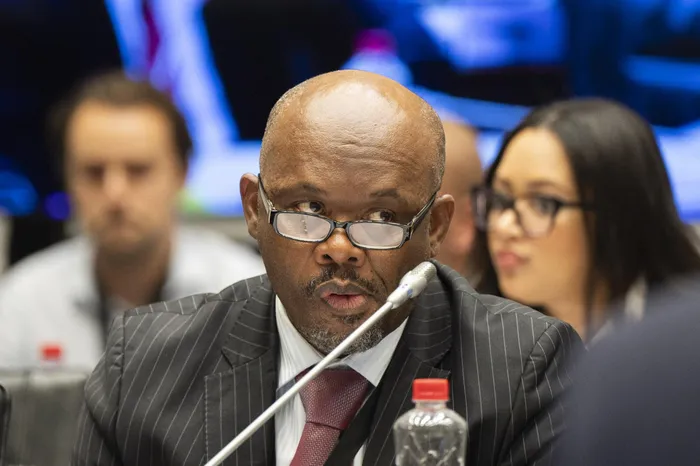
Testimony delivered before the Madlanga Commission has linked suspended Deputy Police Commissioner, Lieutenant-General Shadrack Sibiya, to criminal syndicates.
Image: Armand Hough / Independent Newspapers
There was a time in South Africa when a corruption scandal could stop the country in its tracks. People debated it on street corners, callers flooded radio stations with outrage, and there was a collective sense that something had to be done.
Today, those moments feel distant. Scandals roll by in an almost clockwork rhythm, and instead of public fury, the news is often met with tired resignation. Many South Africans see corruption as just another part of the political landscape. This growing numbness is not simply a social shift. It is a profound danger to democracy.
South Africans are not inherently indifferent. The fatigue we see today comes from years of relentless disappointment. The democratic project promised renewal, dignity and accountability, yet the decades that followed were marked by revelations of mismanagement, patronage networks and systemic looting. Eventually, people reached a point where shock became unsustainable. You cannot be surprised forever. At some stage, the mind begins to protect itself with detachment. When wrongdoing becomes predictable, outrage loses its potency. This emotional exhaustion has deep consequences. In a healthy democracy, public anger is a vital force. It pressures leaders to act, fuels investigative journalism and keeps institutions alert. Once that anger fades, those in power face fewer obstacles when stepping over ethical lines.
Leaders can sense when citizens are tired of fighting. They recognise when the public has accepted corruption as an unavoidable part of life, and they exploit that moment. What was once deemed unacceptable is quietly absorbed into the political culture. South Africa’s corruption fatigue also stems from the sheer scale of wrongdoing witnessed in recent years. Ordinary citizens hear about vast sums disappearing into the pockets of the connected few, yet the numbers feel so huge that they lose meaning. A nurse struggling with understaffed clinics or a young person stuck in the unemployment queue cannot easily imagine how such sums translate into the collapse of services around them.
The figures feel distant even though their impact is immediate. Communities see broken water pipes, stalled housing projects, crumbling roads and clinics without medicines, yet the connection between these failures and corruption often feels abstract. Perhaps the most troubling symptom of corruption fatigue is the erosion of trust in democratic institutions. South Africans have grown sceptical of government promises, weary of political speeches and suspicious of commissions that seem to uncover the truth but seldom deliver justice quickly. This cynicism leads to withdrawal. People stop voting, or vote without conviction.
They pull back from community meetings, civic organisations and public discussions. They begin to believe that nothing they do will change the country's trajectory. This disengagement creates fertile ground for opportunism. When citizens step back, power gathers in the hands of those willing to exploit the vacuum. This is how democracies weaken, not through sudden collapse, but through the slow fading of public vigilance. Reversing corruption fatigue requires more than simply urging people to care again. It demands a shift in how we frame the issue. Corruption must be understood not as distant political drama, but as an everyday threat to public well-being. It is about empty classrooms where textbooks never arrive.
It is about hospitals struggling without equipment. It is about families forced to live without reliable water or electricity because maintenance funds were misused. When the consequences become personal, the numbness begins to crack. It also requires citizens to reclaim their sense of agency. South Africans have a long history of collective action, resilience and refusal to accept injustice. That spirit has not disappeared; it is simply buried under exhaustion. The first step in fighting corruption fatigue is refusing to normalise what is immoral. Each act of wrongdoing deserves scrutiny. Each broken promise deserves a challenge.
Democracy cannot survive on autopilot. It needs a public that refuses to look away, even in moments of frustration. Corruption fatigue may feel like a natural response to years of disappointment, but it is not a harmless one. If South Africans stop caring, the country risks slipping into deeper dysfunction.The antidote lies in vigilance, resilience and the belief that accountability still matters. South Africa has turned difficult corners before. It can do so again-but only if its citizens remain awake.