
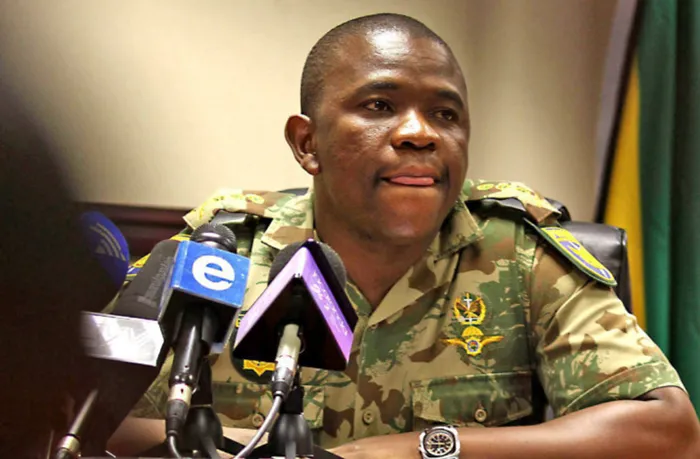
KZN Police Commissioner Lieutenant General Nhlanhla Mkhwanazi wore the SAPS Special Task Force (STF) camouflage uniform and operator's badge during a July 2025 briefing.
Image: Thobile Mathonsi / Independent Newspapers
As the sun sets on 2025, something unfamiliar is settling over South Africa. It is not relief. It is not a triumph. It is something far more valuable.
Clarity. For years, we were trapped in a tired argument. Either our democracy was collapsing beyond repair, or it was miraculously resilient. Doom or denial. 2025 broke that illusion.
This was the year we stopped debating theory and started watching practice. Not a fairy tale. Not a rescue mission. A rough, imperfect demonstration of a democracy that still knows how to correct itself when pushed hard enough.
When Lieutenant General Nhlanhla Mkhwanazi stepped forward and alleged a criminal conspiracy within the heart of the justice system, the country held its breath. We have seen this movie before. Explosive claims. Media frenzy. Then silence. Instead, something different happened.
The response was institutional rather than emotional. A retired Constitutional Court judge was appointed to lead an inquiry. Parliament, often mocked for dysfunction, activated its oversight role. No one was shut down.
No scandal was quietly buried. The system moved slowly and noisily, but it moved. For the first time in a long while, accountability was not a slogan. It was a process in motion. Justice Madlanga’s interim report arrived this week. Its contents will be debated and contested, but the deeper significance lies elsewhere.
Faced with a serious institutional infection, the constitutional body did not collapse. It responded. That alone is a democratic achievement worth naming. For more than a decade, Dr John Hlophe symbolised something corrosive.
A judge found guilty of gross misconduct who remained powerful. A reminder that consequences were optional for the well-connected. 2025 closed that chapter. Parliament finally removed him from the bench.
Then, after attempting to reinvent himself as a political power broker in the MK Party, he was suspended and pushed aside. Two institutions. One message. Past power does not grant future immunity.
Accountability has arrived not as a theory but as an addressable reality. Then came the Starlink moment. It was set up to become another predictable stalemate. Transformation versus progress. Ideology versus urgency.
Instead of noise, we got pragmatism. Communications Minister Solly Malatsi approved Equity Equivalent Investment Programmes using regulatory flexibility. The question shifted from ownership optics to lived impact.
What does empowerment deliver? A paper shareholding for a few or broadband in rural communities, digital infrastructure in township schools, and telemedicine in forgotten clinics.This was not the abandonment of transformation. It was a transformation being forced to perform.Policy moved from symbolism to outcomes. That is what governing maturity looks like.
Political fragmentation followed. Floyd Shivambu’s Afrika Mayibuye Movement entered the arena, and commentators warned of instability. But democracy was never meant to be tidy. It is meant to be competitive. New movements disrupt comfort. They force established parties to earn support rather than inherit it.
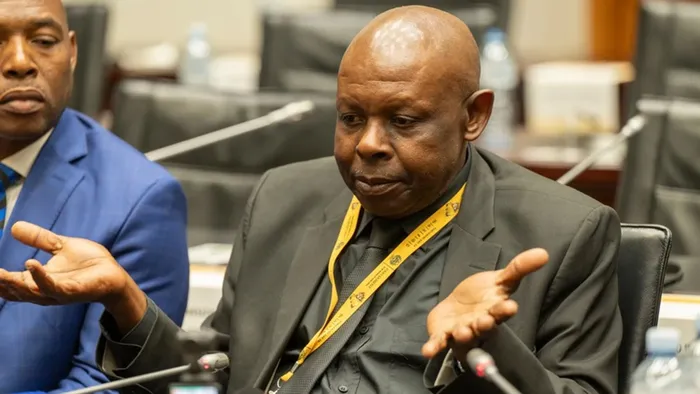
Former state security minister Bongani Bongo is being re-trialed for corruption after he was previously acquitted by impeached judge John Hlophe.
Image: Picture: File / Archive
They remind voters that loyalty is conditional. Coalition politics will be uncomfortable, but stagnation is worse. A noisy democracy is healthier than a silent monopoly. What ties these moments together is not a single leader or party. It is institutions remembering what they are for.
A commission investigated. Parliament asserted oversight. Courts enforced standards. Regulators adapted policy. Citizens organised new political formations. These are not the symptoms of a failing state.
They are the sounds of a democracy rebuilding muscle through use. We enter 2026 without illusions. The final Madlanga report will hurt. Coalition negotiations will strain patience. Service delivery demands will intensify.
But we now have evidence, not hope, that the foundation can carry the load. So, what must follow if 2025 was truly a year of growing up? First, institutions must be protected from political intimidation and budgetary sabotage. Oversight without resources is theatre.Second, accountability timelines must shorten. Justice delayed still erodes trust, even when it arrives.
Third, policy reform must continue shifting from ideological compliance to measurable outcomes. Transformation must be felt, not framed. Fourth, citizens must stay engaged beyond elections.
Oversight is not the job of Parliament alone. It is a civic duty.
Finally, political leaders must accept that credibility is now earned in delivery, not rhetoric. The public has learned to watch actions more than speeches. 2025 did not save South Africa. It challenged us.
We let go of comforting myths of inevitable collapse and destined greatness. In their place, we accepted something harder and more empowering. Our future is not guaranteed. It is constructed through difficult, deliberate choices made repeatedly.
Mayibuye iAfrika. Not as nostalgia. As instruction.
Nyaniso Qwesha, an MBA graduate