

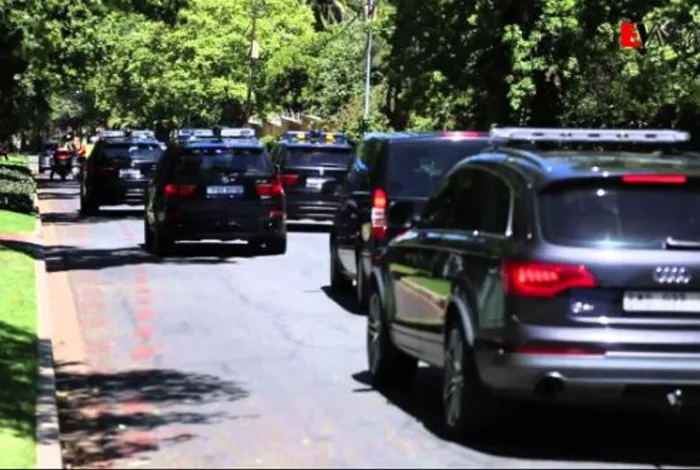
The “use or misuse” of blue light by politicians. They cut through traffic and conscience alike, announcing not service but status.
Image: File
Oh Mighty Blue Lights, once simple signals of urgency, have become symbols of distance. They cut through traffic and conscience alike, announcing not service but status. In their glare, comrades became rivals, brothers became enemies, and movements once held together by principle began to fracture under the weight of power.
There was a time when love guided the struggle. There was a shared belief that freedom meant dignity, justice, and a better life for ordinary people. Back then, voices rose not for positions or tenders, but for the right to be seen and heard. Today, the language of the struggle remains, but its soul feels absent. Something precious was lost along the way.
Many say we must lose the Blue Lights to find ourselves again. To remember who we were before convoys, before bodyguards, before liberation history became a ladder for personal advancement. They say there are no permanent friends or enemies, only permanent interests. If that is true, then the Blue Lights have become the most permanent interest of all. Power changes how people see the world.
Once the Blue Lights arrive, the people no longer look like comrades. They begin to look like obstacles, interruptions, or threats. Protesters are no longer citizens expressing pain but enemies of progress. Criticism is treated as betrayal. Accountability is framed as disrespect. Slowly and quietly, those who once challenged domination begin to reproduce it. We have watched this transformation unfold. Movements that promised radical change now defend the very economic system they once condemned. Leaders who spoke of equality now speak the language of markets, shares, and investment returns. Capitalism, once named as the problem, is now treated as destiny. The system has not been dismantled; it has been inherited.
When protests break out, the response is force. Send in the police, they say. The same methods were once used to silence dissent. The same violence was once rejected in the name of justice. History does not repeat itself here as irony, but as suffering. The Blue Lights offer a taste of power, but they leave behind a trail of broken trust and permanent enemies. Loyalty shifts away from the people and toward factions, networks, and financial interests. “Me first” becomes the guiding principle. People’s power is reduced to a slogan, brought out only when it is politically useful.
Meanwhile, the majority are told to be patient. They are asked to understand economic realities, to accept austerity, to tighten their belts. At the same time, those in power accumulate wealth, property, and security. Liberation is postponed indefinitely, while luxury is treated as a reasonable reward for leadership. Once again, ordinary people are left to survive on their own. We are forced to confront an uncomfortable truth. Political freedom without economic transformation was never enough. Replacing one elite with another was never the dream. Yet capitalism has proven remarkably skilled at absorbing resistance and turning it into opportunity. Those who once resisted exploitation now manage it.
The youth want the Blue Lights. Women want the Blue Lights. Who would not, in a society where dignity feels scarce and survival is uncertain? But have they not seen what the Blue Lights take in return? They take humility. They take memory. They take the commitment to serve rather than accumulate. Progressives become administrators of inequality. Revolutionaries become defenders of stability. Service turns into entitlement. Only a few manage to carry power without being consumed by it. Oh Mighty Blue Lights, you have brought division, mistrust, and bitterness into a movement that once promised collective liberation. You remind us that a struggle can be defeated not only by external forces, but by internal surrender to comfort and capital. Maybe the new “Umshini Wam” is no longer a song of resistance.
Maybe it is the sound of sirens racing past struggling communities, reminding us that power has learned to move fast while justice is left behind. And maybe real freedom will only return when the roads are cleared, not for convoys, but for the people still waiting for liberation to mean something real.