
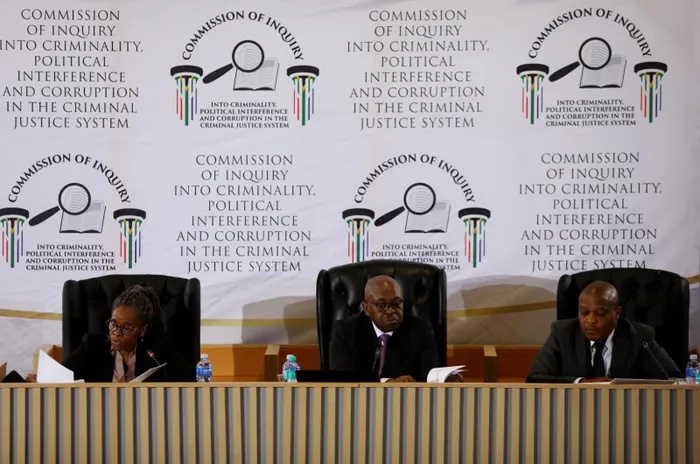
Corruption at SAPS Command: Insights from the Madlanga Commission.
Image: Oupa Mokoena / Independent Newspapers
The issues currently facing the Madlanga Commission and Parliament’s ad hoccommittee have been on my mind for weeks.
Testimony follows testimony, each one peeling back another layer of institutional failure, moral compromise, and delayed accountability. And beneath all of it, a question refuses to let go. Where did we go wrong?
Closely followed by an even heavier one. What now? These questions are not abstract. They speak to the heart of our democracy, representing the pivotal choices and intensifying consequences over time. What we experience now is not a collapse but the result of years of delayed responsibility, ignored warning signs, and tolerated decay.
When the ANC won the first democratic election, it carried the hopes of a nation hungry for justice and dignity. The early years were marked by progress. Infrastructure expanded. Institutions were stabilised. There was a sense, even if fragile, that the country was moving forward. We believed in the idea of collective effort and shared sacrifice.
But somewhere along the way, the discipline that sustained that progress began to erode. The Madlanga Commission and the ad hoc committee are not exposing a single moment of failure. They are revealing a pattern. Warnings ignored. Standard slowered. Accountability is postponed in the name of political unity or institutional protection.
Over time, loyalty replaced competence, and proximity to power matteredmore than service to the public.Infrastructure did not deteriorate overnight. It was neglected. Universities did not losetheir appeal in one dramatic moment.
They were hollowed out by mismanagement,politicisation, and underinvestment. Policing did not become contested because ofone bad decision. It became so because systems stopped correcting themselves.Watching these processes unfold, I found myself turning the same question inward.I asked myself where I went wrong.I used to be a top runner.
I trained consistently. I participated in most races. Fitnesswas not something I had to debate with myself. It was part of who I was. Over time,life intervened. Responsibilities grew. Excuses became easier. I told myself I was stillthat person, even as the evidence suggested otherwise quietly.The realisation came unexpectedly during a hike with friends visiting from CapeTown.
When they suggested it, I immediately said yes. In my mind, I was still fit. Stillcapable. Memory has a way of protecting us from uncomfortable truths.As the trail climbed, I could feel defeat settling in. Not a dramatic defeat, but the quietkind that strips away illusion. My breathing shortened. My legs resisted. My bodyreached a truth my mind had avoided for years. Then, suddenly, I saw it. The
pinnacle point. Standing there, firm and unmoved, it felt like an embrace rather thana rebuke. It did not mock my weakness. It reminded me of what effort still makespossible. The view did not erase the struggle that brought me there, but it gave itmeaning.
Exhaustion turned into clarity. I had not failed completely. I had simplybeen reminded that progress is earned, not remembered.That moment stayed with me because it mirrored what we are seeing as a country.Like an athlete who stops training but expects endurance, we assumed resiliencewithout maintenance. We relied on liberation memory while neglecting presentresponsibility.
And when the consequences arrived, we acted surprised.The Madlanga Commission matters because it interrupts denial and compels areckoning with the cost of inaction. The ad hoc committee matters because it bringsfailures into the open, where excuses are harder to sustain. But the main point isclear: Commissions alone do not fix nations, only action does.South Africa has become skilled at inquiry.
We investigate. We listen. We express shock. We issue reports. Then we return to familiar patterns. That cycle is perhaps our greatest weakness. So, what now?What is now required is more than outrage and more than eloquent findings. It requires discipline. It requires consequences that are not selective. It requires restoring the idea that public office is a responsibility, not a reward.
That accountability is not persecution, but preservation.It also requires personal introspection. A nation is not an abstraction. It is made up ofindividuals who either accept decline or resist it. Just as fitness is rebuilt throughconsistent effort, institutions are rebuilt through sustained integrity and competence.
The pinnacle on that hike did not mean the journey was easy. It meant the effort was worth it. South Africa stands at a similar point. We can see what is possible, but only if we are willing to confront how far we have drifted and commit to the work required to climb again. Where did we go wrong? is an important question.
But what now is the one that will define whether we reach the summit or turn back, pretending the view does not exist?
Qwesha is a trade finance consultant with expertise in global commerce and risk management and regularly contributes to a number of publications