
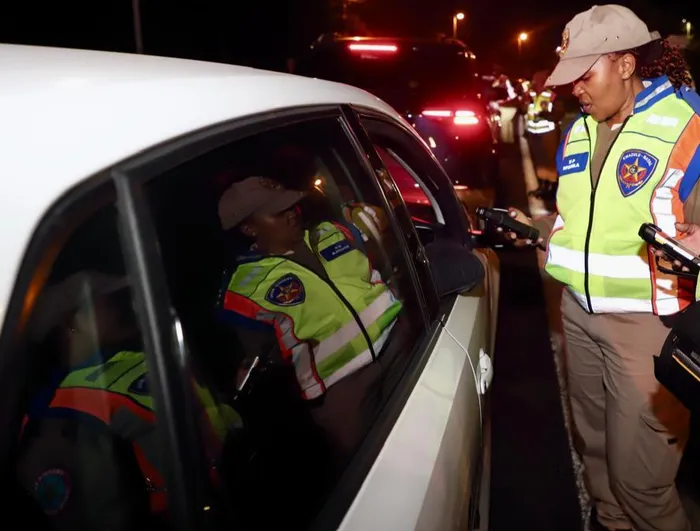
Transport Minister Barbara Creecy's bold move to ban drinking and driving has sparked widespread support from road safety advocates and labour organisations, who hail it as a long-overdue change in South Africa's fight against road fatalities.
Image: Supplied
Just when you think that the ANC couldn’t get more daft, Transport Minister Barbara Creecy disproves it. I almost fell off my chair when I read that Creecy plans to impose an outright ban on alcohol when driving.
On the face of it, it sounds like a brilliant idea, after all according to the annual Zutobi 2025 and 2023 reports, South Africa was ranked as the world's most dangerous country to drive in, primarily due to high alcohol-related death rates (57.5%) and low seat-belt usage (31%).
In reality, this latest announcement by Creecy is a deflection, an excuse to avoid doing the hard work by dealing with the real systemic reasons for our high road fatalities. Instead, she should ensure that the legislation that is already in place is enforced, ensuring that traffic violations are taken seriously.
The Department of Transport spokesperson, Collen Msibi, admitted that South Africa has a stark shortage of traffic officers, yet Creecy has been mum on addressing this key issue. Addressing this shortage and putting additional incorruptible traffic officers out on the roads would go a long way to addressing road carnage and drink driving in South Africa.
Why do I say that a zero alcohol ban for drivers is a bad idea? Why did I oppose similar moves when I sat on the Transport portfolio committee in Parliament?
The law requires that motorists may drive with a blood alcohol level not higher than 0.05g per 100ml of blood, or 0.02g per 100ml for a professional driver. In the ideal world, drink driving would be banned 100%. However, what the minister seems to lack is the reality on the ground (or road).
In reality, remedies like cough syrups contain alcohol, as do chronic medications such as ethanol. Medicines that address mental health issues, such as phenobarbital, which contains up to 15% ethanol, diazepam, or propranolol, which addresses heart conditions and migraines. I could go on, but you get the gist.
In fact, some medications have no easily substituted, alcohol-free alternatives. Pharmaceutical research shows that there are medicines where alcohol is essential.
While most medications contain alcohol, they do not put the motorist over the current permitted alcohol limit – the very reason why South Africa has legislated the limit that it does currently have.
Typically in ANC fashion, these facts will be ignored by the Minister, who will ram through a zero alcohol legislation. Such legislation will then crash and burn when the reality on the ground hits, when thousands of motorists who require such medication are found to have it in their system.
Hopefull,y the minister will take note of the facts and not seek to create attention-making headlines about this matter.
Manny de Freitas is a South African politician, and former Member of Parliament with the Democratic Alliance