

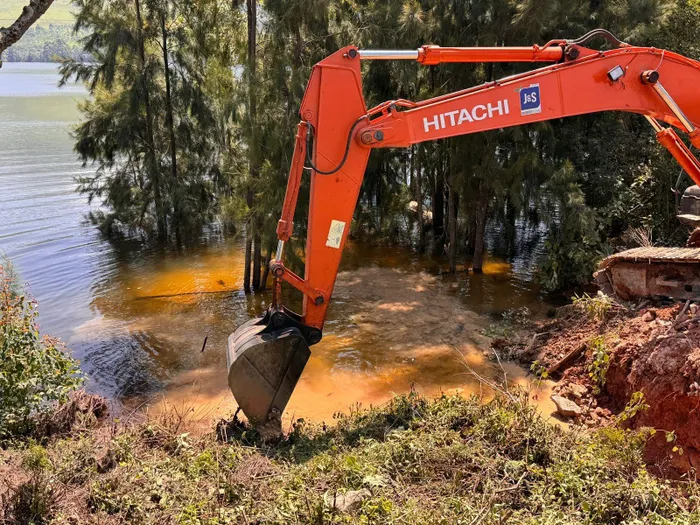
Excavations continue at the Senteeko Dam in Mpumalanga, as the emergency spillway channel is being expanded to reduce the dam's capacity.
Image: GCIS
As a government, our primary responsibility is to protect people, livelihoods, and the environment. That duty guided our response to the Senteeko Dam in Mpumalanga, where recent heavy rainfall weakened the structure and necessitated immediate action to reduce the risk to downstream communities.
Engineers and disaster teams have been working around the clock to widen an emergency spillway, lower water levels, and closely monitor the integrity of the dam. These efforts remain ongoing because the risk has not yet passed. Government remains on site and on alert until it does.
Standing at Senteeko Dam today, one sees heavy machinery, technical expertise, and, most importantly, human concern. Farmers worry about their crops and irrigation systems. Officials assess how water would move should the dam fail and disaster teams engage directly with families living downstream on preparedness measures, including evacuation protocols if required.
While no densely populated towns lie along the projected flood path and no cross-border impacts are anticipated, the presence of farming communities in this corridor makes our responsibility real and immediate.
This situation also carries an important message for communities across the country. Building homes, businesses, or infrastructure on floodplains, riverbanks, or directly below dams places lives at risk. Floodwater does not respect boundaries, and when dams come under pressure, it is often those living in vulnerable locations who face the greatest danger.
Communities living downstream of dams must also remain alert to rainfall patterns beyond their immediate surroundings, as flooding can be triggered by heavy rain upstream, far from where people live, but still result in sudden and dangerous surges of water downstream.
Beyond community awareness, the situation at Senteeko Dam speaks directly to the responsibilities of private dam owners. Privately owned dams form part of South Africa’s broader water and safety system.
When they fail, the consequences are not private. Water moves through farms, settlements, roads, and ecosystems, affecting everyone and everything in its path. Ownership, therefore, comes with a legal and moral obligation to maintain dams properly, comply with safety regulations and act before risks escalate.
The law is clear. Any dam holding more than 50,000 cubic metres of water and higher than five metres must be registered with the Department of Water and Sanitation’s Dam Safety Office. Registered dams must undergo regular safety inspections by an Approved Professional Person (APP) every five years. These inspections assess how a dam will perform under extreme rainfall, identify weaknesses, and recommend remedial action before failure becomes a possibility.
Where dam owners comply, risks are managed early and quietly. Where owners neglect maintenance, ignore professional advice, or fail to register their dams, the government will not hesitate to act. The devastating collapse of the Jagersfontein tailings dam in the Free State remains a painful reminder of what happens when accountability is ignored.
That tragedy marked a turning point, and the state has since taken a far firmer stance on enforcement. Private ownership does not exempt anyone from responsibility, and failure to act will attract decisive regulatory consequences.
South Africa is experiencing increasingly variable and extreme weather patterns. While we cannot control rainfall, we can control preparedness. Registration, inspection, maintenance and compliance are the tools that reduce risk and protect lives. They also reduce the need for emergency interventions such as those currently underway at Senteeko Dam.
We are committed to ensuring that this situation ends without loss of life or major devastation. But we are equally committed to ensuring that it signals a new era of accountability. Dam safety is not about punishment; it is about prevention. It is about protecting families, farmers, infrastructure and water resources that underpin our country’s wellbeing.
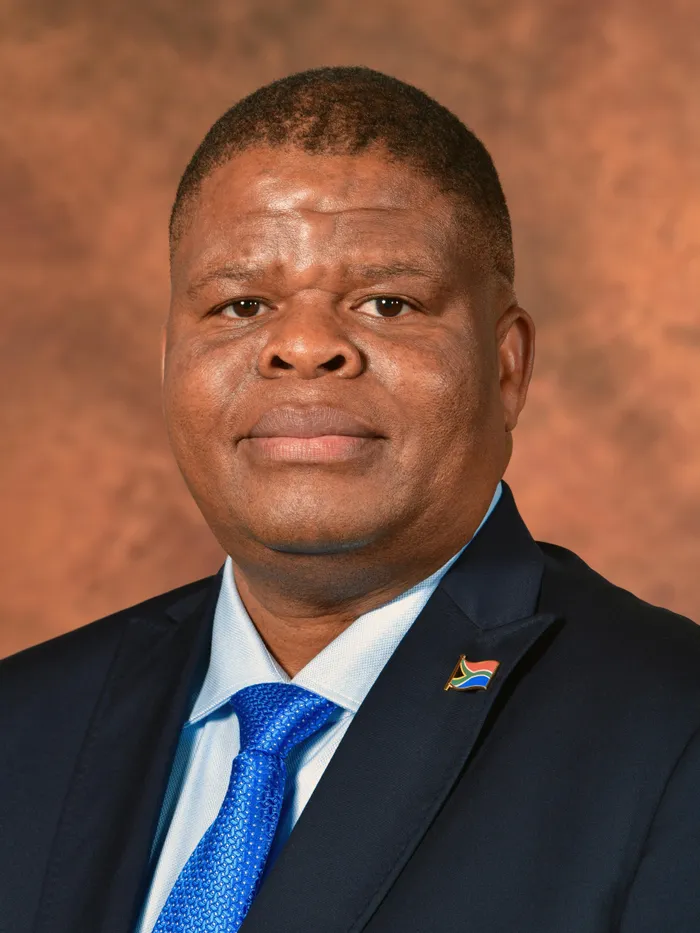
David Mahlobo, Deputy Minister of Water and Sanitation
Image: Supplied
As long as the risk at Senteeko Dam remains, the government will remain present. Accountability, vigilance, and cooperation are not optional in water infrastructure management. They are essential.
Note: Senteeko Dam, registered as “My Own Dam,” is a privately owned irrigation dam located outside Barberton in Mpumalanga, within the City of Mbombela Local Municipality. Recent heavy rainfall has eroded the structure beneath the spillway, creating a risk of failure.
In the event of a collapse, floodwaters would move along the Die Kaap River and affect farming communities for approximately 30 kilometres before reaching the R40 bridge. No densely populated towns lie in this corridor, and no cross-border impacts on Eswatini or Mozambique are anticipated.
Should the dam collapse, the Department of Water and Sanitation, working with disaster management authorities and local government, will activate evacuation protocols, safeguard downstream communities and coordinate recovery efforts. Until the risk is fully mitigated, engineers, emergency teams and regulatory officials remain on site to protect lives and livelihoods.
David Mahlobo, Deputy Minister of Water and Sanitation