
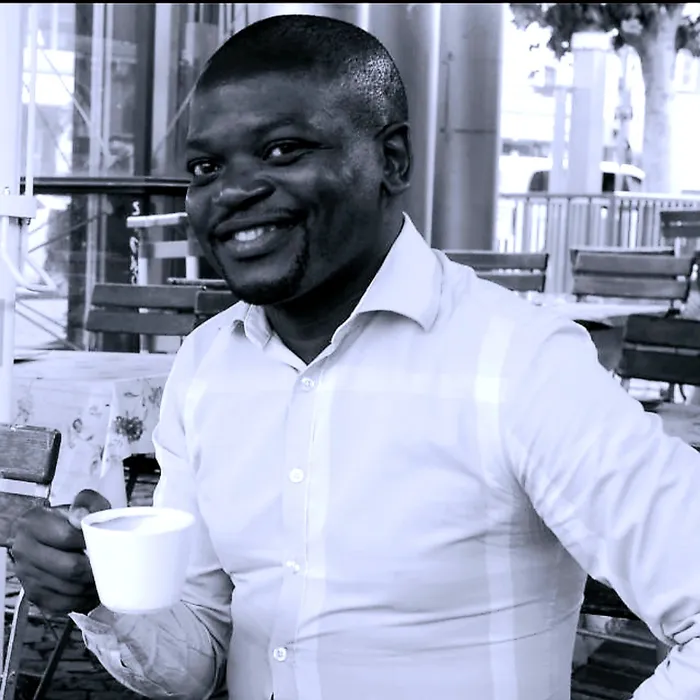
Dr Gideon Chitanga is a political and international relations analyst.
Image: Supplied
In December 2025 Chinese President Xi Jinping hosted France’s President Emmanuel Macron in the southwestern city of Chengdu. The visit was one of the rare occasions the head of the world’s second-largest economy accompanied a guest beyond the capital, Beijing. During their meetings which were held ahead of France’s hosting of the Group of Seven (G7) summit in 2026, the two leaders pledged deeper cooperation on global issues.
Macron would later tell the media that he was “very touched” by Xi’s gesture. The meetings between the two leaders showed all signs of mutual trust and a desire to “act together” at a time when international tensions are rising, the global order is fraying, and global fractures are widening.
In January, the same month the United States announced its withdrawal from 66 multilateral organisations, China hosted leaders from Canada, Finland, and Britain. The Global Times has reported of Chancellor Merz’s potential visit to China slated for late February with experts suggesting that Berlin will seek to strengthen bilateral ties.
So why then should Africa be perturbed or threatened when it comes to exercising its legitimate sovereign choice to forge stronger mutual beneficial socio-economic and political cooperation with China. How should African countries approach the changing global order.
During their visit to Beijing, all these world leaders pursued mutually beneficial bilateral and multilateral cooperation, purposefully seeking to advance shared interests. Under the USA led liberal international order, most countries had not option but to bank their economic and security interests with the USA, however unfair.
The USA-led world order curved what felt like strong and stable alliances based on clear rules while hiding its hegemonic imperialistic tentacles. Where the West was concerned, disagreements were handled quietly, with civility based on shared formal and informal accords and a sense of cordial collegiality among leaders who subscribed to shared norms and values of Western civilisation.
Well, today things have or are changing. Under the Trump presidency not only is everything a transactional deal, but mighty or power is unilaterally correct and cannot be questioned. Not only have the fraying rules of the liberal international order been upended, and allies and enemies publicly ignored, berated, and humiliated, but there is a sense in which the USA, the former hegemony, is now going it alone with unprecedented arrogant bellicosity, at a time when the world order is shifting towards multipolarity.
In a sense, even the “rules-based order”, tolerated by many in the world despite its internal contradictions, and skewed application to privilege the most powerful, while marginalising many in the Global South, has been rendered meaningless, if not futile. Its institutions and rules, responsible for the relative peace and stability of the past 70 years has been rendered irrelevant.
The president of the USA has taken every opportunity to show his contempt of the UN, withdrawn the USA from many of its agencies, and defunded the most important multilateral entity since World War 11. Ironically, the United Nations (UN) Charter, probably one of the most important documents of our time, was signed in the USA state of California on June 26, 1945.
The unilateral invasion of Venezuela and subsequent abduction of President Maduro, the threat to seize Greenland and threats against Cuba, amongst other countries, suggest unbridled imperialist impulses at the heart of Washington.
But as we navigate our way post USA unilateral hegemony, world leaders must contend with not only adjusting but embracing the new realities of a changing global order. Indeed, there is a realisation that while the USA may have been the singular major power in the past 70 years, such power has fast diffused to other economic and political centres, and emerging powers could play an important role reshape the emerging order, ensuring that it is more democratic, inclusive and participatory.
The USA may have unassailable military power, but that alone is not enough and maybe not be the most useful way of exercising global leadership. The use of unilateral tariffs or violence as a big stick to wheep other countries into line has so far proved not the smartest, except for racking weaker economies in the Global South, particularly in Africa.
African countries must be unflinchingly united, speak with one voice, and act with resolute conviction and principle in reshaping the emerging global order. They should not forget the pain of colonial imperialist exploitation and the coercive imposition of painful economic conditionality under structural adjustment programs largely imposed from outside at a time when they needed external economic support to rebuild economies destroyed under anti-colonial wars.
We must remember the violence and gross human rights violations of the USA-USSR cold war, when Washington backed settler regimes and violent insurgence, only to delay independence and the dawn of self-determination by inflaming divisive violent domestic conflicts.
Most importantly, African countries must speak with one voice when it comes to their autonomy to pursue their international interests. During his campaign for office, President Trump threatened to impose severe tariffs on BRICS member countries, developing countries which are close allies with China.
China has emerged as the largest trading partner with the African continent ahead of the USA. China–Africa economic cooperation has expanded rapidly over the past two decades, centered on trade, infrastructure development, investment, and development finance.
Through initiatives such as the Forum on China–Africa Cooperation (FOCAC) and the Belt and Road Initiative, China has financed and built roads, railways, ports, power plants, and digital infrastructure across the continent.
African countries have benefited from improved connectivity, industrial capacity, and access to Chinese capital and technology, while China secures markets, resources, and strategic partnerships. China-Africa cooperation has reshaped development discourses through emphasis on mutual beneficial development and investment in infrastructure. Unsurprisingly, the USA and other Western countries are now talking the language of infrastructure development providing mutual benefits.
China has stayed on the progressive side of African history. A combination of direct support for Africa’s liberation, nascent aid and infrastructure partnerships has evolved into proliferating transformative ties rooted on unconditional solidarity and the need to build better lives for all.
Supporting the struggle for self-determination against highly invested major powers who sought to maintain colonial oppression came at a high cost, but China did not choose the easy way, to leave African liberation movements and people to their own means.
Since the normalisation of diplomatic ties between the USA and China, their relationship has come to demonstrate that two major countries with different political systems, histories, cultures and stages of development can come together and work together for the benefit of their citizens, and the broader international community.
China's rise is not a threat, and US-China engagement has brought unprecedented peace and prosperity to both countries and the world at large. Trade between the two economic giants was estimated at around $585bn in 2025.
While China is the second biggest economy in the world after the USA, recent IMF data places China ahead of India and the USA, respectively, as the top contributors to real global GDP for 2026.
The international order is under great strain, and world leaders must work together to build an equal and orderly multipolar world. Africa must stand strong, resolutely core-define the rules, while maintaining mutually beneficial international cooperation, including the strong ties with China.
Dr Gideon Chitanga is a political and international relations analyst.