When management sells the company: What the Barloworld deal really reveals
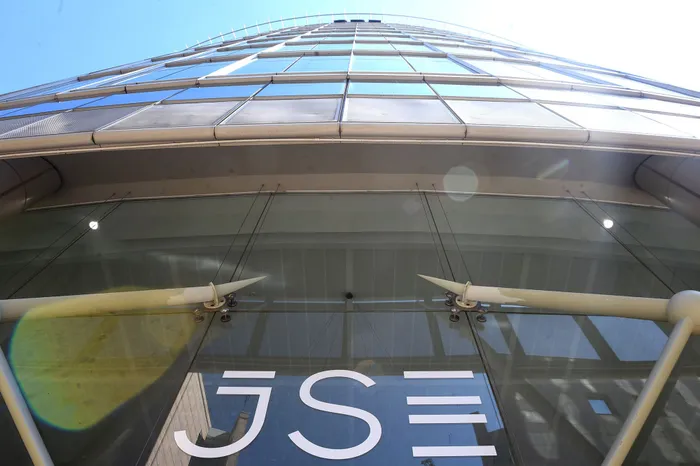
Barloworld’s R23 billion acquisitions by the Saudi-backed Zahid Group and the Black-owned Entsha consortium, followed by its delisting after 86 years on the JSE, mark the end of a long public chapter in the company’s history.
Image: Picture: Itumeleng English / Independent Newspaper
When a 124-year-old South African industrial giant quietly leaves the Johannesburg Stock Exchange, it should give us pause.
Barloworld’s R23 billion acquisitions by the Saudi-backed Zahid Group and the Black-owned Entsha consortium, followed by its delisting after 86 years on the JSE, mark the end of a long public chapter in the company’s history.
The deal has been framed as a transformation, a renewal, and a fresh start. But behind the reassuring language lies a harder truth that deserves public reflection. This transaction tells us as much about power, accountability, and corporate incentives as it does about ownership.
At the centre of it all is one uncomfortable fact. As Barloworld exited public markets in January 2026, senior executives collectively received R43 million in incentive settlements. Chief executive Dominic Sewela alone received R21.8 million. Former finance director Nopasika Lila received R6.8 million. These payments were triggered not by future performance but by the act of selling the company itself.
This was not a traditional management buyout. But it was a management-negotiated exit, financed largely by foreign capital, and completed at a time when South Africa was steadily losing listed industrial companies that once anchored its public economy.
With the delisting now complete, these questions are no longer theoretical. The public no longer has a window into Barloworld’s decisions. What was once visible is now private.
Why Sell Now?
Barloworld’s longevity makes this moment especially striking. Founded in 1902, it survived two world wars, the Great Depression, apartheid-era isolation, sanctions, the global financial crisis, and Covid-19. For more than eight decades on the JSE, it remained publicly accountable, regulated, and open to scrutiny.
So why now?
The official explanation is familiar. Private ownership allows for patient capital, strategic flexibility, and freedom from short-term market pressure. These arguments are not new. They accompany almost every delisting. But they leave a key question unanswered.
If Barloworld’s future under private ownership is so promising, why were long-standing public shareholders not allowed to share in that future? When management negotiates a sale that also unlocks significant personal payouts, timing matters.
Either management believes the market undervalues the company, meaning shareholders were excited too early. Or management believes the road ahead will be challenging and prefers to navigate it away from public view. Neither possibility sits comfortably with the idea of stewardship.
Incentives and Alignment
To be clear, there is nothing illegal about accelerated incentive payments during a change of control. It is standard corporate practice. But standard practice is not the same as public legitimacy.
Mr Dominic Sewela has spent close to two decades at Barloworld and rose through the ranks on the strength of operational experience.
That history deserves acknowledgement. But it does not negate the optics or the implications of receiving nearly R22 million at the precise moment the company leaves public ownership. This is not about questioning personal integrity. It is about questioning incentive design.
When executives benefit financially from a transaction that removes transparency and public accountability, the alignment between leadership and long-term public value becomes blurred. Management has access to information that shareholders do not. Strategy, risks, and the future are known internally long before they are visible externally. That imbalance matters most at the point of sale. In that context, R43 million in collective exit payments feels less like alignment and more like a reward for withdrawal.
Empowerment and Capital
The transaction is rightly described as a Black economic empowerment milestone. Entsha, a 100 percent Black-owned South African investment company associated with the Sewela family, holds 51 percent of the consortium. In a country still shaped by exclusion, that ownership matters. But empowerment must also ask where power truly sits. Zahid Group owns 49 percent and brings significant financial muscle and international reach. The structure is a partnership.
But it is also a reminder that much of the capital driving this deal originates outside South Africa. This is not an argument against foreign investment or Black ownership. It is a reminder that ownership structure shapes accountability. Once a company goes private, decisions about jobs, investment, suppliers, and long-term strategy are made behind closed doors. Private capital prioritises returns and balance sheet discipline.
In practice, this often translates into cost control, asset optimisation, and operational restructuring. These decisions affect workers, suppliers, and communities long before they show up in financial statements.
Under public ownership, these trade-offs were visible and contestable. Under private ownership, they are not.
What Delisting Really Costs
When Barloworld left the JSE, South Africa lost more than a ticker symbol. It lost visibility. Public companies are imperfect. They are pressured by quarterly reporting and market sentiment. But they are also transparent. They report regularly. They explain executive pay. They answer shareholder questions.
Private ownership removes that obligation. Barloworld’s future will now be shaped without public reporting, shareholder votes, or analyst scrutiny. Pension funds and retail investors were compelled to accept R90.50per share once the offer crossed 90 percent. Those who believed in the company’s long-term public value were forced out.
That is how delisting works. But it also reveals who ultimately decides when public participation ends.
A Broader Warning
There is a wider lesson here for South Africa. When companies of Barloworld’s scale choose to leave public markets, it signals discomfort with transparency, regulation, or long-term public accountability. South Africa does not need fewer listed industrial companies. It needs more. Strong public markets allow ordinary citizens, through pension funds and savings, to participate in economic growth.
Each delisting concentrates power and reduces public stakeholding in the real economy. If transformation and long-term investment can only succeed away from public view, then the problem may not lie with the companies alone but with the system meant to support them.
A Question for Leadership
Dominic Sewela and the Barloworld board may say they followed every rule. That may well be true. But leadership is measured by judgment, not compliance. Now, Barloworld left public ownership; executives were rewarded handsomely for the exit itself. That reality cannot be separated from the story of this deal. The board owed the public a clearer explanation. Why this moment? Why this structure? Why were executive rewards tied to withdrawal rather than long-term public value?
Those answers have not been fully given. History will not focus on whether the transaction was lawful. It will focus on whether those entrusted with one of South Africa’s oldest industrial companies acted as custodians of a public legacy or as beneficiaries of its final sale. That distinction matters.
Especially in a country where trust in corporate leadership is already fragile. And that is why the Barloworld deal deserves scrutiny long after the paperwork has been filed and the shares have disappeared from the board.
Qwesha is a trade finance consultant with expertise in global commerce and risk management and regularly contributes to a number of publications