Why renaming Graaff-Reinet honours Robert Sobukwe's legacy
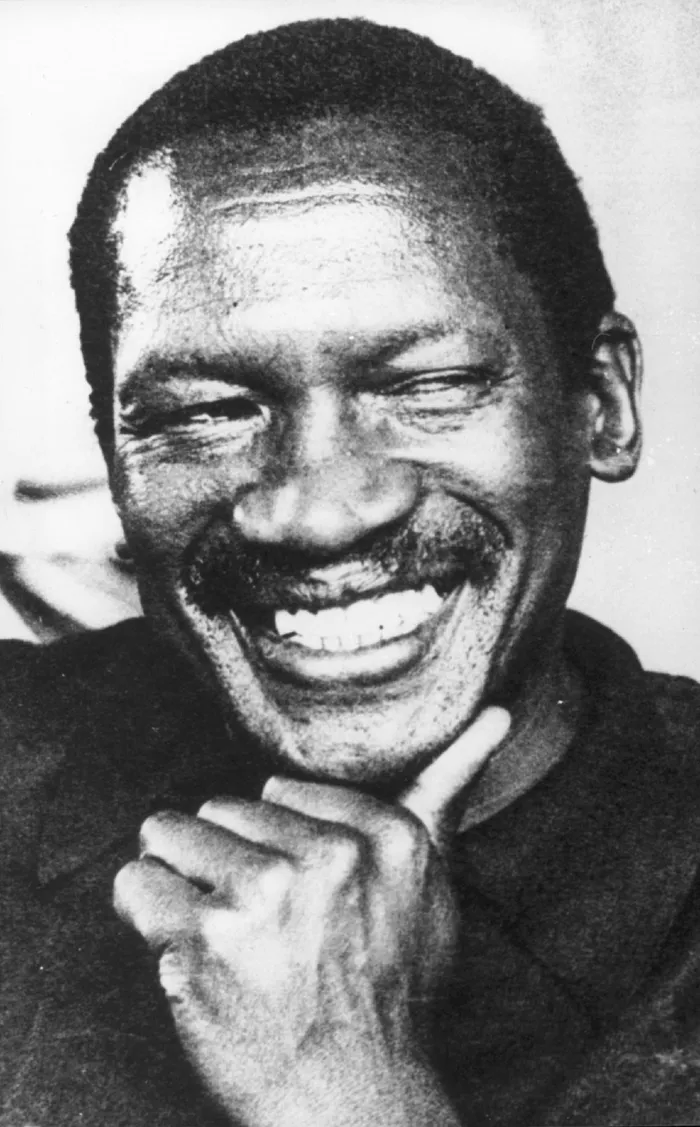
Sobukwe legacy honoured amid backlash: Family and PAC defend name change.
Image: Handout/ Supplied
As part of the decolonisation process, the state should do away with provocative names that are associated with colonial and apartheid atrocities. Graaff-Reinet is one of many names that the government of the Republic of South Africa should scrap in favour of embracing the local hero, Dr Robert Mangaliso Sobukwe, who played a key role in fighting against the racist apartheid regime all his life.
Robert Sobukwe, who died aged 53 years this month of February in 1978, bears a direct connection to the part of the Eastern Cape in the Karoo region that is known as Graaff-Reinet, named after a coloniser and his wife, Cornelis Jacob van de Graaff, and his wife’s maiden name, Reinett. The name, Graaf-Reinett, does not reflect the real history of the land struggle of Black people in that place and in South Africa. The majority of people living in that place are Blacks (Coloureds and Africans).
Renaming and naming places, streets, and monuments after cultural and historical identities that are relevant to the residents is a critical stage in the decolonisation process because it seeks to enable the Black majority to reclaim not only their identity but also inclusivity.
Blacks want to have a sense of ownership of their country, but that cannot happen when the places that are supposed to define them are still named after their former masters (Baas). Mentally, a name like Graaf-Reinett or Paul Kruger still affirms the superiority of white people and whiteness.
Briefly before the passing of Mama Veronica Sobukwe in 2018, we went to visit her, Sobukwe’s cemetery, and the museum. I was deeply shocked when I interacted with residents who had no idea about the historical contributions of their place in the struggle. They did not even know that Sobukwe was born there.
As they say, the prophet is not honoured in his hometown. Like many towns and cities in South Africa, Graaff-Reinet is characterised by inequalities, poverty, alcoholism, and youth unemployment. ‘Prof’, as he was affectionately known to his peers as a result of his clear-headed thinking, was influenced by the injustices that were inflicted on the majority of Blacks. The place has not changed from how Sobukwe knew it.
A lot of opposition to the renaming of Graaff-Reinet seems to be coming from white right-wingers who have not gotten used to the political and social changes that took effect in 1994. The Democratic Alliance and Freedom Front Plus are defending the rights of minorities at the expense of the majority, who have suffered injustices from colonial, apartheid, and the current kleptocratic government. They advance a blatant lie and deception that it was the white community that built Graaff-Reinet. South Africa, including Graaff-Reinet, was built through the toil, tears, and blood of Blacks.
The white minority who are not happy about this development must remember that Sobukwe does not only hail from that small, historic town, but he is a unifier who did not recognise the existence of race, hence the coining of the political terminology called non-racialism/human race when everybody was held up to multi-racialism. Sobukwe’s legacy seeks to unify the people of all backgrounds to become one unit and pursue all aspects of development. That is how he should be seen, not as the DA and FF+ are convincing people.
This form of debate or discussion is also important as it stimulates intellectual rigour, which may possibly result in a new trajectory for our country. It is vital to talk about how we want to arrange our society and make decisions that positively change the fate and fortunes of our lives.
The naming and renaming of places or monuments should not be done to spite or hurt a group of people. It should be taken as an opportunity to further unite people of various backgrounds.
The government should proceed with renaming Graaff-Reinet after Robert Sobukwe to honour his living legacy. This process will help to mentally liberate the people of South Africa who are unconsciously and subconsciously inferior to white people. The renaming after Soubkwe will help to restore and regain self-confidence among communities to start caring for and embracing their communities on all fronts.
Kgwadi is a political scientist. He is a Research Fellow at the Middle East Africa Research Institute