
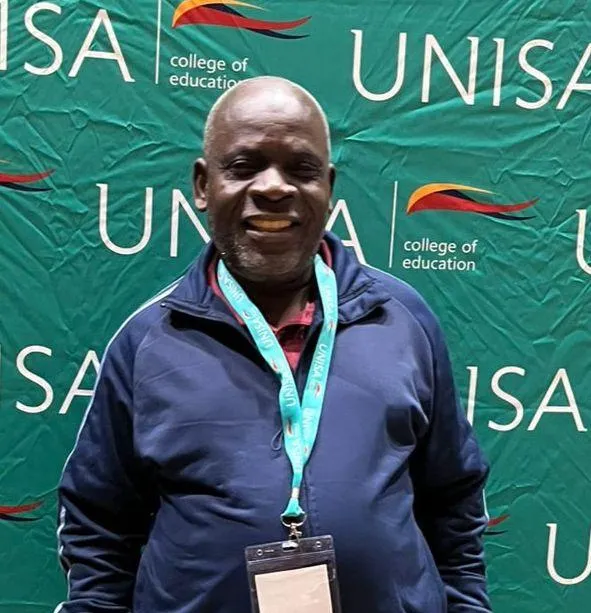
Professor Gezani Baloyi
Image: Supplied
By Professor Gezani Baloyi
Getting the foundation right in Early Childhood Education is the way to go in achieving quality education. There are many positive interventions in tackling the challenges of early childhood education. Getting learners to read for meaning in the foundation phase has long-term gain. In getting quality education in South Africa, the President has called for teachers to teach, parents to play their parental role, and the government to govern effectively. A large amount of the country’s budget is spent on education; therefore, quality teaching and learning can never be underestimated. Communities have a role to play in promoting a culture of teaching and learning in the schooling system. In a schooling system where communities are involved in education, there will be a culture of teaching, learning, and safe environments. Learners will move from one grade to another and will go on to register with institutions of higher learning.
To ensure sustainability in quality teaching and learning, there should be accountability. For example, the principal should be accountable to parents, governance structures, circuit managers, and school management teams; the deputy principal should be accountable to the principal; teachers to the head of department; learners to teachers, etc. These structures should function as a unit of account, and there should be accountability and consequence management. Rooting out corruption in the schooling system will ensure that the country achieves better education for all and eradicates poverty.
The class of 2025 has set the tone and has demonstrated that collective leadership can achieve better results. Our schools must remain centers of excellence, safety, and growth, not battlegrounds. We need to prioritize our education and remove barriers to quality education. This should not be seen as an event but as a process.
In addressing general education and vocational education and training, the President calls for the improvement of the TVET college sector so that the production of artisans can be increased and innovation promoted in South Africa. Indeed, TVET education will offer education with more practical training. Therefore, this education will integrate skills training for youth. We are living in an era where new technologies and innovation are the way to go. Building and maintaining infrastructure of TVET colleges will ensure the President’s call becomes a reality. Promotion of TVET colleges and universities of technology will promote innovation, a direction where the country aspires to be.
Continuous professional development of TVET lecturers remains key and critical in achieving this call. Building more universities and TVET colleges will be a panacea for broadening access to higher education and marginalized communities. Student accommodation is becoming topical and should receive necessary attention in the higher education sector, communities, and various structures that have an interest in education. The institutions of higher learning are positioning themselves to ensure that the curriculum is responsive to the communities, markets nationally, regionally, and globally.
Of particular importance are the issues of ethics and ethical leadership, which remain key in ensuring sustainability of quality education, National Development Planning 2030, Sustainable Development Goals, Agenda 2063. Ethical practice should be promoted across diverse sectors and institutions.
The President calls for corporate citizenship, stating that businesses should come on board and support communities and schools in achieving quality and better education for all. Companies and business people are expected to be responsible members of the societies in which they operate. This reality is encapsulated in the term corporate citizenship, which is increasingly used to refer to corporate responsibility rather than corporate social responsibility. Businesses should always find themselves in relationships of responsibility towards society to eradicate poverty.
The President calls for building safer communities, in which everybody generally knows everybody and there should be a sense of belonging to fight poverty and the challenges of climate change, which have become normal. Flooding in some provinces, including Limpopo, Mpumalanga, KwaZulu-Natal, and the Eastern Cape, has damaged infrastructure, school buildings, eroded sewage systems, bridges, roads, and communities became islands. There were no schools in affected communities, and learners were robbed of their basic right to education. Education is a basic right, and this right cannot be taken away from them. This right is guaranteed in the Constitution, which is the foundation of our democracy.
*Professor Gezani Baloyi is a respected Education Professor and is the Head of Quality Assurance and Enhancement at the University of South Africa, the biggest distance university in Africa.
Quality Assurance and Enhancement