

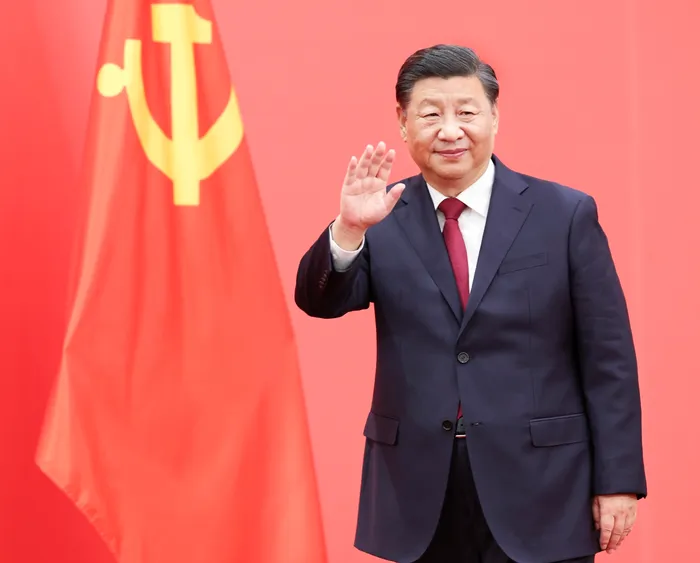
In a formal message to the African Union's 39th Summit, President Xi Jinping announced that the zero-tariff policy, which includes 53 African nations with diplomatic ties with China, will take effect on the 1st of May, 2026.
Image: Pang Xinglei / Xinhua
In a formal message to the African Union's 39th Summit, President Xi Jinping announced that the zero-tariff policy, which includes 53 African nations with diplomatic ties with China, will take effect on the 1st of May, 2026.
The new policy expands preferential access into the Chinese market initially granted to the least developed countries (LDCs) to include all African countries, providing a concrete, transformative trade framework with fixed implementation timelines.
The zero-tariff access to the second-largest economy and probably the largest market by population opens a window for export-led growth across African economies. The timing of the launch declaration (declaration of 2025), which called for the removal of tariffs for African countries.
The zero-tariff policy provides a genuine opportunity that could have a long-term, transformative impact on Africa’s growth. It is a major strategic breakthrough in South-South commerce and economic diplomacy, providing reassurance and certainty that the African continent has access to the Chinese market.
The policy positions Africa as a strategic low-cost entry point into the huge Chinese market. Companies that wish to evade high tariffs in other parts of the world could now set shop in the continent as a springboard into China, bringing much-needed foreign direct investment (FDI). The provision of non-tariff access to the world’s second-largest economy is a significantly bold move that reaffirms China’s deep solidarity with the African continent and its openness to business amid rising US protectionism and transactional bilateralism.
The US recently confirmed that the Africa Growth Opportunity Act (AGOA) will be continued following lengthy uncertainty and fears that some African parties to the Act may be excluded. AGOA, like European Economic Partnership Agreements, often comes with political or governance conditionalities that smack of intrusive political and economic post-colonial interference and paternalism.
As has become common practice under the Trump administration, AGOA is most likely to be used as a big carrot and stick to align African countries into the US economic and political orbit.
The zero-tariff policy essentially sets a reference point that African policymakers can wield in economic diplomacy. As is common in China-Africa policies and partnerships, the policy steers away from overbearing conditionalities while signalling Beijing’s willingness to foster deeper mutually beneficial trade and broader economic relations based on mutual respect.
In this regard, it strengthens Africa’s bargaining power with other trading partners, including Washington and Brussels, whose conditional, externally engineered trade deals sometimes fail to meet local interests.
African countries will be able to engage in trade negotiations with other parties from a point of strength. They will be able to refer to the Africa-China zero-tariff policy as a pro-poor policy that allows them to grow their economies.
They will also be able to push trading partners such as the US and the EU, among others, to rethink and reconsider their eligibility conditions, extend validity windows, relax rules of origin, and renegotiate the rigidity associated with Economic Partnership Agreements (EPAs). Indeed, if the zero-tariff offer becomes a permanent feature of Africa-China trade, it could transform the character of economic diplomacy where Africa is concerned.
The zero-tariff policy could also catalyse the implementation of the African Continental Free Trade Area (AfCFTA), rapidly moving the continent towards deeper intra-continental integration and free trade and coordinated reduction of non-tariff barriers. Non-tariff barriers account for avoidable high costs in doing business in Africa.
Furthermore, the creation of regional production corridors and harmonization of standards, allowing countries to specialize across a single value chain under the AfCFTA could make it easier to channel capital and investment towards shared economic growth and development.
It will enable African countries to easily collaborate and coordinate efforts to attract capital and finance towards intra-regional value chains, collectively improve regulatory frameworks, and invest in growth enablers like reliable (clean) energy production, which are needed to power industrialization and manufacturing.
African governments will have to align investment incentives with export ambitions, pair the AfCFTA-driven regional supply chains with tariff-free access to China to reward economies that scale production beyond national borders and maximise the benefits of the zero-tariff policy.
Such efforts will boost intra-African trade and industrialization by eliminating non-tariff barriers and tariffs on 90% of goods traded among African countries. Both tariff and non-tariff barriers raise the costs of intra-Africa and international trade with major partners, harming the prospects of increased foreign direct investment into the continent.
Probably the biggest challenge for Africa to maximize the zero-tariff access is the historical structure of international trade and the continental economy. It is not a secret that African countries are largely dependent on the export of raw materials such as crude oil, minerals, and other primary commodities, a colonial legacy that must be changed.
Indeed, in the short term, African countries will expand trade in these commodities since they are the main source of revenue in much of the continent. However, in the medium to long term, African countries should use the opportunities provided by the zero-tariff policy to optimize resource allocation to improve Africa’s hardware and software infrastructure for structural transformation and long-term growth.
There is no doubt that the African basket of exports to China is diversifying and broadening and that the zero-tariff policy significantly improves the price competitiveness of African goods at the Chinese border. Light manufacturing, textiles, and agricultural products ranging from tea, coffee, nuts, oil seeds, fruits, and other horticultural goods are set for a trade boom, especially where they already meet Chinese sanitary and phytosanitary standards. The zero-tariff policy reduces landed prices on African goods and creates room for value-added production, enhancing their competitiveness in the vast Chinese consumer and industrial markets.
Trade in agricultural products deserves special attention because China has vowed to support the African export of agricultural products. Indeed, to this end, Beijing established a “Green Channel” for African agricultural products to enter the Chinese market in its 2021 FOCAC commitment. The trade facilitation measures removed many of the tariffs and simplified customs procedures, including inspections at the point of entry, to facilitate faster customs clearance, thus mitigating harmful potential hidden costs emanating from delays at the ports and administrative bottlenecks.
The “Green Channel” is already bearing fruit. By 2023, Africa-China trade in agriculture reached USD 9.35 billion, a 6.1% increase from the previous year. More importantly, the zero-tariff policy offers new opportunities to expand trade in agricultural products from 3.3% of total China-Africa trade as recorded in 2023.
According to data released by the General Administration of Customs of China, trade between China and Africa reached 314.4 billion U.S. dollars from January to November 2025, up 17.8 percent year on year. Africa's exports to China reached USD 112.7, an increase of 5.2 percent year-on-year.
China also pledged to continue advancing the negotiation and signing of agreements on economic partnership for shared development and further expand access for African exports to China by upgrading the "green channel" and other facilitation measures. Africa must do more to ensure that the opportunities provided by the zero-tariff policy are not missed.
Gideon H. Chitanga, PhD, is a political and international relations analyst.