
The letter also acknowledged the broader challenges facing women leaders within the higher education sector, particularly Black women, who often encounter heightened scrutiny
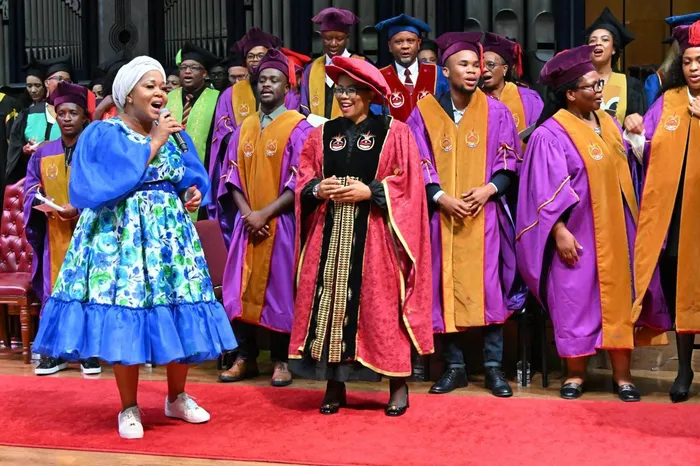
Unisa. Professor Puleng LenkaBula
Image: Supplied
A shop steward from the National Education Health and Allied Workers' Union (NEHAWU) has written an open letter reflecting on the leadership of Professor Puleng LenkaBula, the Principal and Vice-Chancellor of the University of South Africa (UNISA), highlighting her role in advancing transformation and strengthening institutional stability at the university.
In the letter, written by NEHAWU shop steward N Nako, the union representative reflects on the significance of LenkaBula’s leadership at one of Africa’s largest open distance learning institutions.
The letter notes that leadership in higher education is often tested during periods of complexity rather than comfort, particularly as universities face growing pressures related to governance, labour relations, and social transformation.
In South Africa’s higher education sector, relations between universities and labour unions are often marked by tension. Disputes over wages, working conditions, and institutional governance frequently place unions and management on opposite sides of the negotiating table.
Against this backdrop, a recent open letter written by a shop steward from the National Education Health and Allied Workers' Union at the University of South Africa offers an unexpected perspective.
Rather than criticising university leadership, the letter reflects on the leadership of LenkaBula and the significance of her tenure at the institution.
For many observers, it is unusual to see a labour representative publicly acknowledging a university executive, particularly given the historically adversarial relationship that often characterises labour relations in the higher education sector.
Yet the letter frames the moment not as a departure from union principles, but as an opportunity to reflect on leadership, transformation, and the broader role universities play in society.
LenkaBula’s appointment marked a historic milestone for the institution. When she assumed office, she became the first woman to serve as Principal and Vice-Chancellor in the university’s 148-year history.
According to the letter, this milestone represented more than a leadership transition. It symbolised a shift in the long-standing patterns that have historically shaped leadership positions in higher education institutions.
“For many observers, the moment signalled progress toward leadership that reflects the diversity and aspirations of South African society,” Nako wrote.
The letter also acknowledged the broader challenges facing women leaders within the higher education sector, particularly Black women, who often encounter heightened scrutiny and expectations in positions of authority.
Nako noted that under LenkaBula’s stewardship the university has made strides toward strengthening governance and maintaining institutional stability.
Among the developments highlighted in the letter is the advancement of constructive labour relations at the institution, including the implementation of a multi-year agreement between management and organised labour.
The agreement, according to the letter, has contributed to organisational continuity and improved engagement between stakeholders.
Beyond governance and labour relations, the letter also focused on the intellectual direction of the university under LenkaBula’s leadership.
Particular attention was given to the institution’s emphasis on feminist, womanist and Bosadi(women) theorisations as part of its academic agenda.
These frameworks, the letter explains, seek to examine and address the complex social realities experienced by women, particularly African women, whose lives are shaped by intersecting forms of inequality related to race, gender, and socio-economic status.
The letter reads as follows:
Dear Professor Puleng LenkaBula,
Leadership is often tested not in moments of comfort but in moments of complexity, when institutions require both vision and courage to navigate uncertainty. It is in this spirit that I write to acknowledge and reflect on your leadership at the University of South Africa, an institution whose historical significance continues to shape the intellectual and social trajectory of our nation.Your tenure represents a defining moment in the evolution of this university.
By becoming the first woman Principal and Vice-Chancellor in the institution’s 148-yearhistory, you did more than assume an executive position - you disrupted long-standing institutional patterns and expanded the horizons of what leadership at this historic institution could represent. Your appointment signaled a meaningful step toward transformation and affirmed the principle that leadership within higher education must reflect the diversity, aspirations, and realities of the society it serves. Your journey has unfolded within a higher education sector that continues to grapple with structural inequalities, particularly those that affect women and, more specifically, Black women in leadership.
many institutions, the advancement of women into positions of authority has often been met with scrutiny, resistance, and disproportionate expectations. Yet through resilience, intellectual rigour, and principled leadership, you have navigated these challenges with composure and determination. As former US First Lady Michelle Obama once said: "There is no limit to what we, as women, can accomplish. "Your leadership reflects the enduring relevance of these words. Under your stewardship, the university has witnessed important strides toward institutional stability, strengthened governance, and improved stakeholder engagement. Notably, the advancement of constructive labour relations through the implementation of a multi-year agreement has contributed to organisational continuity and stability.
Such developments highlight a leadership approach that values dialogue, mutual respect, and sustainable institutional progress. However, leadership within a university extends beyond administration and governance; it must also shape the intellectual direction of the institution. In this regard, the catalytic niche areas identified and championed under your leadership are particularly significant. Among them, the focus on Feminist/Womanist/Bosadi theorisations stands out as both timely and necessary. It has often been said that the most disrespected person in society is the Black woman, and that the most unprotected person in society is the Black woman. While these words are painful, they reflect realities that continue to shape the lived experiences of many
women in our communities. In this context, the development of feminist, womanist, and Bosadi frameworks becomes more than an academic exercise - it becomes a moral and intellectual imperative. Mainstream or Western feminism has played a crucial role in advancing gender equality globally, yet it has not always adequately captured the layered experiences of women in contexts shaped by colonial histories, racial hierarchies, and socio-economic inequalities. The lived realities of Black women in South Africa cannot be understood through a single lens. They require an intersectional approach that recognises the interconnection of race, gender, class, identity, and historical context. Bosadi theorisation, in particular, offers an African-centred intellectual lens that affirms the dignity, resilience, and agency of African women while confronting the structural forces that continue to marginalise them.
By elevating this area of scholarship, the University of South Africa positions itself as a space where knowledge is not only produced but also used as a tool for social justice and societal transformation. As a woman and as a labour representative within this institution, this intellectual agenda resonates deeply with me. It speaks to the broader project of women's empowerment, not merely as a symbolic gesture but as a lived commitment to ensuring that women are protected, respected, and able to participate meaningfully in shaping the institutions and societies in which they live. Universities carry a responsibility not only to educate but also to challenge injustice, cultivate critical thought, and imagine more inclusive futures.
The work of feminist, womanist, and Bosadi scholarship therefore aligns with the broader national imperative of addressing inequality, gender-based violence, and systemic marginalisation. In the words of Eleanor Roosevelt: "A woman is like a teabag — you never know how strong she is until she is in hot water.” Your leadership has repeatedly demonstrated strength under pressure, particularly in moments when institutions require calm, principled, and courageous leadership. Your journey also echoes the enduring wisdom of Nelson Mandela: "It always seems impossible until it is done.”
Through your leadership, initiatives once viewed as aspirational have begun to take shape, strengthening confidence in the transformative role of higher education.
As you embark on your second term, I extend my sincerest best wishes. The University of South Africa continues to benefit from your leadership, and the broader academic community draws inspiration from the example you set. Your continued stewardship represents not only continuity and stability but also a commitment to transformation and inclusive leadership. May your tenure continue to inspire future generations of women leaders and reinforce the ideals of equity, intellectual excellence, and social justice. With respect and solidarity
N. NakoNEHAWU Shopsteward