

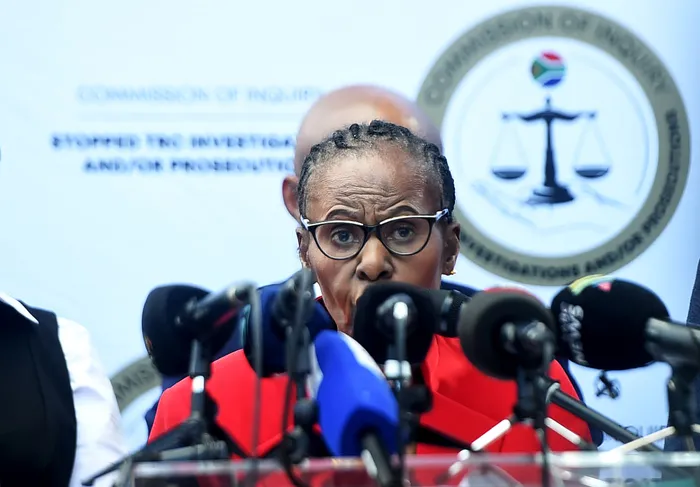
Justice Sisi Khampepe heads the Judicial Commission of Inquiry into TRC cases amid legal challenges.
Image: Itumeleng English / Independent Newspapers
Over 30 years past the landmark 1994 elections that signalled the end of apartheid, many South Africans might believe that the shadows of this dark chapter of history have dissipated.
However, the quest for justice for the victims of apartheid-era crimes continues to face significant hurdles, with a recent commission designed to address unresolved cases now mired in controversy.
The Khampepe Commission, established to investigate why numerous recommended prosecutions by the Truth and Reconciliation Commission (TRC) have never been pursued, has come to a frustrating standstill.
Central to this impasse is the appointment of retired judge Sisi Khampepe, who has facing a legal challenge from former presidents Thabo Mbeki and Jacob Zuma.
Their objection hinges on Khampepe's previous roles at the TRC and the National Prosecuting Authority, raising questions about her impartiality and ability to spearhead the inquiry.
President Cyril Ramaphosa, who appointed Khampepe earlier in 2025, has indicated that he will not oppose this challenge.
Questions have to be asked. How did the president not foresee this possble conflict of interest when he picked Khamphephe?
Ramaphosa is advised by a team of special advisors, tasked with guiding him on key policy areas ranging from economics to law and investment. These advisors are part of The Presidency structure and are supported by various advisory councils.
What was their role when the president made the appointment?
One family member expressed their frustration over the ongoing plight of victims’ families, linking Mbeki's past ''inaction'' during his presidency to parallels she perceives in Ramaphosa’s recent choices.
She pointed out that Ramaphosa recently went overseas to speak about dignity and justice but accused the president of not putting his words into practice here at home.
The urgency for this inquiry could not be clearer.
Each legal delay only prolongs the anguish for families who have lived with the scars of violent pasts. With the promise of justice hanging in the balance, the question remains: will those in power commit to seeing the process through, or will the victims’ stories remain unresolved?
Lives have been lost; families have been destroyed. It's time for justice. It's time for closure.