
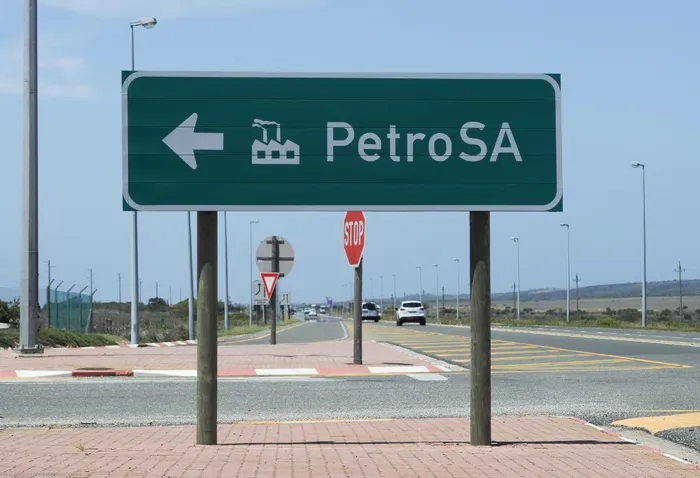
Presently, South Africa finds itself importing a significant majority of its crude oil and refined products. The ripple effects of surging global oil prices manifest quickly, driving up fuel prices across the board and intensifying inflationary pressures.
Image: File
When oil prices rise during global crises, some countries count their profits. Others count their losses. South Africa almost always falls into the second category.
That vulnerability is not just an energy problem. It is an economic one that shapes inflation, growth, and the cost of living for millions of South Africans. Every surge in global oil prices eventually shows up at home in higher fuel costs, more expensive transport, and rising prices at the supermarket.
As geopolitical tensions threaten to push crude prices higher again, energy-producing nations quietly prepare for windfall revenues. South Africa, by contrast, risks watching the moment pass it by now more precariously than ever.
At the centre of this dilemma stands PetroSA. For decades, the logic behind PetroSA was straightforward. A national oil company could provide South Africa with a strategic foothold in the petroleum industry, reduce vulnerability to global energy shocks, and help develop domestic resources. In theory, such an institution could support refining capacity, build technical expertise, and strengthen national energy security.
In practice, that vision has steadily eroded. South Africa today imports the overwhelming majority of its crude oil and refined petroleum products. When global oil prices surge, the consequences ripple quickly through the economy. Fuel prices climb. Transport costs rise. Inflationary pressures intensify. Farmers pay more to move crops to market.
Manufacturers face higher logistics costs. Households feel the shock every time they fill their cars. Energy dependence has quietly become an economic tax. The vulnerability is not hypothetical. The global energy system has already shown how quickly geopolitical conflict can disrupt supply and push prices upward. The Russia–Ukraine War triggered one of the sharpest energy pricespikes in recent memory, forcing countries across Europe and Asia to scramble for alternative supplies.

Nyaniso Qwesha
Image: Supplied
For major energy exporters, the crisis created a windfall. For import-dependent economies, it exposed a dangerous level of dependence. South Africa falls firmly into the latter category. This reality raises an uncomfortable question: what happened to PetroSA's strategic role?
The company once held a meaningful position in the country's energy landscape. Its Mossel Bay gas-to-liquids refinery converted offshore natural gas into liquid fuels, helping supplement South Africa’s fuel supply and showcasing rare technological capability in the domestic energy sector.
But declining offshore gas reserves forced the refinery to halt operations in 2020. Governance failures, financial mismanagement, leadership instability, and inconsistent policy direction compounded the damage. Today, the company faces severe financial distress, with liabilities exceeding assets and mounting operational pressures that threaten its long-term viability. The consequences reach beyond a single state-owned enterprise.
They represent the gradual erosion of a strategic capability. PetroSA’s incorporation into the South African National Petroleum Company was intended to provide a restructuring path. Yet the new entity remains far from the robust national energy institution originally envisioned.
This decline would matter less if southern Africa held little energy potential. Increasingly, however, the opposite appears true. Offshore basins along the region’s Atlantic margin are attracting growing international interest. Major global companies are exploring opportunities along the Orange Basin, where recent discoveries in neighbouring Namibia have drawn attention to the region’s geological promise.
Companies such as Shell and TotalEnergies have signalled interest in exploration activity in South African waters. These developments suggest the region may hold significant untapped resources.
Yet exploration progress has been slowed by legal challenges, regulatory uncertainty, and policy delays.
This creates an uncomfortable possibility: Southern Africa’s offshore basins may hold major energy potential, but South Africa’s institutional weakness may prevent it from participating meaningfully in that development. This is not an argument against the global transition to cleaner energy. South Africa's long-term future must unquestionably include a larger share of renewable power.
The country has abundant solar and wind resources that will play a crucial role in its energy system. But energy transitions do not happen overnight. In the interim, petroleum products and natural gas will remain essential for transportation, industrial activity, and economic stability. Ignoring that reality does not accelerate the transition. It simply deepens dependence on imported fuels while domestic energy capacity deteriorates.
Recent energy disruptions have demonstrated to governments worldwide that energy security is more than just an abstract idea; it's a critical strategy. Countries that allowed domestic capacity to decline are now scrambling to rebuild it at enormous cost. South Africa faces a similar crossroads.
A functioning national energy company could play a catalytic role in strengthening resilience. A revitalised PetroSA or its successor within the South African National Petroleum Company could help secure credible partnerships, support offshore exploration, and restore elements of domestic energy capability. Even incremental progress could improve South Africa’s position.
Energy markets are not purely economic systems; they are geopolitical arenas. Countries with capable national energy institutions often have greater leverage in navigating supply disruptions, negotiating partnerships, and attracting long-term investment.
Without such institutions, countries become passive participants in global markets. That is increasingly South Africa’s position today. The economic implications are substantial. Rising oil prices widen the trade deficit as imports become more expensive.
Higher fuel costs push up transport prices across the economy, placing additional pressure on businesses already struggling with infrastructure failures and logistics constraints. In a country where economic growth has remained stubbornly weak for more than a decade, energy dependence quietly acts as another brake on recovery.
Rebuilding strategic energy capacity will not be easy. It will require governance reforms, credible leadership, financial discipline, and regulatory clarity that attracts serious private investment.
The institutions responsible for managing the sector must be professionalised and insulated from political instability. Ultimately, the responsibility lies with policymakers. Allowing PetroSA to drift further into irrelevance would not merely represent the failure of a state-owned company. It would signal the loss of a strategic tool that could help South Africa navigate an increasingly volatile global energy landscape.
The question South Africa must answer is not whether global energy markets will remain unpredictable. They always have been. The real question is whether the country is prepared to remain exposed to that volatility or whether it is willing to rebuild the institutions needed to manage it. At the centre of that decision stands PetroSA: energy security or energy dependence.
South Africa cannot afford to postpone the choice much longer. Allowing its national energy capability to decay without a credible strategy would not simply be a policy failure; it would be a strategic mistake the country may spend decades paying for.
Qwesha is a trade finance consultant with expertise in global commerce and risk management and regularly contributes to a number of publications