

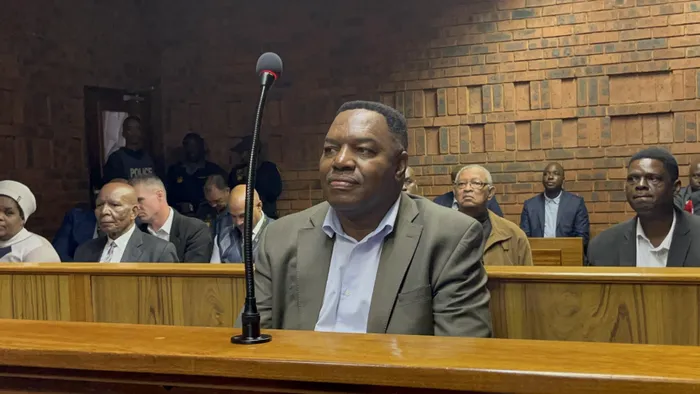
National Police Commissioner, Gen. Fannie Masemola, in court
Image: Kamogelo Moichela / IOL News
There is something deeply wrong when the person legally mandated to protect you is the same person appearing in a criminal dock.
General Fannie Masemola, the country's top police officer, now faces four counts of contravening the Public Finance Management Act, linked to a R360 million tender allegedly connected to an organised crime boss. President Ramaphosa has placed him on suspension. An acting commissioner has been appointed. And the government expects South Africans to feel reassured.
They shouldn't.
This goes beyond Masemola. It cuts to something fundamental that ordinary South Africans experience every day at street level: what does "call the police" actually mean when trust in that institution has been systematically hollowed out from the very top?
At a time when violent crime continues to terrorise communities, when organised criminal networks are deeply entrenched, and when public confidence in policing is fragile, the office of the National Commissioner must be beyond reproach. It is not. It has not been for years. And no precautionary suspension changes that overnight.
The service delivery question hiding inside this scandal is one nobody in government seems willing to answer directly: if SAPS leadership is compromised, who is actually protecting the public? Who is overseeing the officers in Mitchells Plain, Diepsloot, and Inanda who respond to domestic violence calls at 2am?
What quality of institutional culture filters down from a leadership cadre that, across four consecutive commissioners, has produced suspension, firing, and criminal conviction?
Masemola himself told reporters after his court appearance that he had done nothing wrong. That is his right. But the optics of South Africa's top cop appearing in the same case as an alleged crime boss are not something any acting appointment can paper over.
The blunt questions South Africans must now ask their government: Is there a serious vetting process for senior SAPS appointments, or are they primarily political rewards?
Who audits the auditors inside a procurement system that allowed a R360 million tender to reach this point? And when the institution tasked with enforcing the law breaks it, who holds them to account?
The fight against criminals begins with clean, credible, accountable leadership at the top of SAPS.
Pikolomzi Qaba, Gauteng