

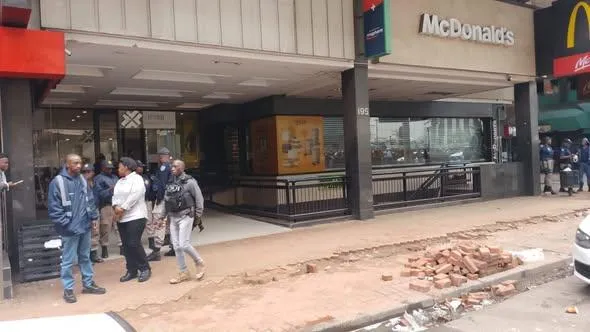
A bold daylight attack inside a McDonald's in Johannesburg's central business district resulted in the shooting deaths of three men.
Image: Faccebook
The current state of violence in South Africa has reached a deeply concerning level.
The South African Police Service (SAPS) in the Eastern Cape has launched a high-priority investigation after a triple murder linked to a violent carjacking and kidnapping in Bethelsdorp.
Three men, ages 23 to 37, were found dead on Monday morning with multiple gunshot wounds after being abducted by armed suspects in Kwanobuhle the previous evening.
On the same day in Gauteng, a bold daylight attack inside a McDonald's in Johannesburg's central business district resulted in the shooting deaths of three men. The South African Police Service has launched a triple murder investigation and is looking for the gunmen.
Police said the victims, aged between 30 and 45, were having breakfast when two masked suspects entered the restaurant at the corner of Jeppe and Small streets and opened fire.
In the same week, a viral video shows a man being shot in a shop in the Joburg CBD. Meanwhile, in the Western Cape, gunfire is relentless day and night due to ongoing gang violence.
During a television interview, a parent of a young child in one of the gang-ravaged areas disclosed that she had taught her child to flee when gunshots are heard.
This situation cannot be considered normal.
Research indicates that South Africa has significantly high rates of violent crime and is known for having one of the highest murder rates in the world.
The majority of crime in South Africa occurs in its four most populous provinces: the Eastern Cape, Gauteng, KwaZulu-Natal, and the Western Cape.
In 2007, the South African government commissioned the Centre for the Study of Violence and Reconciliation to conduct research on the nature of crime in the country.
The study found some contributing factors, one of which is the normalisation of violence; many people believe that using violence to settle disputes is both necessary and acceptable.
We will remain fixated on the question of when the next act of violence will take place as we consider where to go next and what needs to be done to turn the tide.