

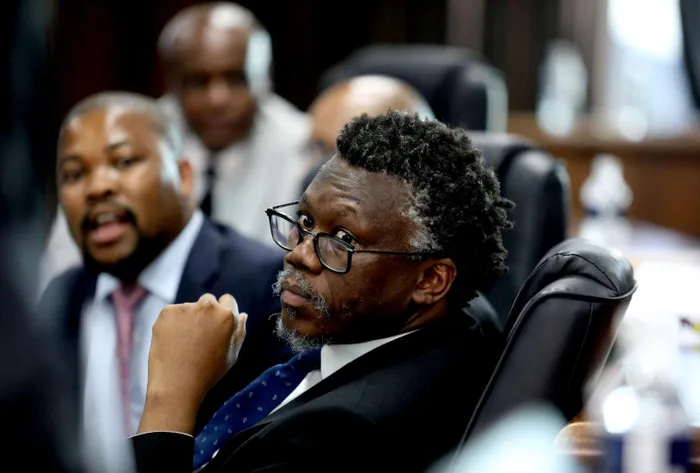
Advocate Tembeka Ngcukaitobi.
Image: Oupa Mokoena/Independent Newspapers
The appointment of Adv. Tembeka Ngcukaitobi SC to the Judicial Service Commission (JSC) is not merely another legal reshuffle within the machinery of South Africa’s constitutional democracy.
It is something far rarer and more consequential for this moment in the nation’s trajectory: it is the institutional recognition of sustained, earned excellence precisely when many South Africans have stopped believing that excellence is still visible, let alone rewarded.
For nearly two decades, Ngcukaitobi has quietly but unmistakably established himself as one of the most formidable constitutional minds of his generation. He did not emerge through spectacle, slogans, factional loyalty, or political noise. He built his authority through relentless study, intellectual rigour, discipline, and meticulous preparation. In an age obsessed with visibility and velocity, that alone is remarkable.
South Africa today is saturated with performance. We inhabit a political culture where outrage travels faster than competence, where theatrics are rewarded more than substance, and where institutional trust has been eroded by scandal, corruption, and public exhaustion. Too often, the country appears trapped inside what can only be called governance theatre: the endless performance of accountability without accountability itself.
Commissions are announced. Inquiries are televised. Reports are published. Statements are issued. Promises are repeated. Yet consequences rarely arrive with the same intensity as the spectacle.
In the middle of this democratic fatigue, something dangerous begins to happen: people stop believing. Young people stop believing that institutions reward merit. Professionals stop believing that integrity matters.
Citizens stop believing that serious work is still recognised. That erosion of belief may ultimately prove more corrosive than corruption itself. Because once a society loses faith in merit, cynicism becomes culture.
Ngcukaitobi’s appointment to the JSC arrives at a critical democratic junction. Against the backdrop of national anxiety surrounding institutional credibility, constitutional trust, and the reverberations of the Madlanga Commission debates, South Africans are increasingly asking whether democratic institutions still possess moral seriousness or have become stages on which accountability is merely performed.
At such a moment, elevating someone whose reputation rests on intellectual credibility rather than political theatrics becomes powerfully symbolic. Ngcukaitobi represents something South Africa desperately needs more of: earned authority. Not inherited, not manufactured, not performed, but earned.
That distinction matters profoundly in a country where millions of young Black South Africans feel trapped between aspiration and despair. Across townships, rural villages, and underfunded universities, a generation is navigating a democracy that often appears to reward proximity to power more than discipline. They are growing up amid collapsing infrastructure, chronic unemployment, institutional decay, and social instability. Many silently ask, "Does hard work still have meaning in a country where corruption feels normalised?
That is the psychological crisis beneath South Africa’s political crisis. It is not only that people are materially excluded, but they increasingly fear invisibility. South Africa is producing a generation that fears obscurity more than mediocrity because they are no longer convinced that excellence alone can open doors.
Appointments like this interrupt that despair. They remind the Black child sitting in a crowded classroom that her environment is not the final definition of her future. They remind young professionals whose labour feels unseen that recognition is sometimes delayed, not denied. They remind South Africans that history still occasionally bends toward competence.
That lesson matters. Especially because Black excellence in South Africa has never emerged from neutral conditions. Under apartheid, Black intellectual potential was systematically suppressed and excluded from institutional authority.
The legal profession itself was historically structured to deny Black South Africans access to constitutional influence. Democracy was supposed to change that, but democracy was never meant to mean representation without excellence.
South Africa does not merely need Black faces inside institutions. It needs Black excellence inside institutions, individuals capable of carrying constitutional responsibility with intellectual seriousness, moral depth, and democratic discipline. That is precisely why Ngcukaitobi’s appointment resonates so deeply. Whether one agrees with all his legal arguments is secondary. What stands out is the seriousness with which he approaches the constitutional questions that will shape the republic’s future.
Seriousness itself has become a radical quality in modern political culture. In many ways, this appointment restores faith in something South Africa has slowly been losing: delayed recognition. Because the truth is that there are seasons where disciplined work appears invisible. There are years when excellence receives little applause. There are moments where ethical people watch opportunists rise faster than those committed to substance.
But history repeatedly shows that sustained excellence eventually creates its own gravity. Ngcukaitobi’s journey carries that lesson. Not every meaningful path to influence is built through noise. Some are still built quietly through books, preparation, sacrifice, and consistency.
Perhaps that is why this appointment feels larger than the individual himself. It becomes a democratic signal: that institutions, despite their failures, are still capable of recognising substance. That constitutionalism still requires intellectual stewardship. That hard work, even when unnoticed for years, is still being seen.
For many Black children growing up in difficult environments across South Africa, that message may matter even more than the appointment itself. Because nations are not sustained only by laws, elections, or commissions. They are sustained by citizens' continued belief that dignity, excellence, and integrity are worthwhile pursuits. And in a country battling democratic fatigue, institutional distrust, and political performance, the recognition of genuine excellence becomes more than symbolic.
It becomes a form of democratic hope.
Qwesha is a trade finance consultant with expertise in global commerce and risk management and regularly contributes to a number of publications