

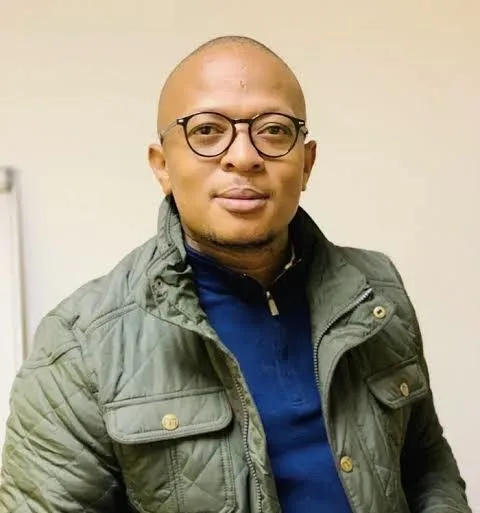
Sifiso Mahlangu steps down as editor of 'The Star'
Image: Supplied
I was eight years old in 1994, the year South Africa changed course. I am a Ndebele man from a mining town in Mpumalanga who would go on to become editor of the biggest English daily in the country not as an exception to my origins but as an extension of them.
There comes a moment in every newsroom when the urgency of breaking news gives way however briefly to reflection. The phones still ring, the deadlines still loom, and the machinery of reporting continues its restless movement but something shifts in you. You begin to understand that journalism is not only about capturing the present. It is about carrying its weight.
I have spent my years in this profession learning that journalism is not a comfortable calling. It is designed to affirm and interrogate. It asks you to sit at the edge of power and public life and to report honestly on what you see even when what you see unsettles, offends or contradicts official narratives.
At The Star I have had the privilege of working for an incredible company. One that at its best understands the weight and responsibility of journalism. I have worked alongside journalists who know that a newsroom is not a stage but a workshop of accountability. We have published stories that challenged authority, disrupted complacency and forced difficult conversations into the open. Some were met with resistance others with recognition. All carried consequences.
It has been an eight year journey. Pravin Gordhan said he would take down Independent Media in 2019. He was wrong! Karima Brown said I would only be editor for three months before collapsing under the pressure and demand. She was wrong too.
Journalism has never been sustained by predictions. It is sustained by endurance and against every forecast, every assumption, every confident dismissal, we remain
I have also had a chairman who understood at key moments the responsibility of sustaining a newsroom. Leadership in media is never simple it sits at the intersection of business realities and the uncompromising demands of journalism. At his best he recognised that a newsroom’s value cannot be measured only in numbers but in its ability to hold power to account.
South Africa is not an easy country to report. It is layered with contradiction extraordinary resilience sitting beside persistent inequality democratic promise existing alongside daily frustration. To cover it honestly is to hold those tensions without flattening them into slogans or despair.
I have sat in communities where hope survives on very little. I have listened to stories of loss that resist neat explanation. I have met young people with ambition and qualifications but no clear path forward. And I have learned again and again that behind every statistic is a life that does not appear in spreadsheets or policy briefings.
Through it all journalism remains one of the few spaces where truth can still be pursued without permission. Not perfectly. Not without pressure. But persistently.
As I step away from this role I do so with gratitude for the work and for those who continue it. Journalism is never the achievement of one person. It is the accumulation of many reporters photographers editors and readers who still believe that facts matter in a time when certainty is often manufactured.
I thank Dr Iqbal Survé for his faith in the craft, and for his commitment to transformation in the face of considerable odds.
There is a line from Frantz Fanon that has stayed with me throughout my career:
“Each generation must out of relative obscurity discover its mission fulfill it or betray it.”
It is not a comfortable idea. It is not meant to be. But it speaks to responsibility the kind that cannot be outsourced or deferred. South Africa like any society still negotiates the gap between promise and reality, the mission is never complete. It is inherited contested and carried forward by those willing to continue the work.
As I leave this desk I do not leave certainty. I leave conviction that journalism still matters that truth still has weight and that silence when it wins is never neutral.
We must never let the racists win!
Until we meet again,
Sifiso Gift Mahlangu