

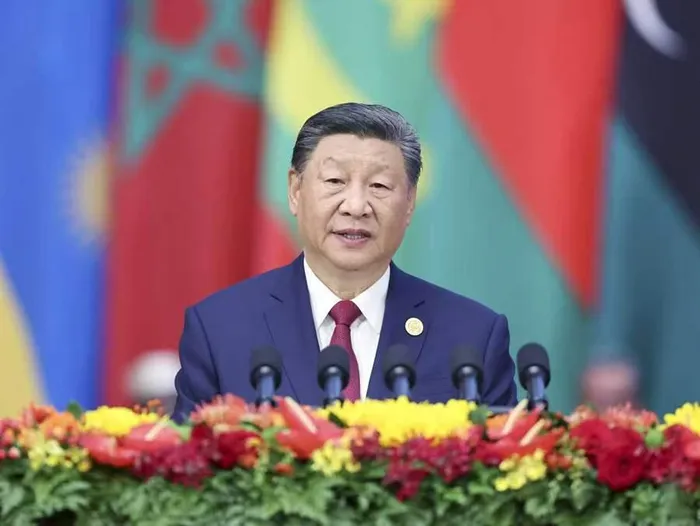
On 14 February 2026, President Xi Jinping announced that China will implement the zero-tariff treatment for African countries with which it shares formal diplomatic relations.
Image: Xinhua
Many African countries, including South Africa, may be feeling the pinch from the 10% tariff on goods exported to the USA.
However, the zero-tariff policy, which kicked in on May 1, could be a game-changer, offering African countries an opportunity to further diversify their trade partners and commodities in international trade as they broaden and deepen access to the world’s largest trading market.
The Trump administration-imposed tariffs on goods exported to the USA from many trading partners, including African countries whose economies face many structural hurdles.
The tariffs, as high as 30% for some goods and countries, were lowered to 10% after the US Supreme Court struck down many of President Donald Trump’s previous duties. South Africa potentially faced up to a 31% tariff increase on its exports to the USA.
The US is South Africa’s third-largest trading partner, after the EU and China. On 14 February 2026, President Xi Jinping announced that China will implement the zero-tariff treatment for African countries with which it shares formal diplomatic relations.
Under the scheme, qualifying goods exported to China between 1 May 2026 and 30 April 2028 will benefit from zero customs duties, provided exporters comply with the applicable tariff schedules and rules of origin.
China's commerce ministry said in a statement that the zero-tariff policy will lend a competitive edge to African products like cocoa from Cote d'Ivoire and Ghana, coffee and avocados from Kenya, and citrus fruits and wine from South Africa, which used to face tariffs ranging from 8 percent to 30 percent.
The zero-tariff policy significantly reduces barrier to entering the Chinese market, creating new and expanding existing opportunities for businesses and industries to catalyse much needed economic development in African countries.
The policy further compliments national and continental initiatives amongst African countries towards enhanced economic resilience and diversification.

Gideon Chitanga, PhD, is an international relations and political analyst.
Image: Supplied
According to Yang Jun, the Dean of Digital Economy Laboratory, School of International Trade and Economics in China, the zero-tariff policy will catalyse positive economic impacts in sectors ranging from wood and wood-processing Industries, flowers, spices, coffee, tea, and a wide range of plant extracts, while trade in fruits, vegetables and nut sectors provides low-hanging fruits, or the greatest potential for quick wins.
Yang Jun urged South African enterprises to expand sales channels into China’s second-tier cities where demand for some of these products is high.
Cities like Chemdy, Han and Hangzhou are emerging as huge markets for various horticultural exports from South Africa and other African countries. Demand for high-quality fruits and agricultural products in these cities is growing rapidly.
The zero-tariff policy is well aligned with the demand characteristics of these markets, thus creating opportunities for South African and other African enterprises beyond the traditional dominant major cities.
Furthermore, South African and continental enterprises should align with China's standards and regulatory requirements to maximise their leverage on the emerging opportunities under the zero-tariff policy.
African governments and businesses should proactively pursue practical measures to meet China's inspection and quarantine requirements, food safety standards, and other relevant regulations, establish and facilitate close communication and cooperation channels with Chinese inspection and quarantine authorities, key importers, and cross-border e-commerce platforms so as to facilitate smooth market access.
On the 1st of May, Xinhua reported that customs authorities across China were busy handling arrivals of African imports that were early beneficiaries of the country's historic expansion of its zero-tariff treatment.
South Africa became the first country to ship products under the new law, exporting a consignment of apples to the Chinese market. Chinese state media reported that 24 tonnes of apples from South Africa cleared customs in Shenzhen early on Friday, the 1st of May, becoming the first batch of African goods to benefit from the expanded trade policy.
As reported earlier this month, Agriculture Minister John Steenhuisen called China’s decision to remove all tariffs on South African imports an “absolute game-changer”, particularly for wine and citrus exports and other high-value exports like beef and nuts
The elimination of tariffs will allow South African exporters to gain a significant price advantage. South Africa's exports of fruits, vegetables, and related products to China are expected to increase by more than 80%, with output growth estimated to exceed 3%.
While horticultural products account for a significant share of South Africa's exports to China, the zero-tariff policy will catalyse South Africa’s advanced wood-processing capabilities to boost export products into China. Such exports to China were previously hindered by tariff-related costs.
The zero-tariff policy will also boost the competitiveness of South African exports to the Chinese market, with expectations for growth in the wood industry sectors, as China’s imports of wood and processed wood products from African countries surge.
China's imports of agricultural products from Kenya are expected to increase by more than 100%, while imports from Zimbabwe, Ghana, Nigeria, and South Africa are expected to grow by between 45% and 85%.
Exports from South Africa to China, such as Rooibos tea, aloe-based products, and flowers, which have distinctive characteristics, are also gaining growing market traction and recognition in the Chinese market.
The removal of tariffs gives these products greater flexibility in pricing strategies, making it easier for them to enter China's new retail channels, e-commerce platforms and specialty supermarkets. In a statement from the Department of Trade, Industry, and Competition (DTIC) issued on May 1, Tau welcomed the zero-tariff policy, saying that the scheme offered South African exporters a “meaningful opportunity to expand into one of the world’s largest and most dynamic consumer markets”.
He added that the trade developments complemented the department’s diversification strategy, aimed at making South Africa’s economy more resilient. The minister also advised exporters that access to the preference is conditional on meeting the prescribed rules of origin, including product-specific requirements, and on submitting a valid certificate of origin for customs clearance in China,” South Africa, like many other African countries, is driving towards fostering economic diversification and resilience in response to global economic instability and uncertainty.
In April 2025, South Africa’s Minister of International Relations and Cooperation, Ronald Lamola said that the government was focusing on fostering economic diversification and resilience through diplomacy to insulate the country from unstable Western markets.
He also said that the pursuit of intra-African trade was vital to building economic resilience, hence the need to fast-track the implementation of the African Continental Free Trade Area (AfCFTA). The zero-tariff policy improves domestic and continental investment opportunities into the extensive Chinese market.
The policy advances the goals of the African Continental Free Trade Area (AfCFTA) to boost African exports by supporting industrialisation, allowing room for value-added manufacturing, and growing regional value chains to incentivise intra-African collaboration in boosting trade capacity.
The policy therefore presents major continental and national opportunities for African countries to align and advance shared continental and national economic interests, economic growth, and employment creation.
Gideon H Chitanga, PhD. is a political and international relations analyst.