Traditional Courts Bill brings apartheid back
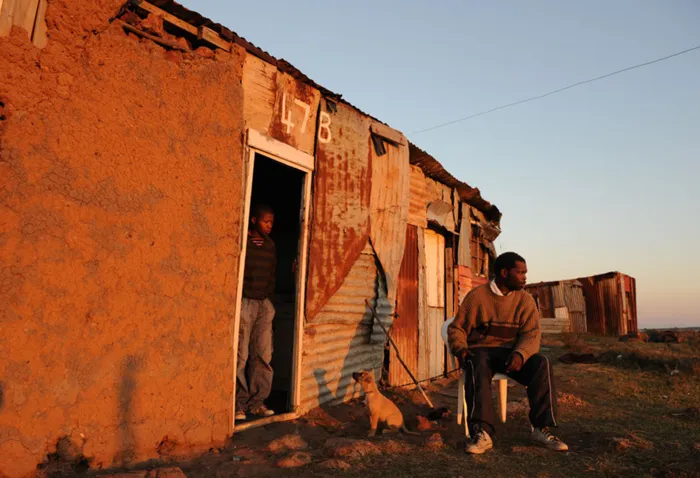
Feature on The arts festival and its contribution to the local community especially the rural areas The National Arts festival held in Grahamstown. Pic Antoine de Ras Feature on The arts festival and its contribution to the local community especially the rural areas The National Arts festival held in Grahamstown. Pic Antoine de Ras
The re-tabled Traditional Courts Bill, if adopted in its current form, will relegate at least 17 million South Africans to a separate and unequal judicial regime merely because they happen to live in the rural areas – a location in many cases imposed on them by the apartheid regime.
While cabinet’s planned “review” of Constitutional Court decisions threatens to violate the doctrine of separation of powers, this bill already does just that. And it accomplishes this no less by rehashing aspects of apartheid and British colonial law stretching all the way back to the 19th century.
In terms of the bill, traditional leaders will be appointed presiding officers of traditional courts with the powers to decide on both civil and criminal matters involving members of traditional communities, or even people just passing through.
These are the same traditional leaders who, in terms of the Traditional Leadership and Governance Framework Act of 2003, administer government functions, including welfare, economic development, land, management of natural resources and registration of births, deaths and marriages.
Moreover, according to the University of Cape Town’s Law, Race and Gender (LRG) Research Unit, the bill gives traditional leaders the power to make customary law.
The chief-cum-judicial officer can pass various sentences, including fines, forced labour, or depriving someone of “customary benefits”, which could mean losing access to land.
This concentration of judicial, legislative, executive and administrative powers means the same person who makes the rules and executes government decisions also metes out punishment when deeming a rule broken.
This system has its historical antecedent in colonialism, which was dubbed “decentralised despotism” in the influential book Citizen and Subject – Contemporary Africa and the Legacy of Late Colonialism by Ugandan scholar Mahmood Mamdani.
Mamdani reminds us that there was nothing “natural” or voluntary about customary law. The most authoritarian elements of pre-colonial social and political arrangements were concentrated in so-called customary law.
Rather than recapturing the ways of people before the ravages of colonialism, as traditionalists would like us to believe, customary law’s purpose was to advance the colonialist and, later, apartheid agenda.
Mamdani points to what he calls colonialism’s “bifurcation” of the state in which civil law applies to “citizens” while “customary” law applies to “subjects”. Customary law turns people into mere subjects because it denies them the protections that civil law affords citizens.
Women were particularly compromised, as they were declared perpetual minors who could neither inherit nor bequeath, according to the Natal Code of Native Law of 1891. This was reinforced in the Black Administration Act of 1927, only repealed in 2005.
The Traditional Courts Bill and the Communal Land Rights Act of 2004 (declared unconstitutional in 2010 for not being tagged as a bill that affects the provinces) both effectively perpetuate the second-class status of especially rural women.
The Traditional Courts Bill entrenches a localised absolutism by denying rural people not only legal representation in traditional courts but refusing them the right to opt out and have their cases heard in the civil courts.
It allows representation by relatives which, says the LRG, would reinforce the current practice of barring widows from speaking in the “sacred” space of the traditional court. The male relatives “representing” them are frequently the very same people eyeing property they are entitled to.
The irony of the re-entrenchment of this parallel system of subjugation becomes more bitter when one remembers PW Botha’s divide-and-rule tricks in the 1980s. A legal division was created between black urban insiders, admitted as part of “White South Africa”, and black rural outsiders, locked down in the 20th century’s last colonial relics, the Bantustans.
The LRG sees the bill as part of a “silent coup”. The legal perpetuation of these colonial dynamics is a testimony to how well traditionalists have navigated the post-apartheid parliament to promote their own interests.
Since the traditionalists’ political flip-flop away from the apartheid regime into the lap of the ANC, they have had more success than other reactionaries such as the volkstaters.
Could it be because traditional leaders are promoters of a system that enables the kind of social control that a government could use in times of socio-economic distress?
British colonialist Theophilus Shepstone said in the 1880s that the main objective of customary law was to “ensure control”, as the “natives” were not regarded as sufficiently “civilised” to enjoy citizen’s rights.
At least the bill does not refer to civilisation but its stated aim is to position traditional leadership as an “institution” that maintains “peace and harmony” and “prevents conflict”.
Are these 21st century euphemisms for social control?
Of course, the bill is saturated with references to upholding the constitution. One clause accentuates women’s participation.
But, if the Traditional Leadership and Governance Framework Act is anything to go by, the commitment to gender equality is thin. That act allows for its own measly one-third quota for women in traditional councils to be lowered even further if there are too few women available to fill the positions.
Finally, the way in which the Traditional Courts Bill found its way back to parliament undermines the pledges of constitutional alignment.
Civil society, including rural people, pointed out the problems when it was first tabled in 2008, including that only traditional leaders had been consulted in its drafting.
Instead of addressing these flaws, the exact same version of the bill has been re-tabled in the National Council of Provinces, which shows that it was the Communal Land Rights Act’s failure in the Constitutional Court that was heeded and not the calls of rural South Africans.
l Christi van der Westhuizen is a journalist and an author. This monthly column series is made available by the Open Society Foundation for South Africa to monitor the health of our democracy.