Commission needs repair, not destruction
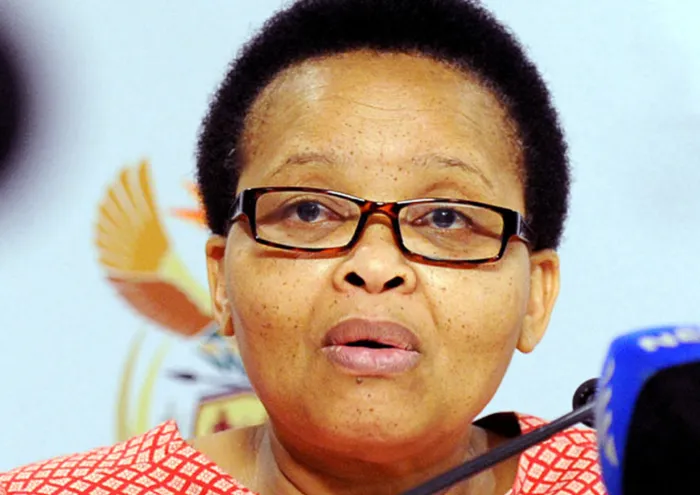
Minister of Women, Children and People with Disabilities; Lulu Xingwana clarifies the mandate of the Department in the context of the latest critisims by the Democratic Alliance during a media briefing held in Pretoria South Africa 17/04/2012. Minister of Women, Children and People with Disabilities; Lulu Xingwana clarifies the mandate of the Department in the context of the latest critisims by the Democratic Alliance during a media briefing held in Pretoria South Africa 17/04/2012.
It is a no-brainer that a commission without commissioners ceases to operate. By the second half of this month, the Commission on Gender Equality (CGE) had only two commissioners, both with terms expiring before mid-June.
So it has been déjà vu at the commission: in 2006-7 it had no commissioners, and blame should be laid at Parliament’s door, as it failed to ensure new appointments.
During the latest replay, in 2010 the number of commissioners had already dropped below the legal requirement of seven.
If the commission is not legally constituted, it could have far-reaching implications for the exercise of its powers, which include issuing subpoenas and holding hearings.
As matters stand, the lack of commissioners has forced those remaining to disband sub-committees responsible for financial oversight and projects on gender-based violence and other work, according to commissioner Janine Hicks, whose term ends on June 7.
The delay in appointments seems to stem from confusion over numbers to be appointed to fill vacancies (the CGE Act provides for the appointment of 11 commissioners plus a chairperson), as well as differentiation between part-time and full-time commissioners.
Parliament has placed before the presidency a list of nine commissioners for appointment, a process the presidency claims to be finalising.
Among those recommended is Wallace Mgoqi, confirming that the ruling party regards chapter nine institutions as parking spaces for loyal comrades.
Mgoqi may be known for defying the DA after his axing as Cape Town city manager, but definitely not for gender work.
The successful candidates have been in limbo, not knowing if and when the presidency will effect their appointments.
Hicks, with outgoing commissioner Kenosi Meruti, chief executive Keketso Maema and management, presented the commission’s strategic plan for 2012-17 to the portfolio committee on women, children and people with disabilities early this month.
Commissioners used the opportunity to appeal to the committee to pursue the matter of the delays with the Presidency and also wrote to the Speaker.
It is notable that among the chapter nine institutions, the commission seems most subject to delays in appointments.
It has been without a chairperson since 2009.
Maema acted in the position of chief executive for two years before being appointed in 2010.
Feminists close to the process regard these problems as stemming from the ANC’s toying with the idea of having the commission disbanded, especially after public protector and auditor-general investigations into misconduct and fraudulent and irregular expenditure in the 2007/8 and 2008/9 financial years.
A controversial independent audit recommended in 2008 that the commission be placed under “mentorship”; Parliament’s ad hoc committee on the review of chapter nine and associated institutions, which the late Kader Asmal chaired, recommended in 2007 that the commission be collapsed into the Human Rights Commission.
While the commission has not been able to avoid controversy in recent years, as its last chairperson, Nomboniso Gasa, left under a cloud, the outgoing crop of commissioners have worked hard to clean up its act.
The commission is due to receive its second unqualified audit from the auditor-general, testimony to its return to sound governance.
It has also been applying its full powers to call hearings and subpoena government departments and companies to appear before it.
However, while the outgoing commissioners have turned things around, Parliament still has to attend to the long overdue alignment of the CGE Act with the 1996 Constitution and Public Finance Management Act, recommended by its own ad hoc committee on the commission’s forensic investigation in April last year.
Previously the justification for pressure to scrap the commission was that it was dysfunctional.
Why it would make sense to scrap the organisation rather than fix it is unclear, particularly, as Hicks notes, as gender power relations have not substantively improved since 1996.
Some of the impetus for scrapping the commission emanates from the new institutional kid on the block, the Department of Women, Children and People with Disabilities (or “the ministry for everybody except able-bodied adult men”, as an activist joked).
The incumbent, Lulu Xingwana, is a proponent of collapsing the commission into the HRC.
Since the minister’s appointment in 2010, attempts by the commission to set up a high-level meeting with her on role clarification have been unsuccessful.
Xingwana has complained about 50 percent of “her department’s budget” going to the commission, which is an incorrect depiction, as the commission has its own budget allocated by the National Treasury, which is merely channelled via the department.
Previously, it was channelled via the justice department.
Xingwana should reconsider her position. The commission has unique oversight powers which a minister cannot exercise in relation to her peers in the cabinet. Also, the commission’s budget is inadequate for the implementation of its mandate, which means the department won’t win much if it absorbs it.
It makes political sense for Xingwana to vie for more money to be allocated to gender work all-round, including her ministry, instead of transferring an already measly budget from one institution to another.
If motivating increased spending on women’s empowerment is a problem, the Treasury should be reminded of the deteriorating statistics on rape and socio-economic inequality, which affect women most.
l Christi van der Westhuizen is a journalist and an author. This monthly column series is made available by the Open Society Foundation for SA.