Veil of silence over sex in SA needs challenging
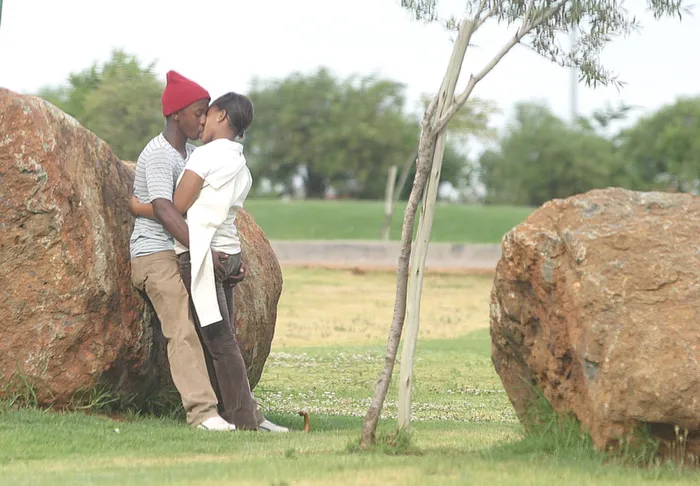
people will be protesting over the new law on teenagers that says they are not allowed to touch and kiss in public.here it is at a park in Soweto, teenagers do it anyway. Picture: Paballo Thekiso people will be protesting over the new law on teenagers that says they are not allowed to touch and kiss in public.here it is at a park in Soweto, teenagers do it anyway. Picture: Paballo Thekiso
The recent fiasco with the Sexual Offences Act should serve as an alert about continuing problems dating from before the act’s adoption in 2007, which have still not received Parliament’s attention.
The Western Cape High Court in May upheld a finding that meant that the courts could not pass sentences for 29 crimes for which the Sexual Offences Act did not explicitly prescribe penalties, leaving victims in limbo.
Lawyers Against Abuse and the Women’s Legal Centre insisted that the Western Cape High Court was mistaken, as the act showed that the legislature intended for the courts to “always be able to hand down sentence”.
A full bench of the Supreme Court of Appeal vindicated activists’ arguments.
Meanwhile, KwaZulu-Natal and Free State courts had detected no such hindrance and were sentencing perpetrators in terms of the act.
The discrepancy in interpretations serves as reminder of the reality of opposition, also in the judiciary, to the democratic transformation of apartheid and colonial conceptions of sexuality and sexual rights.
Some in the judiciary have resisted instituting minimum sentences prescribed for some sexual crimes, arguing that the prescription interferes with judicial discretion.
Isn’t it curious that the Western Cape High Court decision amounts to the judiciary itself casting doubt on its right to exercise judicial discretion?
Commendably, Parliament moved swiftly to amend the act within a month after the high court finding.
Activists have called on Parliament to also tackle other problems, such as sections 15 and 16, which ridiculously and dangerously criminalise adolescent sexuality.
Since appeals have fallen on deaf ears, the Teddy Bear Clinic and Resources Aimed at the Prevention of Child Abuse and Neglect (Rapcan) are currently challenging these provisions in court.
Section 15 criminalises consensual intercourse between persons aged 12 to 16, in contrast with countries that make exemptions for kids close in age (usually a maximum two years apart).
Section 16 takes it further by punishing consensual sexual exploration – even kissing – between teens.
The shameful result is that consenting teens merely exploring their fledgling sexualities may be included alongside rapists in the justice department’s register of sex offenders.
The act goes even further by compelling anyone who is aware of consensual sex between 12 to 16-year-olds, including parents, to report it to the police.
Health-care workers are turned into the “surveillance arm of the law” in breach of their ethical duty to safeguard patient-doctor confidentiality, says Lisa Vetten, director of Tshwaranang Legal Advocacy Centre.
Therefore, the very people that teens could turn to during a stage of great physical and psychological change have been incorporated into a state apparatus seeking sexual control.
The rebuttal that such children are usually diverted for rehabilitation is cold comfort to teens who, before diversion, will still be humiliated into explaining their sexual behaviour to police officers.
Thus the veil of silence that hangs over sex in SA, as shown by research, is drawn even more tightly. While healthy sexual interaction is being driven underground, teenagers’ need for information does not disappear, Vetten cautions.
Teens will be left to find the facts of life in the media and pornography, both of which are guilty of wildly unrealistic and frequently bigoted depictions of sexuality.
The act’s punitive approach will deter sexually active teens from seeking HIV counselling and testing, contraception and abortion services. Vetten contends that “nobody wants 12 and 13-year-olds to become mothers and fathers”. Judging by the current moralistic panic about young people’s sexuality in some quarters, one can’t help but wonder.
The political position has changed from encouraging empowerment about sexuality to a clampdown, illustrated by the fact that the Sexual Offences Act contradicts other laws on access to abortion and contraceptives and service providers’ reporting duties.
It is useful to reflect on the history of the act’s drafting. Rapcan notes in an affidavit that during the drafting in the 2000s, the justice portfolio committee’s argument for prosecuting young people was to achieve “parity”, as such provisions were ostensibly applied more frequently to boys than to girls in the past.
This parity could have been achieved by prosecuting neither girls nor boys, says Rapcan. Instead, the law as its stands today renders girls more vulnerable to prosecution because pregnancy makes the “offence” more noticeable. This unjust outcome is not surprising.
Research published by the Gender Advocacy Programme (GAP) and Tshwaranang reveals that the chairman of the justice portfolio committee at the time, Johnny de Lange, had a decisive hand in the writing of the act, even in his later capacity as deputy justice minister.
De Lange’s gender politics is exposed in the autobiography of Pregs Govender, former chairwoman of Parliament’s committee on women.
When she approached him to advance laws that would address the gender iniquities of apartheid, he shouted at her: “Since when are women’s laws the priority?”
The GAP/Tshwaranang research concludes that the act “most clearly bears the imprint” of De Lange’s “preferences”, including his insistence on creating another register for sexual offences despite it duplicating the more comprehensive Children’s Act register.
The time has come for Parliament to deal with these anomalies, not only because they are seemingly the result of the idiosyncrasies of one individual, but also because they undermine the potential for healthy sexuality in a context already rife with sexual pathology.
l Christi van der Westhuizen is a journalist and an author. This monthly column series is made available by the Open Society Foundation for South Africa to monitor the health of our democracy.